The anti-corruption community should view prisons not as the end of justice, but as institutions in urgent need of reform and accountability.
Blog
Prisons are not the end of justice: A Guide not just for Detention Monitors
If we care about justice, integrity, and accountability, our work cannot stop at the prison gate.
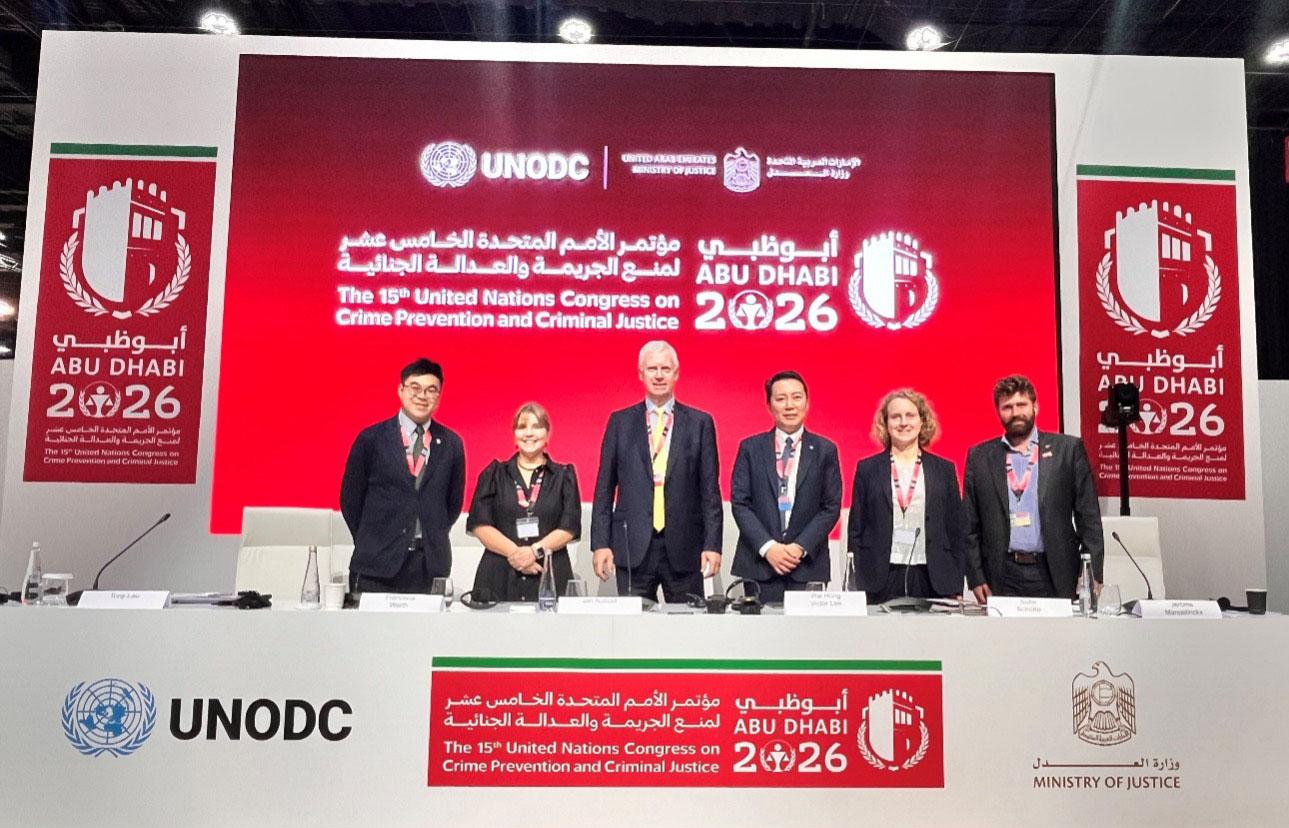
The speakers at the 15th UN Congress on Crime Prevention ancillary event – From risk to reform: Countering prison corruption, from left to right: Tony Lau (Chief Corruption Prevention Officer of the Corruption Prevention Department of ICAC), Francisca Werth (Executive Director of Centro UC Justicia y Sociedad, Pontificia Universidad Católica de Chile), Jan Austad (Policy Director at the Ministry of Justice and Public Security, Norway), Wai Hong Victor Lee (Crime Prevention and Criminal Justice Officer, UNODC), Sofie Schütte (Principal Adviser, U4), Jérôme Mangelinckx (Global Policy Manager, Penal Reform International). Photo: U4 CC BY-NC-ND
This blog text is adapted from a contribution to the 15th UN Congress on Crime Prevention and Criminal Justice, Abu Dhabi – ancillary event: From risk to reform: Countering prison corruption, 28 September 2026.
Speaker: Sofie Schuette, Principal Adviser, U4.
Organisers: U4 / Penal Reform International / UNODC / Centro de Estudios Justicia y Sociedad, Pontificia Universidad Católica de Chile.
With support from: Independent Commission Against Corruption – Hong Kong SAR / International Association of Anti-Corruption Authorities / Inter-American Development Bank.
At the 15th UN Crime Congress in Abu Dhabi, a number of recently developed tools to identify and monitor corruption risks in prisons and ways to mitigate them were presented. It is important to raise awareness about these tools and, not least, the problem they aim to address.
When we think about corruption, we tend to focus on police, courts, politicians, or public procurement. We rarely think about prisons.
Yet prisons are among the institutions most vulnerable to corruption. They are closed environments characterised by strong power imbalances, limited transparency, and restricted external oversight. As a result, corruption can become embedded in everyday prison life.
Prisons should not be viewed as the endpoint of justice. They should be viewed as institutions that require continuous scrutiny, accountability, and reform.
I say this as someone from the anti-corruption community myself. Our anti-corruption research and discussions often stop short of prisons, because that is ‘where you send the corrupt people’. The considerable corruption problem that often exists in prison systems is ignored or grudgingly accepted – partly because detention environments are so difficult to access.
This is where U4’s collaboration with Penal Reform International started in 2023, with the question: how can we embed an anti-corruption lens in the monitoring work already done by detention monitors? The result is the useful tool Corruption in prisons: a guide for detention monitors.
Monitors are uniquely positioned because they have direct access to places that are largely hidden from public view. They can document patterns, identify risks, encourage whistleblowing mechanisms, and advocate for reforms based on evidence.
The role of detention monitors is not to investigate corruption as criminal investigators, but to identify corruption risks, document concerns, and promote accountability
The guide’s main message is that detention monitors should not see corruption as a separate issue from prison conditions or human rights. Corruption often sits behind problems such as unequal treatment, poor living conditions, restricted access to services, and abuse of power.
The role of detention monitors is therefore not to investigate corruption as criminal investigators, but to identify corruption risks, document concerns, and promote accountability.
Here is a very brief overview of what are much more nuanced recommendations in the guide.
1. Know what to look for: recognise the signs of corruption
The first task is to recognise that corruption can take many forms, but not every injustice is corruption. Monitors should in particular consider whether people in detention must pay for services or benefits they should receive as a right.
Warning signs might include:
- Unequal access to healthcare, food, visits, or rehabilitation programmes.
- Preferential treatment for certain prisoners.
- Reports of payments for transfers, privileges, or protection.
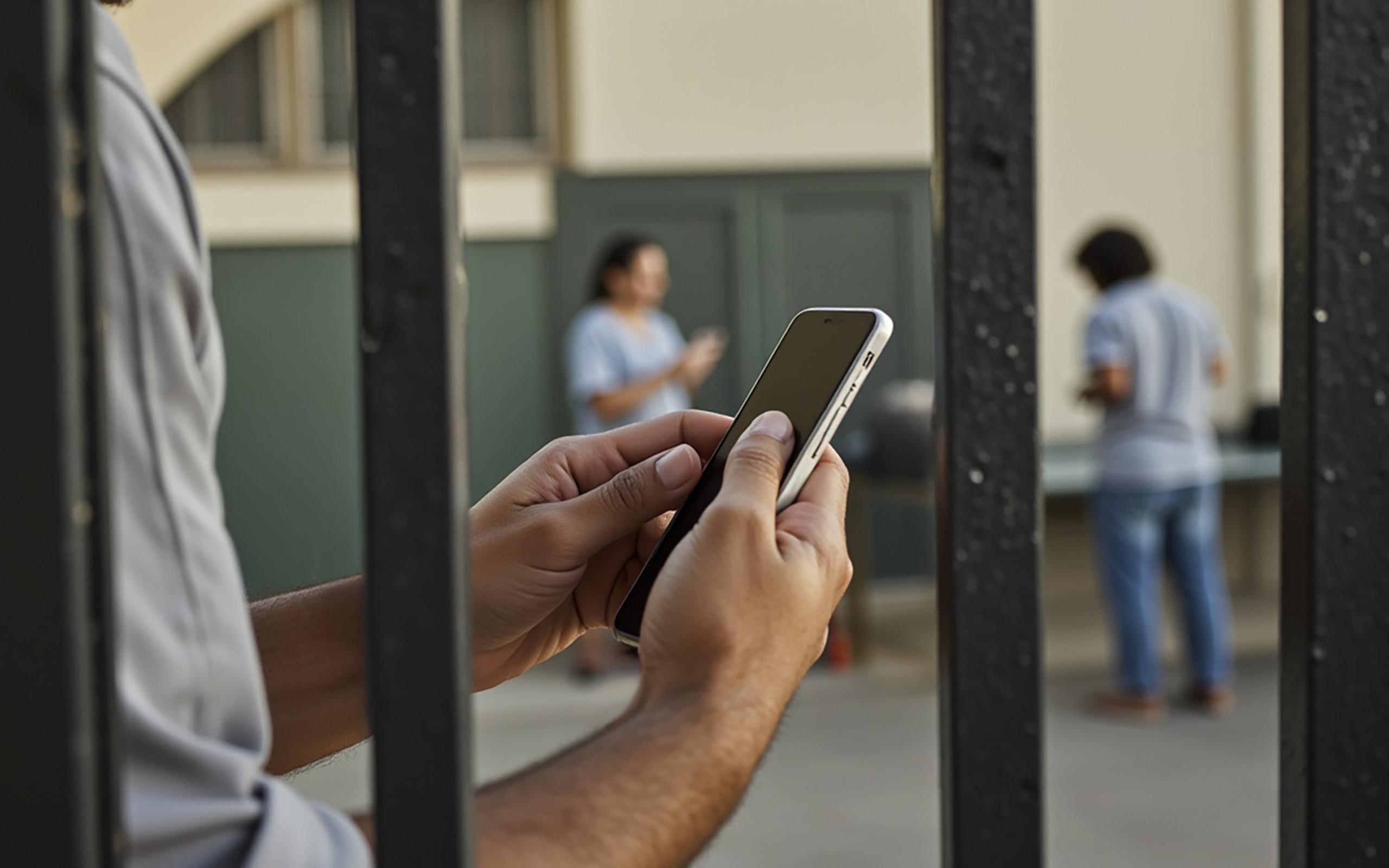
- The presence of contraband, like mobile phones, that could not enter without staff involvement.
2. Integrate corruption risks into monitoring visits
The guide encourages monitors to make corruption a routine part of prison monitoring. This means incorporating corruption-related questions into interviews, observations, and document reviews.
For example:
- Are complaint mechanisms trusted and accessible?
- Do prisoners feel pressured to pay for services?
- Are disciplinary decisions applied consistently?
- Are there transparent procedures for allocation of work, education, visits, or accommodation?
Rather than being treated as a separate topic, corruption should be integrated into regular monitoring of detention conditions.
3. Listen to vulnerable groups
Particular attention should be given to groups that may be disproportionately affected by corruption, such as:
- Women in detention.
- LGBTIQ+ persons.
- People with disabilities.
- Foreign nationals.
- Prisoners with limited financial means.
These groups often have less power to challenge abuses and may be more vulnerable to extortion, discrimination, or exploitation. Detention monitors should therefore ensure that their monitoring captures a diverse range of experiences and perspectives.
4. Document patterns, not only individual cases
The guide emphasises that corruption is often systemic. A single allegation may be difficult to verify. However, when similar concerns arise repeatedly across interviews, facilities, or monitoring visits, a pattern begins to emerge.
Monitors should therefore:
- Record observations systematically.
- Look for recurring complaints.
- Compare information from multiple sources.
- Identify structural risks, such as overcrowding, staff shortages, or excessive discretion.
The objective is not simply to report isolated incidents but to identify conditions that enable corruption.
5. Promote accountability and reform
Finally, detention monitors should use their findings to strengthen accountability.
This may include recommending:
- Stronger complaint and whistleblowing mechanisms.
- Greater transparency in prison decision-making.
- Independent oversight and investigations.
- Measures to reduce overcrowding.
- Improved staff recruitment, training, and supervision.
Detention monitors are often among the few independent actors with access to places of detention. Their role is not only to assess conditions, but also to identify the corruption risks that undermine human rights, equality, and justice. They do this by recognising red flags, listening to vulnerable groups, documenting patterns, and advocating for reform.
Step up, collaborate with, and support detention monitors in addressing prison corruption.
My challenge to the anti-corruption community, in particular civil society watchdogs, is to step up, collaborate with, and support detention monitors in addressing prison corruption.
Traditionally, anti-corruption efforts have focused on getting corrupt actors into prison – think of the call for ‘no impunity’. Much less attention has been paid to what happens inside prisons themselves. If we care about justice, integrity, and accountability, our work cannot stop at the prison gate.
Recommended reading
Corruption in prisons: a guide for detention monitors
Guía de monitoreo de corrupción de cárceles en Latinoamérica
Corruption as a limit to state capacity: Mobile phones in Peruvian prisons
Integrity zones in Indonesian prisons: Addressing corruption amid overcrowding
Integrity behind bars: Guide on corruption risk management in Prison Systems
Disclaimer
All views in this text are the author(s)’, and may differ from the U4 partner agencies’ policies.
This work is licenced under a Creative Commons Attribution-NonCommercial-NoDerivatives 4.0 International licence (CC BY-NC-ND 4.0)
Photo
Photo: U4 CC BY-NC-ND