HomePublicationsMain points
PDF
U4 Helpdesk Answer

Balancing transparency and data protection in public procurement

Lessons from Latin America

Public procurement platforms have been adopted by governments worldwide to ensure transparency and accountability in their procurement processes, which in turn can help counter inefficiencies, fraud and corruption. However, debates have arisen on how to reconcile transparency of this information with data protection and corporate confidentiality. Across Latin America governments have implemented solutions to this issue on their procurement platforms, including separating supplier and public access, two-factor authentication methods and privacy controls, while also omitting some sensitive information where it relates to national security.

Balancing transparency and data protection in public procurement

Main points

  • Transparency is an important tool in preventing and detecting corruption, and is particularly important in public procurement corruption, which can lead to large amounts of public funds being lost.
  • As a solution to this, governments worldwide are introducing open data methods, primarily through online public procurement platforms which host publicly accessible information on public contracts throughout the procurement process, and linking these to other platforms, such as beneficial ownership registers.
  • However, publishing contract and supplier information in the public domain raises some concerns. It can facilitate collusion between bidding companies, expose commercially sensitive information and potentially personal data and could threaten national security if certain information related to sectors, such as defence, are made available online.
  • Governments across Latin America are addressing the tensions between the need for transparency and data protection and protection of sensitive information. Procurement platforms often have layered access, two-factor authentication, and companies can request the removal of sensitive information. However, transparency by default is the main approach seen across the region.
  • Promising approaches combine openness with clear access controls. Examples include separating public access from authenticated supplier access, limiting disclosure of supplier identities before bid deadlines, requiring user accounts for observers and suppliers, and using stronger authentication measures such as with Chile Compra’s two-factor authentication. Linking procurement platforms to other datasets remains a key good practice but is unevenly implemented as sanctions and debarment data are more commonly connected.
  • Regarding legal cases identified in this literature review, where individuals or companies have argued for or against information disclosure regarding government contracts (or other work including the public sector), the courts tend to rule on the side of transparency. However, this is not always the case, such as in cases of national interest.
Query

Please provide a comparative analysis of practices across Latin America to better understand how countries are addressing the balance between procurement transparency and the protection of sensitive information.

Background

Public procurement refers to the purchase by governments and state-owned enterprises of goods, services and works and accounts for a large portion of government spending, with governments in higher income economies spending around 15% of GDP (gross domestic product) on procurement (EC n.d.; OECD n.d.). It involves spending a large share of taxpayers’ money, meaning that governments are expected to conduct public procurement efficiently with a high standard of integrity to ensure that the quality of services and products are high (OECD n.d.).

However, given the large amounts of funding and complexity in processes involved in public procurement, these processes are particularly vulnerable to corruption (Arista and Fazekas 2024). It can occur at the different stages of the procurement process, for example, during the:

  • planning stage: the procurement needs may be exaggerated, misrepresented or tailored towards a specific company, product or technology in return for kickbacks or other favours
  • tender stage: specific companies may be given preferential treatment such as additional preparation time or preferential disclosure of evaluation criteria, and companies may influence or even bribe the public officials who manage or evaluate the tender
  • contract award stage: public officials may award the contract to a company who has bribed them or offered other favours, and might conceal the awarding process or use an unjustified single bid award rather than an open competitive process
  • implementation stage: contractors may inflate invoices, overbill, renegotiate the contract or other practices such as asset theft, diversion, delivery of poor quality products or services to ensure that they receive a greater than agreed amount of payment for the contract

Open contracting has emerged as an important anti-corruption tool to counter these practices, and it has been increasingly adopted by governments worldwide over recent years. This refers to reforms which ensure that open data is published at each stage of the procurement process (including planning, implementation and monitoring stages) and enables governments and members of the public to identify and address inefficiencies and abuse, including corruption (OGP n.d.). Publishing open data on public procurement can contribute to significant net savings; for example, one European study covering more than 3.5 million government contracts found that publishing more procurement information was associated with a lower likelihood of single bid tenders, meaning that substantial savings were likely generated through increased competition among bidders (Bauhr et al. 2019). Another study into the open contracting reforms in Ukraine after the introduction of its online e-procurement system, Prozorro, found that the reforms decreased corruption, increased competition and saved approximately US$6 billion (OGP 2020).

This Helpdesk Answer examines how countries across Latin America navigate the tensions between transparency in public procurement and confidentiality of data. It explores the extent to which procurement data is made publicly available through national procurement platforms, the safeguards applied to protect sensitive information, and the legal and policy frameworks that shape disclosure practices. This paper also reviews selected cases in which companies or individuals have challenged decisions to disclose or withhold procurement information, highlighting how governments and courts have sought to balance transparency with competing public and private interests.

Open data standards and guidelines

The open contracting data standard (OCDS) is widely considered the open data standard for public contracting, and it is implemented by over 50 governments worldwide, providing guidance on how to publish data and documents on contracting processes for goods, works and services (OCDS n.d.).

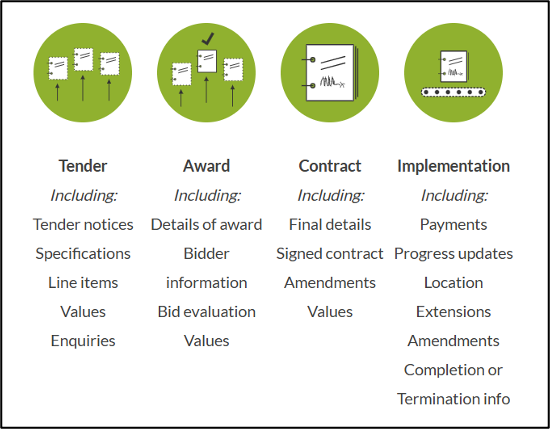
The OCDS requires publishing data in an open, accessible and timely manner on public contracting to engage citizens and businesses to fix problems and delivery results, focusing on the guiding principles. The Open Contracting Partnership is a global partnership that includes members at the national and local levels as well as civil society organisations (CSOs) that work together to co-create action plans with concrete reforms and commitments (OGP Steering Committee 2022). The model below describes how data can be published and standardised throughout the entire procurement process:

Figure 1: Information and data that should be published during the procurement process according to the open contracting data standard

Source: OCDS n.d.

Its release schema provides a more detailed specification of the fields and data structure that should be included when publishing contracting data.

Proactive disclosure of procurement information (also referred to as transparency by default) is recommended by bodies such as the OECD (2015), the Center for Global Development (2019), and Open Contracting Partnership (n.d.). As an example of this. the Information and Privacy Commissioner of Ontario’s guidelines on Proactive Disclosure of Procurement Records (2015) recommends that public agencies and bodies when undergoing public procurement processes should:

  • make proactive disclosure the default by ensuring that institutions’ policies and procedures reflect a corporate commitment to transparency that extends to the creation and maintenance of any process, procedure, system or record that may need to be developed to support it
  • be transparent and upfront about their commitment to information disclosure, making it clear on any forms or instructions that the information received will be made publicly available
  • consult with a broad range of stakeholders about the design of the open procurement process
  • ensure that records are available in a user-friendly manner and assist members of the public with understanding legal and financial elements, if complex
  • and design procurement processes with limited disclosure exceptions in mind; attention should be given to identifying information that may be exempt or redacted from disclosure because it is confidential, was supplied in confidence or could cause harm if released, which may include:
    • trade secrets
    • scientific information
    • technical information
    • commercial information
    • financial information
    • and/or labour relations information (Information and Privacy Commissioner of Ontario 2015)

These considerations should be incorporated into procurement planning and documentation from the outset to ensure appropriate protection of sensitive information (Information and Privacy Commissioner of Ontario 2015).

Additionally, public procurement platforms can be linked to other databases such as beneficial ownership data, company sanctions, politically exposed persons databases and others to ensure all information is integrated and readily available. As an example, some countries integrate beneficial ownership data directly into procurement workflows so that contracting authorities, auditors and watchdogs can identify who ultimately owns the bidding companies.

Identifying beneficial ownership is particularly important for detecting companies that may be used to facilitate illicit activities, including money laundering and the concealment of the proceeds of corruption and other crimes. While many companies have relatively straightforward ownership structures, in which the legal owner directly exercises control and is also the beneficial owner, others are embedded within complex ownership chains spanning multiple jurisdictions. Such opaque structures can be exploited by oligarchs, criminal networks and tax abusers to obscure ownership, evade accountability and circumvent the rule of law (Knobel 2023).

For this reason, integrating beneficial ownership information directly into open procurement platforms is essential. Doing so enables authorities, journalists, civil society organisations and citizen watchdogs to more easily identify and scrutinise suspicious ownership arrangements. A leading example is Ukraine’s Prozorro procurement system, which integrates beneficial ownership data with company registry information and other open datasets, allowing users to cross-reference information and detect potential integrity risks more effectively (Markle 2022).

The state of open data in public procurement

Across regions worldwide, open data on public procurement is becoming increasingly common. For example, the Global Data Barometer found that 41 out of 43 countries31ff1b2cf72d in Africa, Latin America and the Caribbean publish some government procurement data online (Salazar 2025). Chile, Ecuador, Paraguay, Uganda, Mexico, the Dominican Republic and Peru scored particularly high on the assessment of availability of procurement data and governance in the study (Salazar 2025).

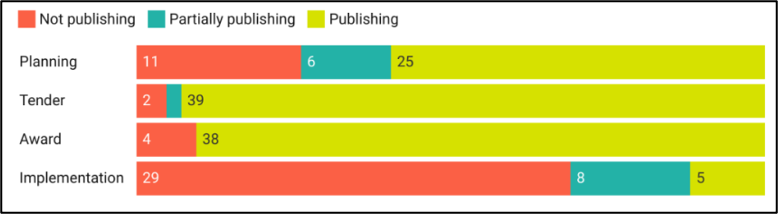
However, while these procurement platforms are available, there are still significant gaps in their implementation and effectiveness. For example, only half of the countries assessed release data in machine-readable formats and only 16 countries make this machine-readable data available as a whole through bulk downloads or APIs5f8e00f41aba (Salazar 2025). Figure 2 below shows that, while the majority of countries assessed publish information regarding the tender and award of a contract, a portion of countries do not publish information regarding the planning of a tender and even less on the implementation of the contract.

Figure 2: Number of countries publishing data at each stage of the public procurement process across 43 countries

Source: Salazar 2025.

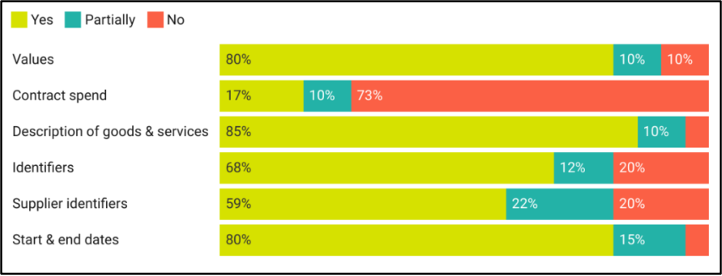
The differences are also wide in terms of the data fields that different governments enter into their procurement platforms. As recommended by the open contracting data standard, data should be available across the tender, award, contract and implementation processes. However, the Global Data Barometer (Salazar 2025) finds that the fields of contract spend, identifiers of the tender and contract, and supplier identifiers are often missing from procurement platforms. Missing this key information would prevent governments and citizens from scrutinising the contracts and identifying corruption risks (OGP n.d.).

Figure 3: Number of countries including data fields in their public procurement data across 43 countries

Source: Salazar 2025.

The risks of open data in public procurement

As noted by the Information and Privacy Commissioner of Ontario (2015), although transparency by default should be the approach of governments and public agencies and bodies, there are several situations when the disclosure of certain information may not be appropriate and even harmful to the data subject. This section provides an overview of these risks and some approaches of how to mitigate these risks.

Personal data risks

Personal data refers to any information that relates to an identified or identifiable living individual (referred to as the data subject) which can be used to identify a particular person (EC n.d.). Examples of this include a name and surname, a home address, an email address, an internet protocol (IP) address, a cookie ID, among others (EC n.d.).

Certain personal data is published on public procurement platforms and in connected beneficial ownership registers when it is necessary, such as the contact details of designated representatives in contract award notices, names of suppliers, positions of contract signatories and the contract value and contract details. Data protection laws worldwide provide the legal basis for how jurisdictions approach the protection of personal data, and the publication of certain personal data without consent or legitimate interest may violate laws such as the general data protection regulation (GDPR) (Alexe and Sandru 2020).

However, the Open Contacting Partnership (2018) identifies this risk and argues that personal data in contracting documents can be disclosed as it is important for transparency in the procurement process and to prevent fraud, that certain personal data can be disclosed without endangering people’s privacy and safety, anonymising or aggregating certain personal data can make it non-identifiable, redactions can be made for sensitive information, and it should be clear to the suppliers what personal data is collected, how it is used, shared and secured. If these measures are taken, then the risks associated with personal data are both minimal and unlikely.

Commercial data risks

Another concern associated with open data in public procurement is that increased transparency may inadvertently facilitate collusion among companies by making bidding behaviour more visible and predictable (OECD 2026: 8). According to the OECD (2026:8), the detailed and timely disclosure of information on bids, bidder identities and procurement outcomes could enable competitors to monitor one another more effectively, thereby potentially supporting the formation and maintenance of cartels and other anti-competitive arrangements (OECD 2026:8).

To mitigate the risks of collusion, the OECD recommends that transparency in public procurement must be embedded within a broader governance framework, which requires a balanced, risk-based approach that differentiates between forms of transparency that enhance participation and accountability (clear procedures, equal access to tender information) and those that might facilitate collusion (detailed and timely disclosure of commercially sensitive information) (OECD 2026:9).

In addition, another argument that is often used by companies against open data in public procurement is that the disclosure of information is counter to commercial confidentiality and that if commercially sensitive information is public then it will damage the company’s commercial interests and undermine competitiveness (Kroon 2016). This could include patents, trademarks, copyrighted material or trade secrets which is defined as “a trade secret may consist of any formula, pattern, device or compilation of information which is used in one’s business, and which gives [the holder] an opportunity to obtain an advantage over competitors who do not know or use it” (Kroon 2016). There are often disputes around what constitutes commercially sensitive information; however, in most countries sufficient evidence of potential damage to the company is required to prevent the disclosure of commercially sensitive information (Kroon 2016). This is assessed against public interest (such as increased accountability) and the two are weighed against one another (Kroon 2016).

Nonetheless, Open Contracting Partnership’s (2018) report counters many of the arguments used against commercial confidentiality. It notes that:

  1. that most commercially sensitive information is not legitimately sensitive forever
  2. it cannot be considered sensitive if the information is already known to competitors
  3. in some jurisdictions, even commercially sensitive information may be disclosed based on a public interest test
  4. the commercially sensitive information argument is over-used; some countries publish their contracts by default without apparent harm (OCP 2018:6)

A final risk associated with open data in public procurement relates to national security. For example, in the defence sector, having transparency may mean that sensitive information on the types and quantities of weapons being purchased or the locations of military facilities will put national security at risk.

Security risks

An analysis of access to information in five countries3cd8217bfa66 found that often the most common obstacle to access information in the sector was the security classification of information (Trapnell and Choo 2024:66). This includes countries having a broad classification regime which led to all information in the defence sector being classified as well as national archive laws that allow for prolonged or indefinite withholding of information (Trapnell and Choo 2024:66). The “public interest” test in the defence sector is absent in a number of countries, which require public officials to weigh the benefit of disclosure against the potential harm to protected interests (Trapnell and Choo 2024:7).

For example, the UK government’s Transforming Public Procurement Learning Manual states that a contracting authority may withhold information that: is classified and requires protection from unauthorised access or distribution; relates to sensitive sites such as military or intelligence service operations; and information relating to critical national infrastructure where loss or compromise could result in serious economic damage to the UK (Government Commercial Function 2024:387).

To help mitigate and balance risks while still considering transparency in defence procurement, the Global Principles on National Security and the Right to Information (2013) (also referred to as the Tshwane Principles) were developed by 22 organisations and academic centres worldwide to provide guidance to those drafting and implementing laws or provisions related to the state’s authority to withhold information on national security grounds or punish disclosure of this information.

They assert the right to information, but Principle 3 outlines the requirements for restricting that right on national security grounds. These include:

  • prescribed by law so that individuals can understand what may be withheld and why
  • necessary in a democratic society, such as posing harm to national security interest
  • and protection of a legitimate national security interest, with the categories of information that may be withheld set clearly in law (Tshwane Principles 2013)

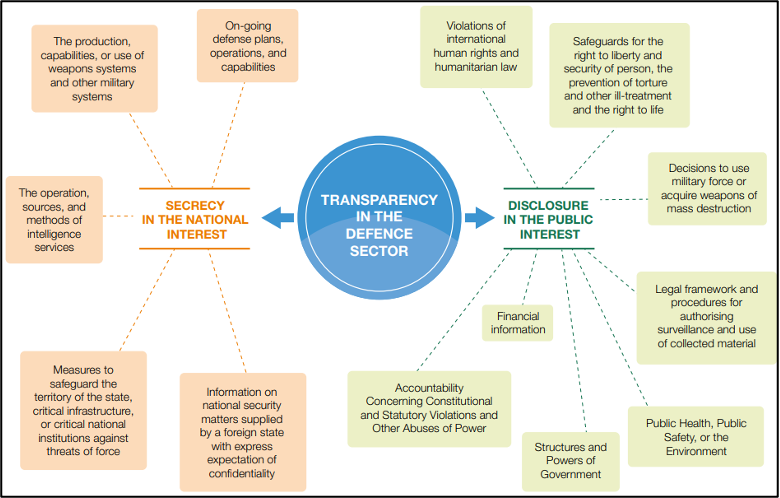
Figure 4 below shows in more detail the grounds for which the principles set out when information should be published for the public’s interest or remain confidential to protect national interest, as illustrated by Trapnell and Choo (2024:16).

Figure 4: Legitimate grounds for withholding or disclosing information according to the Tshwane Principles (2013)

To conclude, the case for greater transparency in public procurement through open data is significant and supported by a growing number of studies on the topic. By increasing public oversight, enhancing competition and enabling the detection of corruption and inefficiencies, open procurement data can contribute to more accountable and effective public spending. At the same time, there are legitimate concerns regarding the disclosure of certain types of procurement information. Depending on the context, transparency may increase the risk of collusion among bidders, expose commercially sensitive information, or undermine public interests in areas such as defence and national security. Public procurement authorities therefore face the task of balancing transparency, accountability, privacy, commercial confidentiality and security considerations when determining what information should be disclosed and in what form. These competing objectives are often reflected in the relationship between public procurement legislation and access to information frameworks.

Country analysis

In the Latin American and Caribbean region, public procurement represents an average of 8% of GDP and roughly 17.4% of total government expenditure (Transparencia Mexicana 2026:18; OECD 2024:98). Corruption, inefficiencies and fraud in public procurement remains a problem in the region, with the Inter-American Development Bank (2018) estimating that around 4.4% of the region’s GDP is lost each year. More recently, CSOs across the region raised the alarm over serious corruption risks in the region’s emergency response to the Covid-19 pandemic, specifically the public procurement process (De Luca and Rajuili 2023).

However, governments are increasingly adopting open data in public procurement to counter these issues. In a 2022 OECD survey, 84% of Latin American and Caribbean countries surveyed used a central e-procurement system in one or more stages of the public procurement cycle (OECD 2024:100); 59% of countries surveyed in the region had integrated their e-procurement platforms with other e-government systems, such as budgeting systems, business and tax registries, social security databases and financial systems for payment (OECD 2024:100).

Additionally, more countries in the region are improving on beneficial ownership transparency and are including this in their procurement systems (De Luca and Rajuili 2023). In 15 of the countries (79%) surveyed by the OECD, there was some form of beneficial ownership disclosure required when registering as a supplier in the e-procurement platforms (OECD 2024:100). Furthermore, 74% of the countries surveyed require public officials to declare that they have no conflict of interest for each public procurement process, and the same proportion of countries limit certain public officials from participating in public procurement opportunities (OECD 2024:102).

This section provides a closer examination of the public procurement systems in five Latin American countries: Argentina, Brazil, Chile, Colombia and Mexico. It looks at the legislative and institutional framework for public procurement, the online procurement systems, as well as how each country balances transparency with personal and corporate confidentiality. To assess the implementation of these platforms and frameworks, it also provides overviews of legal cases where these tensions between data protection and corporate confidentiality and access to information have been brought to court, and what the outcome for these were.

Argentina

Legal and institutional framework

The oficina nacional de contrataciones (national procurement office) is responsible for designing and implementing the policies for the national public procurement system, make improvements to the system and subsystems and draft regulations and rules regarding purchases and contracts (Argentina.gob n.d.).

The national regulation of public procurement includes a number of laws:

The city of Buenos Aires and province of Mendoza apply the open contracting data standard.3fc83fbf197b

Information published across the procurement cycle

The COMPR.AR platform includes supplier information from the Portal del Sistema de Contrataciones Electrónicas de la Administración Pública Nacional and was introduced in 2016 as the primary public procurement platform (de Michele and Pierri 2020). It hosts electronic bidding for public procurement contracts and information about purchasing and contracting for goods and services (de Michele and Pierri 2020).

The COMPR.AR platform is widely considered to be successful, resulting in faster procurement processes and reducing the prices paid in the procurement of off-the-shelf goods by 4% for the Argentinian government (de Michele and Pierri 2020:4).

From inspecting the COMPR.AR platform, it does not currently appear to have an automatic link to the beneficial ownership registry

Privacy and access control in procurement platforms

Law 27.275 on access to public information is the principal transparency framework and established transparency by default. In terms of data protection, the law 25.326 on personal data protection established how personal data is collected and processed and security and confidentiality obligations.

Argentina’s law 27.275 on access to public information applies to a wide range of parties relevant to public procurement, including: the national administration, state-owned enterprises and companies, enterprises and companies in which the national government has a minority stake, concessionaires, permit holders and licensees of public services, business organisations, political parties, unions, universities, any private entity that has been granted public funds and non-state public legal entities in all matters regulated by public law, and with regard to information produced or related to public funds received.

However, the COMPR.AR platform is still bound by the personal data protection law no. 25.326. The platform is therefore aligned to the data protection law, which includes stipulations that consent must be obtained, the owners of the personal data must be clearly informed, no one must be forced to provide sensitive data and the data controller must use the necessary technical measures to guarantee its security.

The following cases include both cases that involve public procurement and, more broadly, on access to information about companies and government agencies. As a trend which can be seen from these following cases, the Argentinian justice sector rules in favour of transparency.

Lisandro Marco Benetti v. Ministry of Social Development

Mr Benetti requested a copy of an electronic file containing background procedural information about a resolution that authorised the emergency procurement of 1,700,000 units of semolina noodles and the awarded contracts to several companies. The ministry denied access to this information, arguing that this was a classified document; however, the agency for access to public information ordered the ministry to give access, stating that the ministry had failed to sufficiently explain the reasons behind the denial (Global Freedom of Expression 2020).

ACIJ v. AFIP (2019–2021)

In 2018, the Civil Association for Equality and Justice (ACIJ) began the administrative process with a request for access to public information from the AFIP (Administración Federal de Ingresos Públicos) to know the number of beneficiaries, their individualisation and the amounts received as additional reimbursements to exports under a tax rebate regime, covered by law 23.018. The Agencia de Acceso a la Información Pública (AAIP) (the access to information authority) ruled against, stating that they had to disclose the information as a matter of public interest and that there was no infringement on tax secrecy as the requested information did not imply that the tax collection agency should reveal “data or content relating to the taxpayer's economic and financial situation, nor declarations or statements made by the beneficiaries to the tax collection agency” (Verbic 2025).

CIPPEC v. Ministry of Social Development

The supreme court ordered the state to release information requested by the Center for the Implementation of Public Policies for Equity and Growth (CIPPEC) from the Ministry of Social Development. This information involved social assistance provided to individuals and legal entities between 2006 and 2007, which had initially been denied. The court argued that the data of the beneficiaries and the content of these programmes did not contain sensitive data and that it was of public interest as it could be used to scrutinise the authorities’ management of public resources (Columbia Global Freedom of Expression 2014).

Brazil

Legal and institutional framework

The principal procurement framework in Brazil is law no 14.133/2021 law on bidding and administrative contracts. This law provides general principles and rules on public procurement, steps and requirements for the contract award procedure, as well as guidelines governing the relationship between the government and private contracted parties (Sant’Anna, Saullo and Lauer 2026). The ministry responsible for public procurement is centralised under the Ministry of Management and Innovation in Public Services.

Other relevant laws include (among others):

  • law no 8,987/1995 provides general rules for public works and services concessions, commonly used for self-sustainable infrastructure projects, such as toll roads
  • law no 10,520/2002 provides rules for an alternative type of procurement process used for the acquisition of common goods and services that the government contracts out on a regular basis; formally repealed on 1 December 2023
  • law no 11,079/2004 which is the legal framework applicable for public-private partnerships (PPPs) and defines them as a type of public concession in which the government engages with a private party to provide public services (sponsored PPP) or the rendering of a service to the government (administrative PPP), which shall demand, in any case, high investments and a long-term amortisation period. The PPP Law was created to attract a new wave of private investments for projects of high social interest, especially in the infrastructure sector, which, in other conditions, would not be economically feasible for the government (Sant’Anna, Saullo and Lauer 2026).

The federal government of Brazil applies the open contracting data standard.

Information published across the procurement cycle

The national public procurement portal (Portal Nacional de Contratações Públicas, PNCP/Compras.gov.br) is managed by the management committee of the national public procurement network and ensures that data from all contracts made by the federal government and by state and municipal governments are centralised and available to everyone (Gov.br n.d.).

It has been integrated with the Cadastro Nacional De Empresas Inidôneas E Suspensas (CEIS), which is the national register of suspended and debarred companies, and the Cadastro Nacional De Empresas Punidas (CNEP), which is the national register of sanctioned companies under anti-corruption laws (Gov.br 2023). However, this literature review did not identify whether it is currently integrated with a public beneficial ownership register.

The procurement system in Brazil is decentralised. Some states have their own procurement platforms (although these must be integrated with the PNCP), and some agencies such as FINEP, CNPq and BNDES post specific tenders (EIC 2025; BMA Law 2021). A new platform called Medicamentos Transparenteshas also been introduced for price comparisons on medicines. In most Brazilian states, vendors are required to register with a state procurement system or obtain a business licence (EIC 2025).

There are mixed reviews regarding the transparency of public procurement in Brazil. One study notes that some municipalities frequently limit data disclosure to the bare minimum necessary required to fill formal mandates and often fail to make the data accessible in an open format which hampers stakeholders’ ability to evaluate the data (Salm Junior et al. 2024).

Privacy and access control in procurement platforms

The access to information framework in Brazil is law no. 12,527which establishes publicity as a general rule and secrecy as an exception. Brazil’s privacy framework is governed under law no. 137,709 which applies to both public and private sector processing of data, noting that consent must be gained and that sensitive personal data should be only processed under specific circumstances.

Under law no. 14.133/2021, the PNCP has adopted an open data format, and its requirements for processing, classification and availability of information falls under the access to information law no. 12,527 (BMA Law 2021). However, there is an “item sigloso” (confidential item) filter on its platform, meaning that there is a level of confidentiality applied to certain contracts, although this literature review could not determine what the eligibility criteria are for this.

Eligibility for suppliers is verified by the unified supplier system (SICAF), and the purchasing body only has access to the identity of the suppliers until after the deadline for submitting proposals has passed. After this, actions under the contract, including signalling effective delivery or completion of the contracted goods and services as well as payment, are published online (PNCP n.d.). The rules for this system are established under instruction normative No.3 of 2018, which also highlights that servers (and employees) holding access passwords to SICAF must ensure the confidentiality and integrity of the system’s data and that sanctions against suppliers can also be recorded in the system (PNCP 2018).

This literature review did not identify any cases involving tensions between transparency and confidentiality in Brazilian public procurement specifically. However, the case below illustrates how the justice sector upheld the principles of transparency and the public's right to access information regarding public employees.

STF, ARE 652.777/SP (2015)

An appeal was filed by the municipality of São Paulo against a decision by the state court that ordered the removal of a municipal public servant’s employment information from the city hall’s website. The supreme federal tribunal upheld the disclosure as constitutional stating that naming public agents and publishing data tied to their public function does not violate private rights, pointing to the access to information law (135 anos 2015).

Chile

Legal and institutional framework

Basic law 19,886 on administrative contracts for the supply and provision of services is Chile’s principal public procurement law. It stipulates that state agencies must make their acquisitions through the public market platform and those that fall under the regulation are ministries, undersecretaries, public services, municipalities, state universities, hospitals and health services, the comptroller general and the armed forces (Chile Compra n.d. a).

In 2023, law 21.634 was amended to further increase the standards of transparency, promote the participation of suppliers (particularly among smaller suppliers) and incorporate new procurement procedures, such as innovation procurement (Chile Compra n.d. a).

In 2024, additional entities covered by the law were added, including the judicial branch, national congress, corporations, foundations and associations of municipal or regional participation, foundations in which the presidency participates and corporations, foundations and associations in which an agency of the state administration participates in their administration or direction and receives transfers of public funds equal to or greater than UTM1,500 ( approximately US$110,774) annually (Chile Compra n.d. a).

The Chilean national government through Chile Compra applies the open contracting data standard (Chile Compra n.d. b).

Information published across the procurement cycle

The government agency Dirección de Compras y Contratación Pública (Chile Compra) was created in 2003 as the institution that manages the procurement platform as a decentralised public service under the Ministry of Finance, with oversight from the president (Chile Compra n.d.). The agency reports that, throughout 2026, a total of 1178 organisations made purchases through its Mercado Público platform, generating a total of 846,400 purchase orders (Chile Compra 2026). Its public tender documents and direct contracting processes and framework agreements comply with the open contracting data standard.

Mercado Público is connected to several datasets including sanctions and exclusion data, which contains information on suppliers that have been convicted of a corruption related offence, money laundering or have faced sanctions for anti-competitive behaviour (Chile Compra n.d.).

Open Opportunities (n.d.) reports that Mercado Público is considered to be a model for e-procurement across the region. It places all government procurement in one place and is a particularly transparent platform with published awards, statistics and analytics. Similarly, Whitfield (2026) also refers to the platform as one of the most transparent procurement systems worldwide.

The government has also recently ratified a new law which improved the public procurement system to include the need to collect and use beneficial ownership data for due diligence purposes (De Luca and Rajuili 2023). As of December 2024, domestic and foreign legal entities are required to disclose their ultimate beneficial owners and administrators as part of their registration service (Open Contracting Partnership and Open Ownership 2025:1). This helps to identify potential conflicts of interest as beneficial ownership data provides information about the ownership and control relationships and allows procurement authorities to identify any potential conflicts of interest (Open Contracting Partnership and Open Ownership 2025:5). Some large suppliers initially refused to provide this information, but their eligibility for public tenders was then restricted (Open Contracting Partnership and Open Ownership 2025:6).

Privacy and access control in procurement platforms

Law no. 20,285 on access to public information establishes transparency as the general rule and creates disclosure obligations and access-rights mechanisms. The law establishes exceptions for privacy, rights of individuals, national security and national interest.

Law no. 19,628 on protection of private life and personal data protection regulates personal data processing by public and private bodies. In 2026, it was updated by law 21,719 which introduced a further legal basis for processing personal data in addition to consent (such as performance of a contract) and additional requirements for processing sensitive personal data (DLA Piper n.d.).

Chile Compra (2025) notes that it has a directive with recommendations on the use of personal data in purchasing processes regarding suppliers’ data, confidentiality, veracity and purpose. It states that personal data should be accurate and up to date, meaning that outdated data is deleted as well as personal data that cannot be established or verified (Chile Compra 2025). The processing of data should only be done in compliance with transparency requirements and that it is responsible for the security of data. Moreover, those who work with the personal data are obligated to keep it confidential and if sensitive personal data is collected then consent must be given (Chile Compra 2025).

In 2025, Chile Compra (2025) announced that it was incorporating a second authentication factor to strengthen the security of state transactions. This includes sending a temporary code to the email address associated with the public market account when accessing their buyer or supplier dashboard and aims to protect users’ digital identity.

The following cases show where the courts have rejected access to information (on grounds of corporate confidentiality and national interests) in public procurement processes but also cases where transparency was the ruling in the context of information on the execution of public contracts.

Subus Chile SA v Council for Transparency (CPLT) (2025)

Subus Chile SA, a passenger transport company, filed a complaint against the Council for Transparency after being denied access to competitors’ economic offers and associated financial information submitted during a public transport tender process.

The court rejected Subus Chile’s claim, stating that the requested information constituted commercially sensitive and strategic business information as an exception to article 21(2) of the transparency law (Poder Judicial 2026). The court stated that releasing the document would affect their property rights over valuable intangible assets and proprietary business methods and their competitive position in the market (CA de Santiago 2025).

Complaint in case rol no. 57,792-2024

A requester sought access to documents related to the public prosecutor’s case management system, including reports prepared by Pragma Informática SA (a computer consultancy), tender procurement documents, contracts and other background material.

The public prosecutor’s office refused to provide this information, arguing that there was an ongoing criminal and administrative investigation and that the documents were exempt under article 21 no. 1(b) of the transparency law, that the documents were covered by confidentiality provisions of article 182 of the criminal procedure code and that the tender documents contained confidentiality clauses.

However, the supreme court overturned the lower court’s ruling and ordered disclosure, stating that the requested documents, while they may have been submitted during administrative or judicial proceedings, did not constitute investigative actions or deliberations prior to the adoption of an administrative or judicial decision, and the technical records did not jeopardise the criminal investigations. They also ruled that there was no evidence that showed harm to commercial or economic interests and that some information about the investigation was already public (Actualidad Juridica 2025).

Santiago court, case no. 578-2024

The Santiago court of appeals upheld a decision by the Council for Transparency requiring the civil registry and identification service to disclose information about the number of identity cards reissued between 2013 and 2023. The court rejected the argument that releasing the data would harm the technology supplier’s commercial interests.

The Council of Transparency ruled that the information should be disclosed as the information only consisted of aggregate numbers of reprinted identity cards, it did not reveal technical secrets, and that the data was generated in connection with the performance of a public contract and a public service. Moreover, the information concerned a publicly known issue regarding identity card chip failures (Diario Constitucional 2023).

Case file no. 46.441-2024

The Chilean supreme court upheld a decision by the Santiago court of appeals that blocked the disclosure of information related to a lithium exploration contract involving CODELCO and its subsidiary. An individual requested information from the undersecretariat of mining concerning the lithium project, which the undersecretariat refused, and the Council of Transparency ruled that the information should be disclosed as it was held by a public institution.

However, this was taken eventually to the supreme court, which ruled that the requested documents contained sensitive commercial information, meaning it fell within the exceptions to disclosure under the transparency law (Actualidad Juridica 2025).

Colombia

Legal and institutional framework

The core legal framework in Colombia was law 80 from 1993, now law 1150 from 2007, which establishes the legal basis for efficiency, objectivity and transparency in public spending. The national public procurement agency (also known as Colombia Compra Eficiente) is the governing body in Colombia for public procurement, and it develops and promotes public policies and tools for government procurement and contracting processes (Agencia Nacional de Contratación Pública n.d. a).

Government entities, institutions and private companies are required to follow the provisions which regulate purchases made and contracts entered into by the government and state owned and private companies (ITA 2026). There are some exceptions to this, when direct contracting is authorised if it is under the threshold, contracts for professional and/or scientific expertise, or emergencies (ITA 2026). A risk allocation (regarding potential risks that could affect contract performance) is also now required to be incorporated into contract specifications, with clearly defined responsibilities for each party (ITA 2026).

The Colombian government applies the open contracting data standard (Agencia Nacional de Contratación Pública n.d. c)

Information published across the procurement cycle

Colombia has two digital procurement platforms, SECOP I and SECOP II. SECOP I is an information repository where state entities are required to publish procurement process documents from contracts (Agencia Nacional de Contratación Pública n.d. e). It functions as an advertising platform for opportunities, and suppliers can view procurement opportunities and obtain information on the procurement processes. Oversight bodies can audit the procurement system, and civil society can monitor the information (Agencia Nacional de Contratación Pública n.d. e).

SECOP II is the transactional platform where entities can conduct the entire procurement process online. Suppliers can view government demand, obtain information on procurement processes, submit bids and manage their contracts; and oversight bodies audit the procurement system. Each account has associated users, and government entities can create, publish and execute electronic contracts at every stage of the process through their user accounts (Agencia Nacional de Contratación Pública n.d. f).

SECOP II publishes information such as process identification numbers, procuring entity name and details, procurement method, description of goods or services, publication dates and deadlines, questions and clarifications, bid submissions, information about awarded suppliers, award values and evaluations, among other information (Ministry of Information and Communications Technologies n.d.). It also contains a function that contains information on company sanctions, disqualifications, fines and contract performance violations (Agencia Nacional de Contratación Pública n.d. b).

After the introduction of SECOP II there was a decrease of 6% in direct contracts in favour of competitive awards in 2019 (Open Contracting 2020). Among national agencies, there was a 16% increase in the average number of bidders (Open Contracting 2020).

As far as this literature review can identify, neither SECOP I nor SECOP II have integrated beneficial ownership data into their platforms.

Privacy and access control in procurement platforms

The main access to information law is law 1712 from 2014, which establishes that all information held by public entities is presumed to be public, open and accessible, and members of the public can request information held on them by public entities. It establishes information that may be withheld, such as that pertaining to defence and national security.

The data protection framework is law 1581 from 2012 which establishes consent, accountability and the rights of the data subject, as well as how to revoke consent and file complaints. It refers to personal data held by both public and private institutions.

SECOP II complies with the regulations on transparency and right to access information as it offers information in an open data format and complies with the OCDS standard (Agencia Nacional de Contratación Pública n.d. c). Its personal data processing policy states that each state entity acquires the status of data controller for personal information (according to law 1581) and that they are responsible for uploading the information in accordance with their own policies (Agencia Nacional de Contratación Pública n.d. d).

One case was identified in this literature review where a citizen requested copies of contracts between private companies and the government. After denial, the court ruled that this information should be disclosed.

Janssen Cilag S.A. v. Tribunal Administrativo de Cundinamarca — Sentencia T-273/23

The companies Janssen Cilag SA and Janssen Pharaceutica NV filed an action for protection after a citizen requested copies of contracts the government had signed with pharmaceutical companies to buy Covid-19 vaccines. The citizen had previously filed a special judicial procedure under Colombia’s transparency law to challenge the initial refusal by the contracting authority, and the Tribunal Administrativo de Cundinamarca ordered disclosure.

Ultimately, the constitutional court ruled that an anti-corruption NGO had already published the contracts and that access to public information is grounded in the principle of maximum disclosure, from article 13 of the American Convention on Human Rights and Universal Declaration (Cotre Constitucional Republica de Colombia Rama Judicial 2023).

Mexico

Legal and institutional framework

The law on acquisitions, leases and services of the public sector and its reforms is the main procurement legal framework in Mexico. The Secretariat of Anticorruption and Good Governance (SABG) is the main authority responsible for procurement and sets the policies, guidelines and standardisation rules.

There are 84 decentralised bodies, three public funds, one state-owned enterprise and two civil associations that carry out their own procurement activities (OECD 2021:18). There has been criticism of the high number of different public procurement procedures across the country, that the regulatory environment is “patchwork” and that it is difficult for small and medium-sized businesses to participate (Transparencia Mexicana 2026).

The Executive Secretariat of the State Anti-Corruption System of Aguascalientes (SESEA) alongside the Municipality of Guadalajara and a number of other public agencies apply the open contracting data standard in their public procurement information online (Open Contracting Partnership n.d.). However, it is unclear whether the federal government’s public procurement information applies the standard.

Information published across the procurement cycle

Compras MX is Mexico’s recent digital procurement platform, which was launched in 2025 as a successor to CompraNet. It is a transactional tool that has fully digitised the entire procurement process for public entities, and all Mexican federal government procurement above the simplified procedure threshold must be published on the platform (Whitfield 2026). It uses the CUCOP (Clasificador Único de Contrataciones Públicas) classification system, which is distinct from common procurement vocabulary (CPV) or North American industry classification system (NAICS) codes (Whitfield 2026).

The platform states that the information it has on suppliers and contractors includes:

  • name or company, nationality or address
  • information relating to the number of the articles of incorporation, its amendments and details of registration in the corresponding public registry
  • and registration with the single registry of suppliers and contractors (RUPC) (Gobierno de México n.d.)

However, this literature review could not identify integration with other datasets, including a beneficial ownership register.

Privacy and access control in procurement platforms

The general law on transparency and access to public information was enacted in 2025 and covers access to information and data protection. The general law on the protection of personal data held by obligated entities was enacted in 2017 and covers personal data and facilitating transparency, including peoples’ rights of access, rectification, cancellation and opposition. The law treats personal data as a distinct protected category while other information may be subject to transparency obligations.

Under the General Law on Transparency and Access to Public Information (2025), information may be classified as restricted if:

  • its disclosure would cause greater harm than the public interest in accessing the information, provided itis directly related to administrative or judicial proceedings that have not been concluded with finality; or
  • would jeopardise the operation or integrity of technological, energy, space, satellite, telecommunications, or defense systems developed, acquired, or operated directly or indirectly by the Federal Government, as well as facilities, infrastructure, projects, plans, or services that are strategic, high-priority, or related to national defense (Gomez et al. 2025).

This literature review identified one case where a private company requested to have its information made confidential after entering into a contract with a government agency, which was rejected by the courts.

Review 752/2019

A private company that entered into a contract with a decentralised body of the Ministry of Agriculture and Rural Development (SAGARPA) was flagged for possible irregularities by the superior audit office of the federation in an individualised audit report published on its website in 2018. Through an amparo9cc31773e120 lawsuit, the company challenged the constitutionality of both articles and argued that the publication of its corporate name violated its rights to privacy, reputation and presumption of innocence.

However, the district judge denied the amparo, ruling that the publication of the work is established in article 79 of the constitution, also referencing article 6 of the constitution which states that the names of private companies that enter into contracts with the government are public information (Lobo 2023).

Conclusion

The Latin American countries examined in this Helpdesk Answer are increasingly treating transparency as the default in public procurement, with most platforms publishing core information across the procurement cycle including plans, notices, tender documents, awards, contracts and purchase orders. Structured publication through central electronic procurement platforms is a strong emerging practice. Argentina’s COMPR.AR, Brazil’s PNCP, Chile’s Mercado Público, Colombia’s SECOP I and II, and Mexico’s Compras MX all show the value of consolidating procurement information in one place, though coverage, interoperability and data quality vary.

These are still aligned with data protection laws, meaning that sensitive personal data is protected, but priority is placed on disclosure rather than confidentiality. This increase of transparency supports monitoring by oversight bodies, civil society and journalists, and can help reduce direct awards and increase competition where platforms are transactional and widely used and is supported by some initial evidence, such as faster procurement processes and reducing the prices paid in the procurement of off-the-shelf goods by 4% for the Argentinian government (de Michele and Pierri 2020:4).

The most promising approaches combine openness with clear access controls. Examples include separating public access from authenticated supplier access, limiting disclosure of supplier identities before bid deadlines, requiring user accounts for observers and suppliers, and using stronger authentication measures such as Chile Compra’s two-factor authentication. Linking procurement platforms to other datasets remains a key good practice but is unevenly implemented; sanctions and debarment data are more commonly connected, as seen in Brazil, Chile and Colombia, while beneficial ownership integration is still limited. Chile stands out for requiring supplier beneficial ownership information for due diligence and conflict-of-interest checks.

Legal frameworks typically recognise both access to information and legitimate exceptions for privacy, commercially sensitive information, national security and privileged information. Court cases across the region show that blanket claims of confidentiality are often rejected unless authorities or companies can demonstrate concrete harm, while commercially sensitive or security related information may be legitimately withheld when justified.

A recurring challenge is the lack of clear, operational guidance on how platforms should protect personal data in practice. Several systems rely on general data protection laws or on contracting entities and users to ensure compliance, but provide limited public information on redaction, pseudonymisation, retention or handling of sensitive attachments. However, resources such as PublishingGovernment Contracts: Addressing Concerns and Easing Implementation (Center for Global Development, 2014) recognise these challenges and propose practical safeguards. These include adopting a presumption in favour of transparency for government contracts while establishing an independent dispute resolution mechanism through which claims for confidentiality can be reviewed by an information commissioner.

Other implementation gaps include uneven use of open and machine-readable formats, limited bulk downloads or APIs, weak links to beneficial ownership registers, fragmented subnational systems, and minimum-compliance approaches that make data technically available but difficult to analyse or compare.

The legal cases across the countries analysed generally show a trend towards supporting transparency over corporate confidentiality. Broadly speaking, the arguments are that disclosure of information is a matter of public interest (ACIJ v AFIPl CIPPEC v. Ministry of Social Development; Janssen Cilag S.A. v. Tribunal Administrativo de Cundinamarca — Sentencia T-273/23). Another common argument is that the information published does not violate private rights more broadly (STF, ARE 652.777/SP; Claude Reyes v Chile).

Another common ruling is that the request for information does not mean disclosing commercially sensitive information or economic interests of a company, meaning that the information can be made public (Complaint in case Rol No. 57,792-2024; Santiago Court, Case No. 578-2024; Review 752/2019).

However, in one case, the court upheld the right to confidentiality, interestingly in a case that involved a state-owned enterprise, CODELCO, a copper mining company (case file No. 46.441-2024). In this case, the supreme court ruled that the requested documents contained sensitive disclosure information, which meant that it fell under the transparency law’s exceptions to disclosure. Another case in Chile upheld the right to confidentiality (SubusChile SA v Council for Transparency), where the court ruled that supplying the information would affect property rights over valuable intangible assets and proprietary business methods and their competitive position in the market.

To conclude, transparency and data protection in public procurement systems should be designed together. Procurement systems are strongest when they publish structured, reusable information by default, apply narrowly tailored and legally grounded exceptions, protect sensitive personal, commercial and security information through clear protocols, and preserve enough openness for public accountability and anti-corruption monitoring.

  1. This is not an exhaustive list of all countries in the region.
  2. An API refers to an application programming interface which is “a set of features and rules that exist inside a software program (the application) enabling interaction with it through software – as opposed to a human user interface. The API can be seen as a simple contract (the interface) between the application offering it and other items, such as third-party software or hardware” (Mozilla n.d.).
  3. Armenia, Guatemala, Malaysia, Niger and Tunisia.
  4. For an overview of which governments implement the Open Contract Data Standard worldwide, please refer to their world map.
  5. Amparo refers to a judicial action to protect an individual or individuals from the acts or omissions of the authorities that violate the human rights and guarantees protected by the Mexican constitution (Mexican.laws n.d.).

References

Transparency International

Cite this publication


Maslen, C. 2026. Balancing transparency and data protection in public procurement. Lessons from Latin America. Bergen: U4 Anti-Corruption Resource Centre, Chr. Michelsen Institute (U4 Helpdesk Answer 2026:20)

Disclaimer


All views in this text are the author(s)’, and may differ from the U4 partner agencies’ policies.

This work is licenced under a Creative Commons Attribution-NonCommercial-NoDerivatives 4.0 International licence (CC BY-NC-ND 4.0)

Photo