After decades of corruption, exacerbated by more than a decade of war, can Syria’s new authorities fulfil its promise to reconstruct using principles of transparency and accountability, and rejecting corruption, cronyism, and bribes?
Blog
Syria’s delicate balance: Performative reform vs. systemic change
While petty corruption and bribery are decreasing under Syria’s transitional administration, its commitment to deeper structural reforms is uncertain.
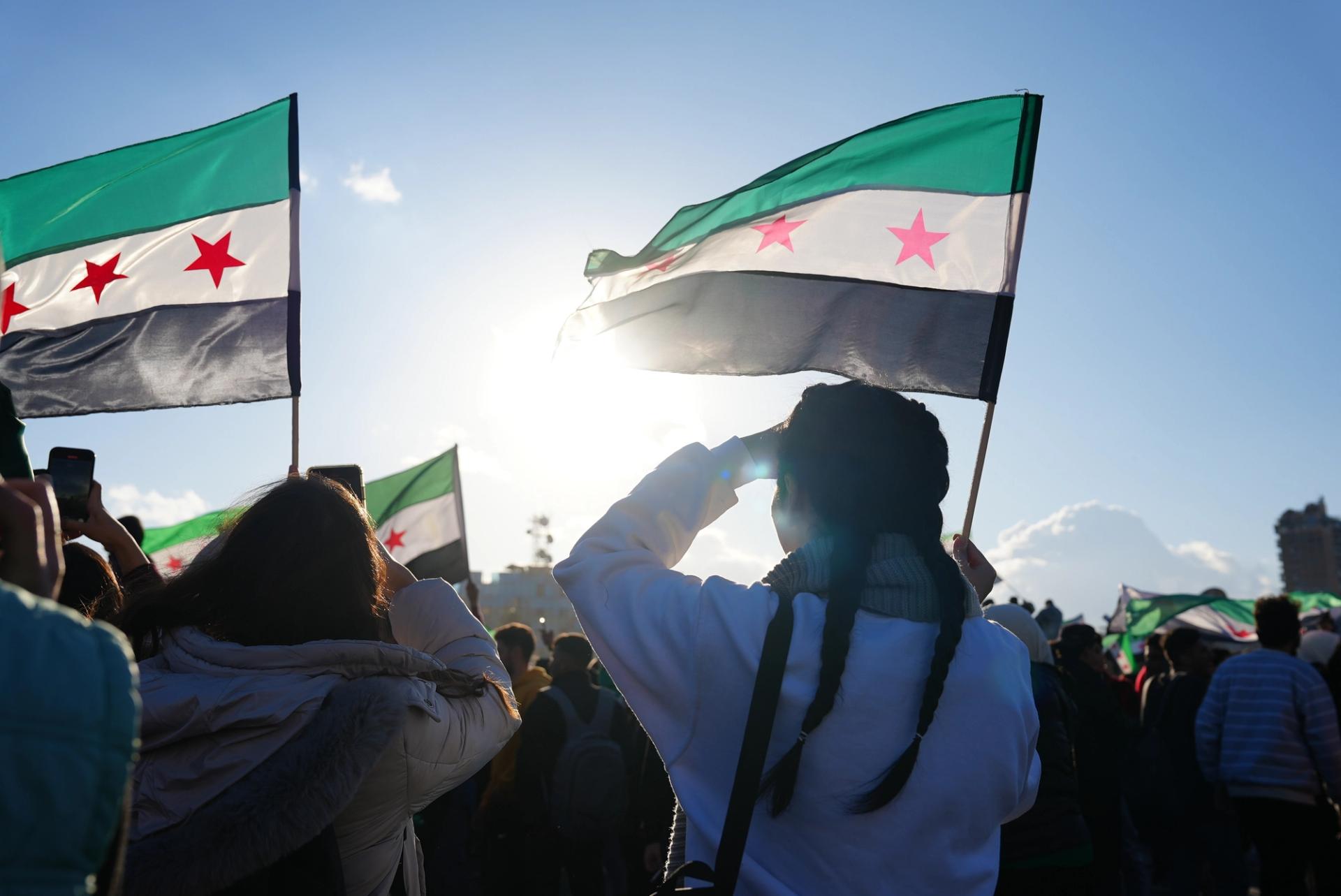
The Syrian Transitional Government has made efforts, throughout 2025, to disrupt Assad-era patronage networks, tackle petty corruption, and reform the security and economic sectors. While these and other moves have been widely publicised and welcomed by international partners, the visibility of reforms is not the same as genuine transparency. Photo:
Mohammad Bash/Shutterstock
COPYRIGHTEDThis blog draws on research conducted for a January 2026 U4 Issue by Abdullah al-Jabassini and Joseph Daher, and on discussions that took place as part of a U4 Partner Forum in December 2025.
It has been over a year since the collapse of Syria’s Bashar al-Assad regime in December 2024 and the assumption of authority by the Syrian transitional government (STG) led by Interim President Ahmad al-Sharaa. While the early period was filled with public enthusiasm and high expectations of rapid transformation, governance has since shifted towards stabilisation, consolidation, and institutional reconstruction.
Credible anti-corruption initiatives are essential for signalling a genuine break with previous modes of governance.
Early decisions on governance and anti-corruption are not cosmetic: the patterns, practices, and polices of anti-corruption adopted during this transitional period will shape the trajectory of state-building in Syria for decades. If corruption becomes systemic at this early stage its later removal will be significantly more difficult. We have seen in other fragile and state-building contexts how opaque decision-making, elite bargains, and practices associated with kleptocratic rule can become entrenched. Credible anti-corruption initiatives are essential for signalling a genuine break with previous modes of governance.
The illusion of progress
In a new U4 Issue Abdullah al-Jabasini and Joseph Daher examine steps taken by the STG to integrate anti-corruption into its agenda. Prominent among these have been the STG’s efforts, throughout 2025, to disrupt Assad-era patronage networks, tackle petty corruption, and reform the security and economic sectors.
While these and other moves have been widely publicised and welcomed by international partners, the visibility of reforms is not the same as genuine transparency. As Daher noted at a U4 Partner Forum in December 2025, the public sees the outcome, but not the process through which decisions are reached. Instead, recent reforms reflect a broader trend in which publicised reforms are unlikely to alter underlying power structures.
The incomplete nature of disclosure undermines trust and may raise questions about whether reforms are substantive or performative.
The security sector provides a clear illustration of this visibility/opacity dynamic. Criteria for promotions and reintegration of defecting officers are made public, but the reasoning behind these processes is not disclosed. The resulting decisions can appear arbitrary: some armed factions were integrated into the new state apparatus without being disbanded; some leaders of armed groups were elevated despite minimal formal education; and other factions have resisted incorporation into the new state. The incomplete nature of disclosure undermines trust and may raise questions about whether reforms are substantive or performative.
Economic governance reflects similar inconsistencies. Customs corruption declined in 2025 and several participants in the Forum reported that systemic bribes at checkpoints have largely disappeared. The price of goods in Damascus dropped after Assad’s deposition when bribery at checkpoints entering the city was abolished.
Nonetheless, systemic problems remain. For instance, the content and selection criteria of the US$27 billion in investment agreements signed by the new government have not been published. Representative positions within chambers of commerce and industry are unelected, with appointments made directly by the STG. Decisions favouring actors linked to the defunct Hayat Tahrir al-Sham group (of which Ahmad al-Sharaa is the former leader) – such as the use of an app called Sham Cash as the vehicle for all state salaries, despite not being recognised as a bank – indicate the formation of new networks of privileged economic actors.
Signs saying ‘Don’t pay bribes’ may hang in administrative buildings, but as one participant at U4’s Partner Forum in December noted, such signs give a false impression of ongoing structural changes.
Precariously balanced
Syria today sits on fragile ground. On one hand, petty corruption has receded, but on the other, strategic opacity surrounding the running of the state has increased. Big-ticket deals and elite bargains risk entrenching next-generation cronyism under the banner of reform. This is particularly visible in the way economic decisions are made in al-Sharaa’s Syria.
On one hand, petty corruption has receded, but on the other, strategic opacity surrounding the running of the state has increased.
Economic stress heightens risks of corruption. Across Syria, salaries may have increased by 200%, but subsidies have been removed and a family of five in Damascus needs US$700 a month to meet basic needs. Most Syrians rely on remittances and if the economic situation worsens, there will be increased incentives for bribery. New networksare already forming around reconstruction contracts and administrative decisions by the government. The re-emergence of businessmen affiliated with the former regime underscores the need for transitional justice that addresses economic crimes.
Scenarios for the next year
The direction of Syria’s governance transition will become clearer over the next twelve to eighteen months, with three broad paths possible.
The first, and most positive, scenario could be called the ‘credible reform path’. This route towards improved governance and anti-corruption would require several commitments from the STG, such as:
- Publication of criteria guiding decision-making
- Establishment of complaints offices linked to the judiciary
- Election of chambers of commerce and industry
- Documentation and publication of subnational consultations by the state.
The second possible scenario – and the one that most closely reflects the STG’s current approach – is a ‘mixed path’: Donors are prepared to accept ambiguity, and elite bargains are consolidated.
Finally, a ‘backsliding’ scenario would see the resurgence of bribery due to fiscal stress and the increased dominance of opaque agreements in reconstruction efforts.
Possible indicators of which path Syria is taking include:
- Disclosure of security-related integration criteria
- Publication of memorandums of understanding and their content
- Release of election timetables for chambers of industry and professional associations
- Formalisation of audit mandates for economic councils.
These indicators give us practical insights as to whether the STG is moving toward accountable governance or toward a new system of elite capture.
Donors must set the tone
The structural issues in Syria are too deep to be reversed through donor conditionality alone, but donors play an important role in establishing expectations and norms. This is particularly the case given that contemporary Syrian elites derive much of their legitimacy from external states. Donor money should be conditioned on transparency processes, civil oversight, effective disciplinary procedures, and basic disclosure in security sector reform.
If anti-corruption efforts are to mean more than words on paper, donors also need to look beyond formal, state-led reforms. Supporting investigative journalism, research centres, and civil society watchdogs, for example – and strengthening their ability to monitor the state – can be a powerful way to promote real accountability. The Tamkeen project in northwest Syria showed how publishing their own financial accounts creates a public demand for integrity and this can be replicated across other regions.
Engaging expertise among the Syrian diaspora can help to offset elite capture and strengthen the credibility of reform.
Donors must remain aware that reconstruction that excludes local participation risks triggering a backlash, as seen in Deraa and Sulamayn. In addition, engaging expertise among the Syrian diaspora can help to offset elite capture and strengthen the credibility of reform. These measures are relatively low-cost but are nonetheless influential in shaping emerging governance norms.
As Daher cautioned during the Partner Forum, Gulf donors – who are significant actors in Syria’s reconstruction process – tend to prioritise stability over good governance and to focus their support on the new ruling elite. This means that European actors are pivotal in setting expectations for transparency. Their engagement can either reinforce performative reform or create incentives for genuine accountability.
Disclaimer
All views in this text are the author(s)’, and may differ from the U4 partner agencies’ policies.
This work is licenced under a Creative Commons Attribution-NonCommercial-NoDerivatives 4.0 International licence (CC BY-NC-ND 4.0)