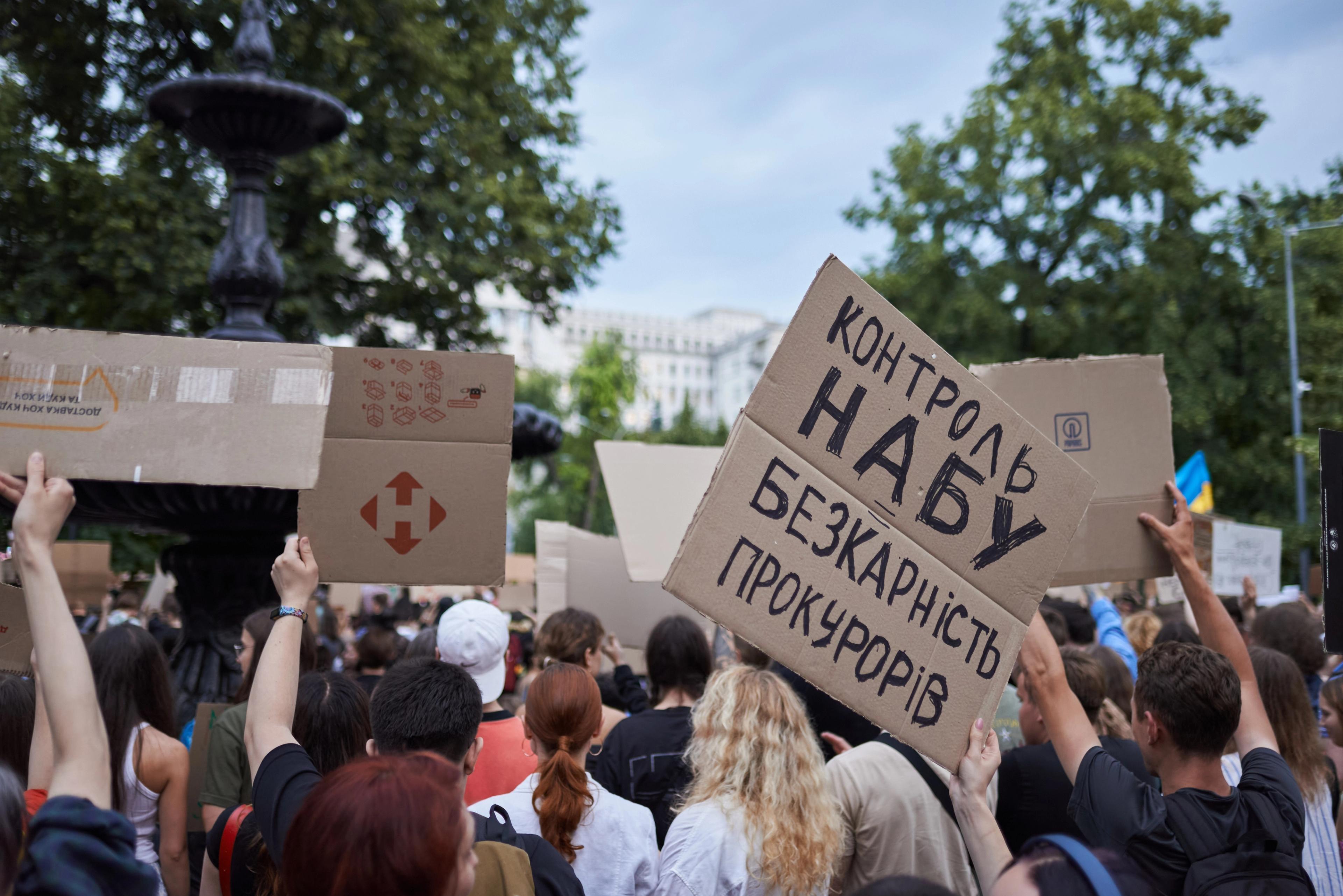
Ukraine’s anti-corruption reforms cannot be understood as a straightforward march towards functioning institutions. Their future depends on who shapes the policy arena and how open it remains.
Blog
Rethinking the politics of anti-corruption in Ukraine – from sandwich to kite
Anti-corruption reform is inherently political. Simplifying political complexity into a basic model can help predict where things are headed – but the model has to actually match reality.
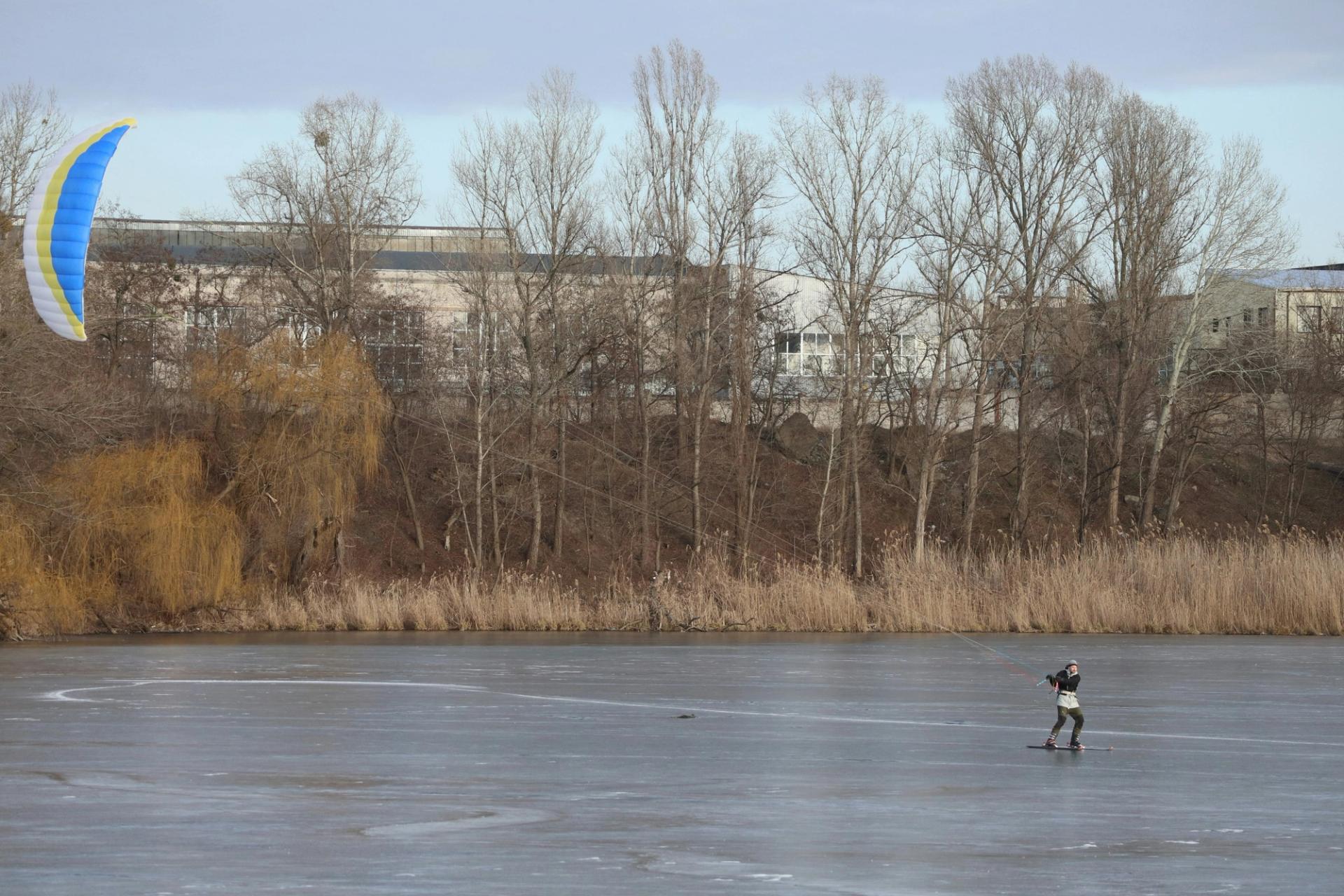
Using the kite model to explain the political economy of anti-corruption reform recognises the active role of Ukraine’s political leadership in setting agendas, controlling resources, and deciding which actors get access to decision making. Photo:
Yevheniia / Unsplash
CC BYFor the past decade, the political economy of Ukraine’s anti-corruption reforms has been compellingly explained through the sandwich model: Civil society organisations and international partners "sandwiched" Ukraine’s political leaders, influencing from below and above. Civil society organisations did this through sharpened monitoring tools, expert advice, and collaboration, as well as argumentation and advocacy in the media. International partners exerted pressure mostly through political and financial conditionality but also through persuasion and technical capacity. When the two sides of the sandwich worked together effectively, Ukraine’s political leaders had strong incentives to adopt reforms.
The sandwich stabilised as much as possible the reform process and helps explain an important part of Ukraine’s reform story since 2014, especially the formal adoption of new rules and regulations. But Ukraine has changed, and the test of anti-corruption reforms have gone beyond formal adoption to implementation and impact. The sandwich needs updating. My latest U4 Issue on Ukraine’s anti-corruption future, written together with Oleksandra Keudel and Oksana Huss, proposes a kite model instead, which builds on the sandwich model in two ways.
Kites have executive power front and centre
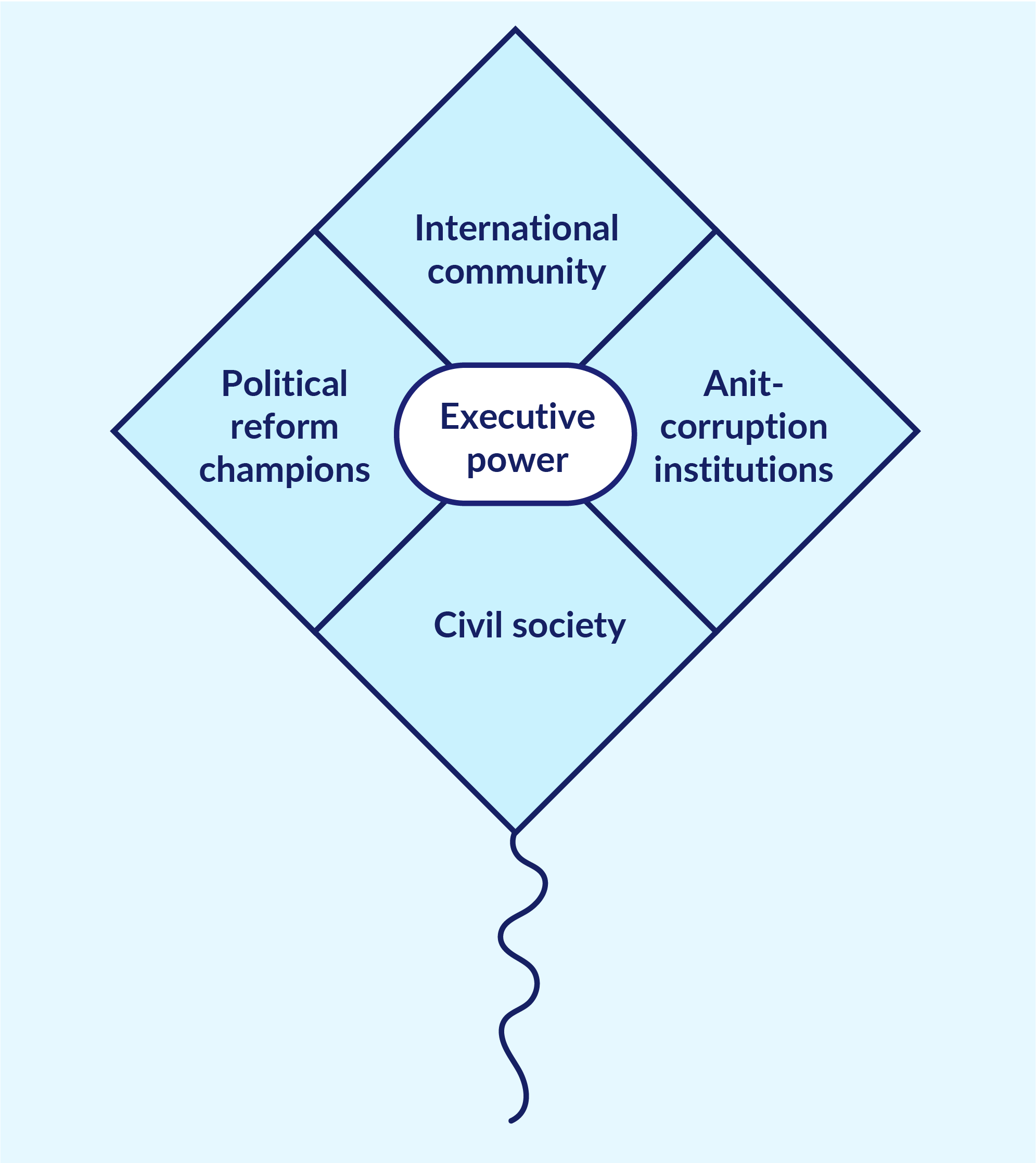
First, the sandwich model assumes Ukraine’s domestic political leadership is somewhat passive in regard to reforms – they are subject to pressure, but don’t exert any back. The kite model questions this and puts Ukrainian domestic executive power in the centre as the essential determinant of reform progress. The kite model recognises the active role of Ukraine’s political leadership in setting agendas, controlling resources, and deciding which actors get access to decision making. This is especially important in wartime Ukraine, where executive coordination has grown since Russia’s full-scale invasion.
Influencing the executive is done by more than civil society and international partners
But we don’t just reassert the role of executive power. The second main update to the sandwich model is that we recognise that as Ukraine’s anti-corruption approach has matured, new reform constituencies have emerged that have their own forms of influence. These are the specialised anti-corruption institutions and reform champions within the Verkhovna Rada – the Ukrainian parliament.
Specialised anti-corruption institutions in Ukraine have developed their own centre of gravity.They can use strategies and tactics to assert their own independence. This is a common trajectory for enforcement and judicial institutions across the world: once they gain teeth, they start being targets of attempts to curtail their power. As a response, anti-corruption organisations build legitimacy, form alliances, mobilise support and resist external pressure.
Ukraine provides clear examples of specialist anti-corruption institutions constructing a political base that can influence the way reforms play out. The National Anti-Corruption Bureau and Specialized Anti-Corruption Prosecutor’s Office can generate evidence, raise the political costs of corruption, and build support among civil society, citizens, and international partners. Their response to attempts to weaken their independence in 2025 showed this agency in practice. Rather than yielding to political pressure, these agencies leveraged public opinion, institutional partnerships, and international norms to challenge legislative encroachment.
Meanwhile, reform champions matter because change is not produced only by pressure on government. Ministers, parliamentarians, mayors, and officials can use positions inside the state to build coalitions, introduce new ideas, and make reforms work. Ukraine’s experience since 2014 shows the importance of these internal reform constituencies. Reform-minded politicians and officials have helped push legislation and demonstrate that different ways of governing can work. The kite model therefore treats reform champions as an independent source of political will, not simply as allies of civil society or international donors. Their position can be fragile, however, especially when reforms threaten established interests.
Figure 3: The kite model offers a new way to conceptualise political influence around the executive
How to keep the kite flying in Ukraine
Does this matter in practice? Yes, because our practice is shaped by our mental models of how politics works. The sandwich model certainly influenced practice. When reforms stalled in the past, the response was often to strengthen the sandwich: boost international conditionality, give civil society a greater formal role, or improve cooperation between the two.
The kite model can help us understand how that dynamic has changed and new ways political will for anti-corruption reform can be sustained in Ukraine.This may become an increasingly important question. As anti-corruption reforms in a country advance, they can become more politically sensitive – since reforms may start to threaten political interests and off-the-books ways parties raise money.
Sustaining political will takes deliberate effort, alongside the work of identifying the right interventions. In the paper, we show that three main mechanisms influence the executive’s political will: capacities, incentives, and ideas.
Political reform champions can shape the ideas surrounding anti-corruption – framing it as part of effective state-building, democratic resilience, and Ukraine's national development.
So, while the sandwich showed the power of coordinated pressure between the international community and civil society, the kite helps us see how a wider constellation of actors can influence the executive in different ways. Ukraine's specialised anti-corruption institutions influence political will through investigation, enforcement, and the production of evidence and data, raising the potential costs of both corrupt behaviour and political interference with the anti-corruption system.
Political reform champions can shape the ideas surrounding anti-corruption by framing it not simply as an externally imposed compliance requirement, but as part of effective state-building, democratic resilience, and Ukraine's national development.
New practical entry points are therefore revealed. However, there are limits to what the kite explains. The kite model is a political economy of reform rather than an attempt to explain how corruption works in Ukraine and the extent to which corruption is more transactional or systemic. Updating how the war has re-shaped the nature of corruption may be equally important because it helps anticipate who may provide the headwinds that compels the kite to crash land.
Disclaimer
All views in this text are the author(s)’, and may differ from the U4 partner agencies’ policies.
This work is licenced under a Creative Commons Attribution-NonCommercial-NoDerivatives 4.0 International licence (CC BY-NC-ND 4.0)