In conflict settings, aid agencies operating cross-border face challenges to monitor aid use and impact, thus needing strategies to handle the inherent political, fiduciary, and human risks.
Blog
Aid under constraints: Potential integrity risks in Gaza’s humanitarian system
Gaza’s institutions, social norms, and humanitarian structures face potential novel risks. However, the long-established aid system of UN agencies, international NGOs, and local organisations still offers an effective route to recovery.
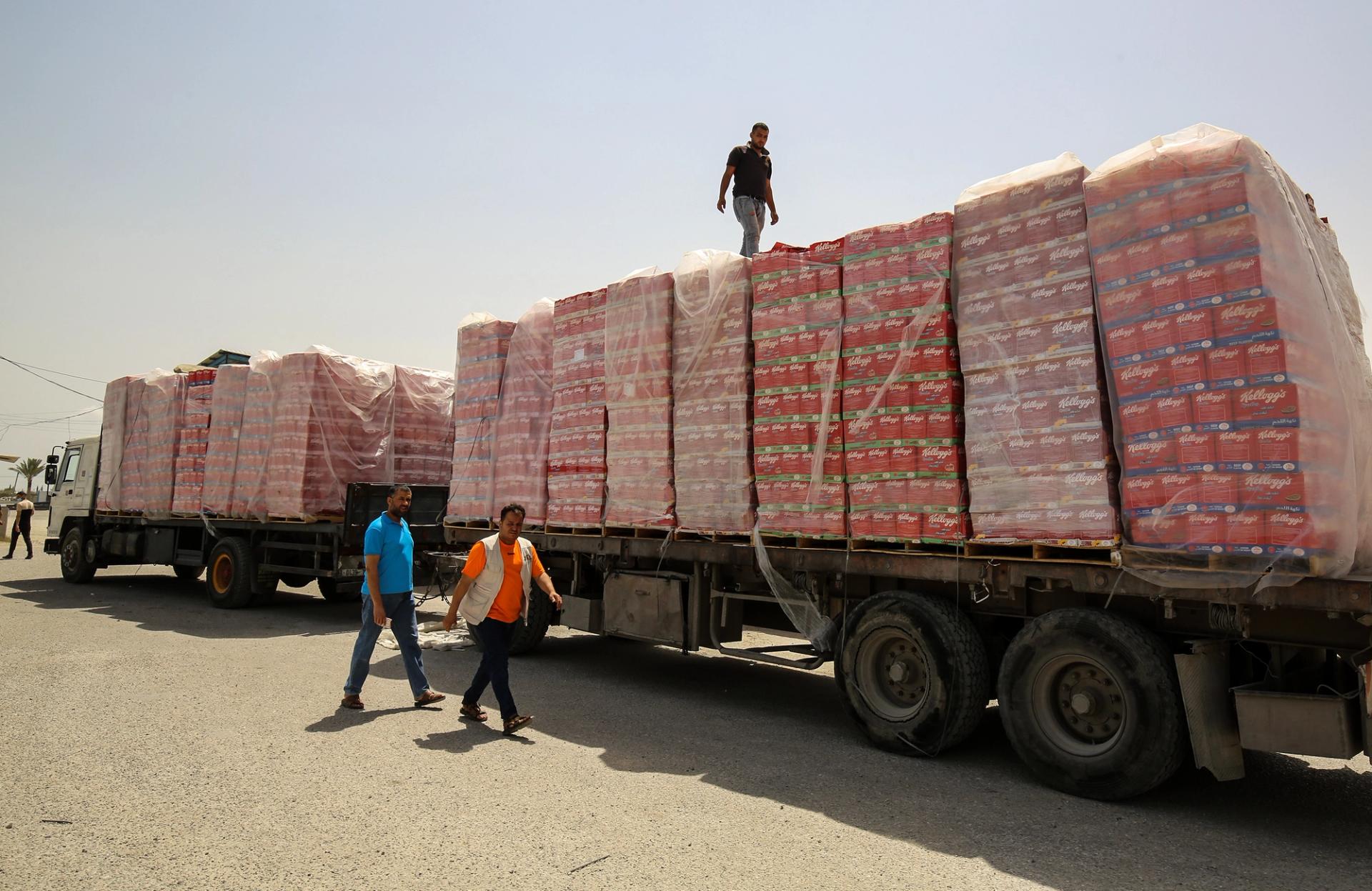
The international community must help construct a legitimate delivery architecture that is resilient to access constraints, places community agency at the centre, and reduces Gaza’s dependence on a humanitarian model shaped by external control. Photo:
Anas-Mohammed/Shutterstock
COPYRIGHTEDWhile the 20-Point Peace Plan for Gaza has contributed to an upturn in humanitarian relief, fundamental questions remain about how aid will be delivered and by whom. While the Civil-Military Coordination Center (CMCC), established by the US military, seems to be asserted as a central organising mechanism, the long-established constellation of UN agencies, international NGOs, local organisations, and community groups is still likely to play a role within aid delivery (from here on we refer to this as the ‘the established aid system’).
This blog argues that constraints on aid delivery, combined with the devastation to Gaza’s social, economic, and material infrastructure, could generate new integrity risks for humanitarian assistance. Crucially, these risks are not about diversion to Hamas or organised armed actors. Instead, they arise from the coping strategies of crisis-affected individuals, households, and informal groups operating under extreme stress, scarcity, and uncertainty.
New integrity risks arise from the coping strategies of crisis-affected individuals, households, and informal groups operating under extreme stress, scarcity, and uncertainty.
Where aid flows are unpredictable, access is intermittent, and basic governance and social systems have collapsed, people may seek to divert, manipulate, exchange, or hoard aid as a rational response to insecurity. At the moment, without a clear picture of what is happening, these risks remain hypothetical. Nevertheless the aid system should at least anticipate and prepare for these.
While UN agencies, international NGOs, local organisations, and community groups face extreme pressure from the Israeli authorities, this blog argues it is that constellation that is best placed to deal with those new integrity risks. Able to draw on decades of know-how, the established humanitarian delivery system has the experience and tools to minimise the impact of those new risks. Barring or placing constraints on these organisations will only worsen the problem.
Even so, a health check of the ‘established’ integrity system is needed and this blog makes suggestions for how to approach such an assessment.
Fragmented aid in Gaza
Despite some recent improvements after the ceasfire, humanitarian aid in Gaza is still characterised by intense fragmentation and strain. Evidence suggests citizens of Gaza have experienced sites of humanitarian aid as arenas of trauma and insecurity.
All humanitarian assistance to Gaza enters, exits, or moves internally under the control of the Israeli authorities, who regulate crossings, inspections, convoy approvals, and movements of goods and personnel. Aid convoys and medical shipments are frequently delayed and restricted, fragmenting the supply chain and creating a patchwork of delivery efforts.
Logistical and security barriers to aid delivery in Gaza are severe. Widespread destruction of infrastructure, including key highways and transport corridors, has limited the movement of humanitarian supplies. These challenges are intensified by the closure of border crossings and an acute shortage of fuel, both of which are vital for powering vehicles, generators, and essential relief operations. Ongoing insecurity further endangers both humanitarian staff and civilians, with hostilities restricting access to affected populations.
Crises change people’s behaviour, creating new risks
Fragmentation of aid is a determinant of integrity risks and should be analysed as such. When aid can only be delivered unpredictably and under high stress, crisis-affected populations may seek to divert or hoard aid as a coping mechanism.
Desperation creates a space for new behaviours. Corruption scholars have long emphasised how survival imperatives can reshape moral reasoning: rule-bending may be reframed as a legitimate or even altruistic response to scarcity. Social psychologists have pointed out that social fragmentation is associated with disengagement from established norms, including fairness and solidarity. Exposure to violence may lead to greater tolerance of aggression.
As repeat behaviours become new norms, the scope for the manipulation and diversion of aid – stealing, reselling, defrauding, misdirecting – will widen. Selling or redistributing aid could become widely seen as coping, not misuse. Some forms of aid will also be more vulnerable, especially where there are chokepoints in the system. Aid delivery may become chequered by ‘micro-capture points’: small, localised sites where aid becomes particularly vulnerable (shelters, informal settlements, temporary warehouses).
As repeat behaviours become new norms, the scope for the manipulation and diversion of aid – stealing, reselling, defrauding, misdirecting – will widen.
To be clear, such forms of behaviour need to be understood, not moralised. Anthropologists have long argued that moral judgements should not be allowed to distract from a clear-sighted understanding of practices around corruption. From the outside, diversion or manipulation may seem like deception, cheating, and unprincipled. But such behaviours are less about opportunism than they are actions into which distressed and stricken people are pushed as means of survival; a forced departure from solidarity; symptoms of an aid system operating under high external duress and internal fragmentation. Indeed, a core task for aid delivery systems will be to distinguish between adaptive behaviours and outright selfish manipulation.
Due to the difficulties in gaining a clear picture of what is happening in Gaza, there is not much evidence to suggest that these risks are becoming realities. Even so, it makes sense to be sensitive to these possibilities and plan accordingly.
Building on decades of experience and integrity infrastructure
One way of anchoring planning in such a chaotic situation is to go back to basics: for the humanitarian delivery architecture to reflect on how to uphold core humanitarian principles.
The possible behaviours described above jeopardise impartiality, which is in essence about delivering aid to those who need it most, without regard to social standing. No preferential treatment, no distortions – these are building blocks of integrity more broadly. Anti-corruption scholars have argued that impartiality is the opposite of corruption.
No preferential treatment, no distortions – these are building blocks of integrity more broadly. Anti-corruption scholars have argued that impartiality is the opposite of corruption.
While Gazan society has shown remarkable resilience, it is important to examine whether these risks to integrity may evade existing oversight and verification mechanisms.
The UN-anchored system has, over a number of years, developed a multilayered defence, combining internal controls (audit, vetting, standard operating procedures), technological tools (digital registration, vouchers), information loops (real-time monitoring, e-payment tracking), and community feedback mechanisms (hotlines, meetings) – all grounded in basic principles (humanitarian and need-based, using impartial assessments).
The table below is a non-exhaustive summary of the myriad interventions aiming to ensure that aid reaches those who need it most.
| UN agencies and coordination bodies | International NGOs (INGOs) | Local partners and civil society | |
|---|---|---|---|
|
Core agencies involved |
|
|
Local NGOs, committees, charities, youth groups, municipalities |
|
Policies and practices |
|
|
|
| Monitoring and oversight |
|
|
|
| Community engagement and feedback |
|
A full analysis of this system is beyond this blog’s parameters, but broadly speaking this plethora of interventions aligns with best practices in the humanitarian sector and should form the basis of discussions around how to prevent opportunist diversion in the new context of Gaza. While no humanitarian aid delivery system in the world can be free from diversion, the integrity system seems to have been operating to good effect in difficult conditions.
Most important: that system has proved that it adapts and learns on the go. The system’s adaptive capacity reflects institutional memory, especially UNRWA’s accumulated operational knowledge. Past know-how informs new designs. As the conditions for humanitarian aid in Gaza have changed, self-reflection is needed more than ever.
Weakening environmental conditions for integrity architecture
Integrity tools are not self-executing but rely on certain enabling conditions. Being alert to how those conditions are fundamentally altered is part of directing aid to a more stable future for Gaza. These conditions will vary geographically within Gaza, but overall we can distinguish between four different types of fragmentation – physical, institutional, social, and epistemic – that influence the effectiveness of integrity policies:
- Physical fragmentation (mass urban and infrastructure destruction) is where the basic material foundation of some anti-manipulation policies has been eroded: internet, electricity, and feet on the ground. This can affect digital registration and smartcards/e-vouchers (eg SCOPE), as well as hotlines and whistleblowing that depend on coverage.
- Institutional fragmentation refers to institutions fragmenting in such a way that underlying norms cease to be a strong guide for behaviour. Examples include the weakening capacity of UNRWA, municipalities, international aid organisations, and civil society organisations. As Philp notes, in these settings ‘the future is cheap, the present is everything…’. When people feel the future does not matter, they become less invested in their reputation, their standing, and their legitimacy – and hence in the propriety of their conduct. Overarching policy frameworks such as standard operating procedures, procurement control, and anti-fraud policies may not bite as before. Interventions relying on positive norms, such as community feedback and codes of conduct may be weakened.
- Social fragmentation also reduces the effectiveness of integrity policies. People are often far from their original neighbourhoods and community committees. Community validation of public beneficiary lists, community committees, and informal oversight may all be affected. Also compromised are informal verification networks (women’s committees, neighbourhood elders, camp focal points), which have long served as soft integrity mechanisms.
- Epistemic fragmentation occurs when information networks have been under huge pressure. When situational data is incomplete, outdated, or distorted, aid actors can lose sight of real needs and vulnerabilities. Many checklist tools, such as e-payment tracking and market assessments, are difficult to implement.
Reasserting integrity
The established aid-delivery system faces a double bind: the very same structural conditions that create new risks also weaken the systems that prevent diversion. The most fundamental approach to managing risks should be structural: the international community must help construct a legitimate delivery architecture that is resilient to access constraints, places community agency at the centre, and reduces Gaza’s dependence on a humanitarian model shaped by external control.
Further thinking on how to ensure the resilience of the integrity system in Gaza should be led by practitioners and communities that are currently, laudably, organising aid in very difficult circumstances. Reform should use the proven know-how of the existing system (the UN-INGO-CSO-community groups constellation) as a foundation of aid delivery. Adaptation must avoid creating systems that unintentionally legitimise or internalise externally imposed restrictions, especially those controlling aid corridors or limiting movement. It should revolve around the humanitarian imperative: the fundamental ethical obligation to prevent and alleviate human suffering.
Support could mean developing decentralised and continuity-supporting verification systems, supporting municipalities and community structures in ways that reflect Gaza’s altered social geography, rebuilding information flows in low-tech or hybrid formats, and diversifying entry and distribution channels.
Distinguishing between coping mechanisms and manipulation is essential for designing integrity responses that do not criminalise distressed populations or incentivise punitive donor practices.
A further principle is to develop a clear picture of what is happening. In conflict contexts, Jackson and Mijad argue that where authority is fragmented, the dynamics of aid allocation and delivery are heavily influenced by hyper-local dynamics, personalities, and politics. In order to reinforce the anti-capture system, it is vital to develop micro-level understandings of communities. From Syria we know resilience in humanitarian aid emerged from local actors intimately familiar with the social context of their communities, a position that allows responses to develop from nuanced perspectives. Ultimately, this knowledge should be aimed at producing recommendations using ‘risk maps’ at each stage of the aid delivery chain. Access chokepoints controlled by Israeli authorities represent the highest-risk stages and must be explicitly factored into risk assessments.
In order to reinforce the anti-capture system, it is vital to develop micro-level understandings of communities.
Distinguishing between coping mechanisms and manipulation is essential for designing integrity responses that do not criminalise distressed populations or incentivise punitive donor practices.
European donors should assess developments in close collaboration with Turkish, American, and Gulf aid delivery networks, each learning from one another to share red flags and vulnerabilities. Solutions will come from honest and careful analysis. A deficit of good faith between aid actors in Somalia suppressed a discussion on what to do about diversion.
An over-emphasis on tracking, planning, and monitoring (TPM) may make donors feel like action is being taken in the short term, but ultimately strengthening local structures may be the most sustainable anti-capture route. TPM may be hindered by a lack of detailed contextual knowledge, leading to either over-positive or under-nuanced monitoring. Models of reinforcing community monitoring of aid exist and can protect individuals from repercussions. Emerging best practice in areas such as track and trace and digitalisation can be drawn upon.
Revisiting ‘do no harm’ principles in the current situation is crucial. Aid can have unintended effects in conflict zones, including risking violence. Do-no-harm analysis must also consider how aid interventions might reinforce or normalise occupation structures, including dependence on single chokepoints or security providers linked to coercive actors.
The cost of inaction: Corruption as a social order
The risk of inaction is huge. For this we can heed lessons from elsewhere. We need to be aware just how quickly ‘ecosystems’ of manipulation can emerge in critical sites of humanitarian aid, especially in displacement camps. A confidential (leaked) 2023 UN investigation found widespread theft of food and cash aid in camps for internally displaced people in Somalia. The UN report concluded that an entire network benefited: camp owners, local authorities, corrupt humanitarian staff, and security forces all colluded in stealing aid. In north-west Syria newly installed armed groups entrenched power by apparently installing allies to run camps.
Attempts at aid capture can sow violence and division. Research by CDA found that within Mosul’s eastern neighbourhoods, liberated from ISIS in 2017, diversion manifested on a ‘hyper-local level’ with some streets divided by two or three checkpoints, each operated by a different faction. Nearly forty nascent patronage networks and armed groups vied to establish schemes to siphon resources, including development aid.
These examples show how small-scale diversion can metastasise into more systematic and nastier forms of coercion and control over communities, forging an architecture of disorder: competing factions, shadow markets, and violence.
Gaza may be different from those places. Indeed, Gazan society has remained remarkably resilient. But communities still face deep-seated insecurity despite the ceasefire. Israeli forces also remain deployed in over half of Gaza.
The setup of the Gaza Board of Peace will be announced soon. European donors in particular all have a duty to demand humanitarian principles of aid are upheld in whatever structure emerges, starting with integrity, as a way to make sure aid reaches those who need it most.
Disclaimer
All views in this text are the author(s)’, and may differ from the U4 partner agencies’ policies.
This work is licenced under a Creative Commons Attribution-NonCommercial-NoDerivatives 4.0 International licence (CC BY-NC-ND 4.0)
Keywords
fragile states, humanitarian assistance, humanitarian crisis, Israel, integrity, integrity management, integrity building, social norms, war and conflict, UN – United Nations, UNWRA – United Nations Relief and Works Agency for Palestine Refugees in the Near East, Gaza, Palestine, MENA – Middle East and North Africa