The six countries sharing the Mekong River Basin have governance systems that reinforce corrupt behaviour. This affects choices for regional cooperation on natural resource governance.
Blog
Re-centering anti-corruption in resource frontiers
Well-intentioned green initiatives can risk inadvertently becoming mechanisms for marginalisation.
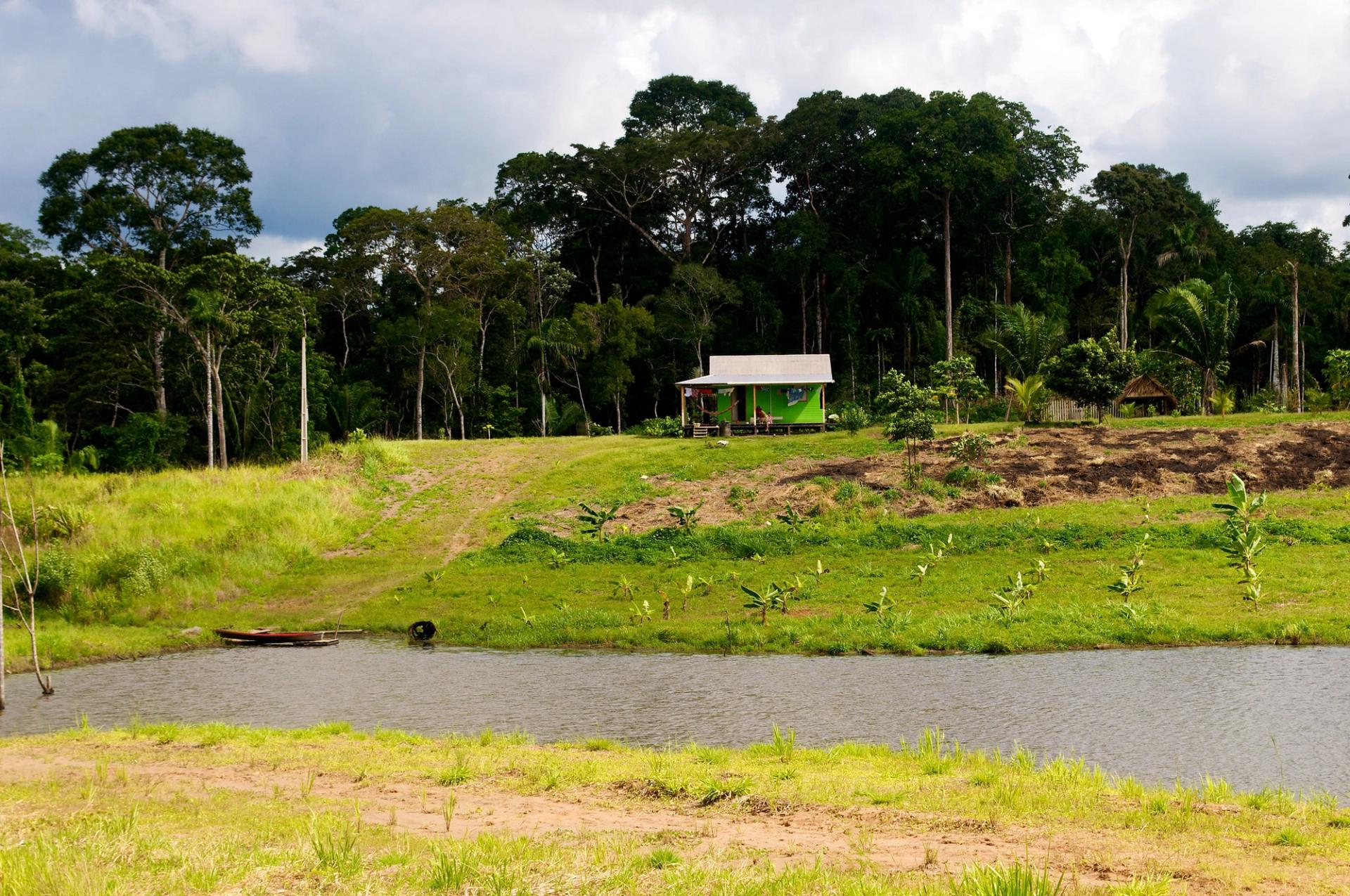
To protect Indigenous and community rights, anti-corruption efforts must focus on strengthening tenure, legal empowerment, and human security. Photo:
Kate Evans/CIFOR
CC BY-NC-NDAnti-corruption approaches in natural resources typically focus on promoting transparency, accountability, and participation – through disclosure initiatives, citizen engagement, and oversight mechanisms. Yet growing evidence shows that these approaches often fall short, failing to confront the deeply embedded, context-specific power relations and decision making that drive corruption in natural resources.
Nowhere is this more evident than in resource frontiers – shared landscapes such as borderlands, forests, and pastoral rangelands located at the geographic margins of the state – where governance is often fragmented and contested. Anti-corruption is frequently insufficiently adapted to the specific challenges of law and governance in the world’s resource frontiers.
A new Special Issue in Political Geography we’ve convened argues that corruption isn't just a byproduct of lawlessness or governance failure in these regions; it is often a foundational tool that is deliberately used to create new legal and territorial orders.
Evidence from the Special Issue shows that, for Indigenous and pastoralist communities living in or near resource frontiers, corruption isn't usually just about missing funds or benefits – it is a direct, often existential, threat to their land, livelihoods, and security.
The erasure of Indigenous rights
In resource-rich areas, the state’s own legal infrastructure can be ‘hijacked’ to facilitate dispossession.
In the Brazilian agricultural frontier, for instance, a contribution to the Special Issue highlights the concept of ‘selective legibility’. This involves the deliberate manipulation of administrative records to make Indigenous land claims ‘invisible’.
By burying these claims in bureaucratic opacity, state officials are shown to have created a ‘legal truth’ that the land is vacant and available for agribusiness and investment.
The ‘green grabbing’ paradox
Well-intentioned green initiatives can also risk inadvertently becoming mechanisms for marginalisation.
In Peru, formal tools like forest transport permits have been used to ‘launder’ illegal timber stolen from protected indigenous territories, transforming illicit logs into legal global commodities.
In Kenya, non-state actors, acting as a ‘shadow state,’ have bypassed the Community Land Act to convert communal lands into conservation areas, thus securing territory for carbon markets and high-end tourism at the expense of pastoralist livelihoods.
In Tanzania, large-scale climate projects (including REDD+) have shifted accountability upwards to development partners and elites, excluding smallholder farmers and Indigenous voices from forest management.
Participation dilemmas
Resource frontiers are often characterised by limited state presence and capacity. In response, donors and NGOs have increasingly promoted participatory approaches and social accountability. Participatory safeguards, such as Free, Prior and Informed Consent (FPIC), strong regulatory frameworks, and collaborative governance have long been used to try to strengthen the social contract between states and citizens.
Yet evidence from the Special Issue suggests these measures do not automatically improve governance. Participatory safeguards can result in surface-level compliance, where formal requirements are met without shifting decision-making power. In Kenya, participatory processes in community land reforms have, in some cases, reinforced existing inequalities when captured by local elites and their networks, shaping both control over the process and how benefits from communal natural resources are distributed.
Re-centering anti-corruption in resource frontiers
The articles in the Special Issue together confirm that technical fixes and monitoring technology aren't enough if they don't address underlying power imbalances that shape whose rights are recognised, how decisions are made and prioritised, and who ultimately benefits from them.
To truly protect Indigenous and community rights, anti-corruption efforts must focus on:
- Strengthening tenure: Hardening land and nature rights against manipulation.
- Legal empowerment: Strengthening the capacity of communities to engage with formal institutions, including supporting strategic litigation and advocacy to help communities contest land grabs.
- Human security: Recognising the high stakes, Global Witness documented 146 land and environmental defenders murdered in 2024 alone, many of whom were protesting corruption.
Corruption in resources frontiers is often the ‘cartographic ink’ used to redraw the map in favour of the unscrupulous.
Protecting the world's remaining natural wealth requires exposing ‘legalised abuses’ and re-centering the rights and aspirations of those who have stewarded these lands for generations.
Disclaimer
All views in this text are the author(s)’, and may differ from the U4 partner agencies’ policies.
This work is licenced under a Creative Commons Attribution-NonCommercial-NoDerivatives 4.0 International licence (CC BY-NC-ND 4.0)