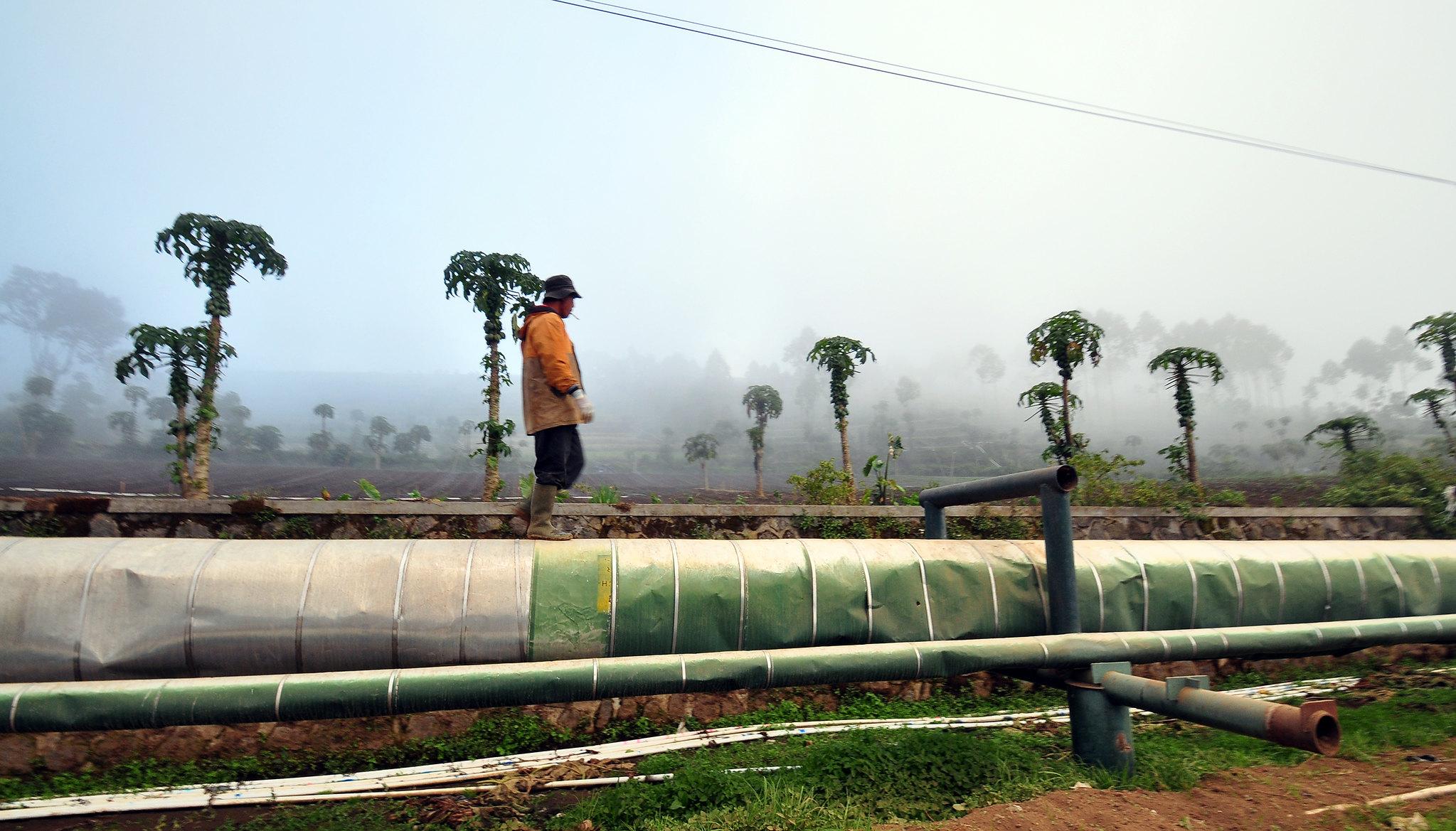
Corruption and conflicts of interest are undermining Indonesia's energy transition — but stronger transparency and conflict-of-interest rules could change the picture.
Blog
Improving anti-corruption resilience in Indonesia’s energy transition
Indonesia is pursuing an ambitious energy transition, but faces persistent challenges from conflicts of interest and corruption that could derail these efforts.
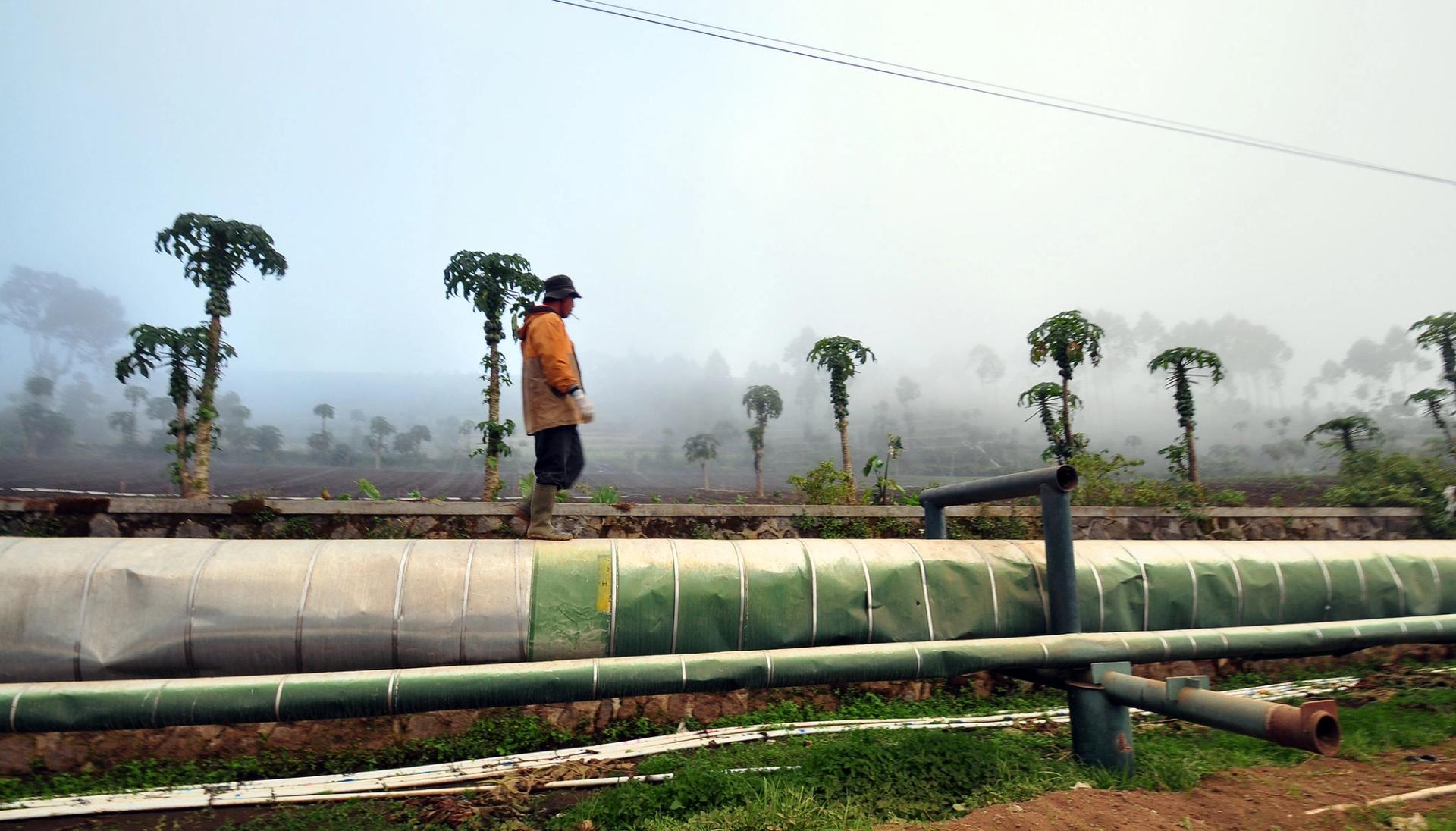
Improving beneficial ownership transparency and conflict of interest regulations are two proposed ways to improve anti-corruption resilience in Indonesia’s energy transition. Photo:
Gita Aulia / Flickr.com
CC BY-NC-NDNew analysis from U4 highlights how political finance, weak regulations, and a ‘revolving door’ of personnel between public office and the private sector create vulnerabilities for the energy transition.
Indonesia’s shift from fossil fuels to renewables is a massive economic transformation, vulnerable to corrupt practices. The country’s economy is heavily dependent on fossil fuels, and governmental anti-corruption efforts have yielded mixed results. Recent high-profile corruption cases have exposed elite involvement, and some commentators argue public trust in the rule of law has been undermined by presidential pardons in several cases.
President Prabowo – who came to power in 2024 – has prioritised both issues, promising to address the ‘pervasive’ corruption problems faced by Indonesians and to reduce the country’s dependence on fossil fuels.
President Prabowo – who came to power in 2024 – has prioritised both issues, promising to address the ‘pervasive’ corruption problems faced by Indonesians and to reduce the country’s dependence on fossil fuels.
One of the initiatives that will support the energy transition – and help Indonesia to reach its UNFCCC emission-reduction targets – is the Just Energy Transition Partnership (JETP). Prabowo inherited the JETP, established in 2021, from the previous administration as a development cooperation pathway – based predominantly on loans – that seeks to encourage private investment in renewable energy.
Key corruption risks in Indonesia’s energy transition
Political financing
It is an open secret that candidates for local and national elections rely heavily on sponsors from the private sector, including coal-mining and coal-reliant companies. This ‘campaign debt’ can lead to obligations, conflicts of interest, and favourable treatment for private interests once officials are in office. For instance (and with specific relevance to JETP), this dynamic may have influenced decisions around the increased role of coal-fired power plants in industrial sectors such as nickel production.
Weak enforcement and oversight
While election finance is regulated, those regulations are rarely enforced, meaning JETP-related policies and enforcement can potentially be shaped to protect incumbent industries. It is possible, for example, that JETP funding could be redirected towards projects that prioritise the production and use of fossil fuels. Conflicts of interest further complicate matters, as state officials and members of parliament are sometimes ultimate beneficial owners of energy companies, making investigations extremely difficult for statutory authorities.
Energy monopolies and procurement loopholes
The state utility firm Perusahaan Listrik Negara (PLN) acts as regulator, distributor, and main buyer of energy, creating a bottleneck for the energy transition. As discussed in our 2026 paper Addressing conflicts of interest and corruption in Indonesia’s energy transition, procurement processes are vulnerable to manipulation, with contracts often going to politically exposed individuals. This exposes JETP to risks in its funding of infrastructure improvements, including grid expansion and renewable power generation.
Revolving doors
There are few policies to prevent officials from moving between public office and the private energy sector. This ‘revolving door’ of personnel exacerbates state capture and, among other risks, it can:
- Allow private interests to influence regulations and policy for personal gain by providing unfair access
- Distort competition
- Bias procurement and project selection decisions
- Allow individuals to design or designate projects as ‘green’ to benefit allies.
Pathways to stronger anti-corruption resilience
Our analysis points to two potential pathways for improving anti-corruption resilience in Indonesia’s energy transition.
Improving beneficial ownership transparency
Obscuring the ultimate beneficial owners of firms facilitates bid rigging, tax evasion, and money laundering. Indonesia does have a central database of ownership, but challenges remain in verifying information and taking action against fake registrations.
Improving conflict of interest regulations
Existing conflict of interest laws are fragmented and inconsistent. While new regulations aim to close loopholes, they are not always implemented effectively and some apply only to the executive branch, excluding members of parliament and other sectors of the bureaucracy that could benefit from regulation.
Collaboration to identify remedies
In late 2025, U4 collaborated with GIZ Indonesia’s Energy Programme and the Green Corruption Team at the Basel Institute on Governance to bring Indonesian state and non-state actors together to boost efforts to tackle conflicts of interest and corruption risks in the energy transition.
Indonesia’s experience is instructive of how analysis and collaboration across dedicated government agencies and civil society groups can inform modest improvements, even under challenging conditions.
Over two days in Jakarta, colleagues from the Ministry of Energy and Mineral Resources (ESDM), the Corruption Eradication Commission (KPK), the Financial Transaction Reports and Analysis Center (PPATK), and the Ministry of Home Affairs, worked with their civil society counterparts (from Transparency International Indonesia, Publish What You Pay Indonesia, and Cerah), to jointly assess the challenges and identify remedies. This effort fed into ongoing work by the KPK to develop measurement guidelines for evaluating energy transition projects.
There is much work still to be done to improve anti-corruption resilience in the energy transition worldwide. Indonesia’s experience is instructive of how analysis and collaboration across dedicated government agencies and civil society groups can inform modest improvements, even under challenging conditions.
--------
Read more in Addressing conflicts of interest and corruption in Indonesia’s energy transition, U4 Issue 2026:04.
Disclaimer
All views in this text are the author(s)’, and may differ from the U4 partner agencies’ policies.
This work is licenced under a Creative Commons Attribution-NonCommercial-NoDerivatives 4.0 International licence (CC BY-NC-ND 4.0)