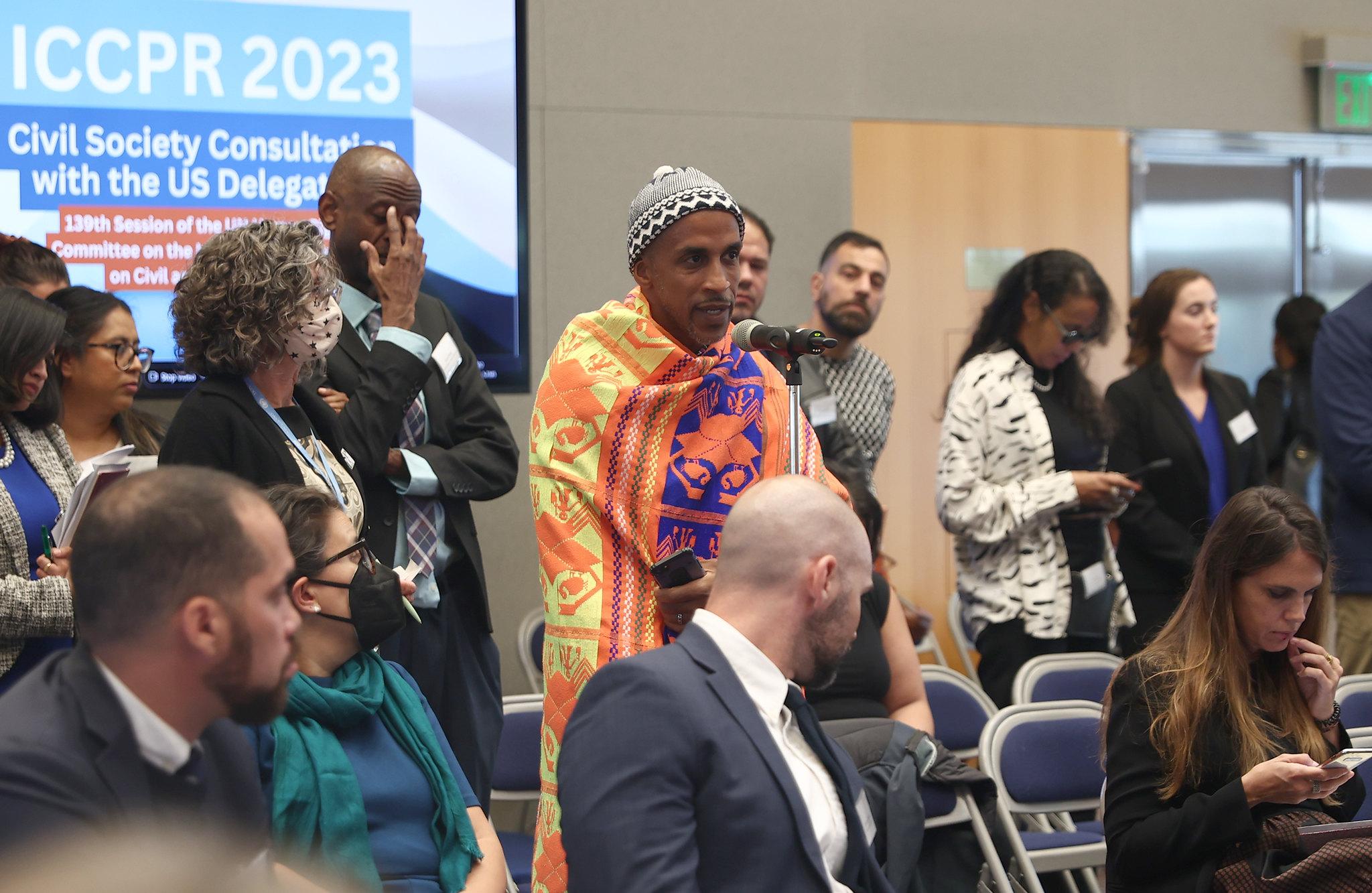
A review mechanism without meaningful participation reduces credibility and impact. Strengthening the involvement of civil society organisations will help the UN Convention against Corruption (UNCAC) meet its standards in reducing corruption.
Blog
Future-proofing UNCAC reviews through transparency and civil society – timely reminders for CoSP11
The technical and procedural barriers to civil society inclusion in UNCAC reviews are well-documented, and so are the solutions.
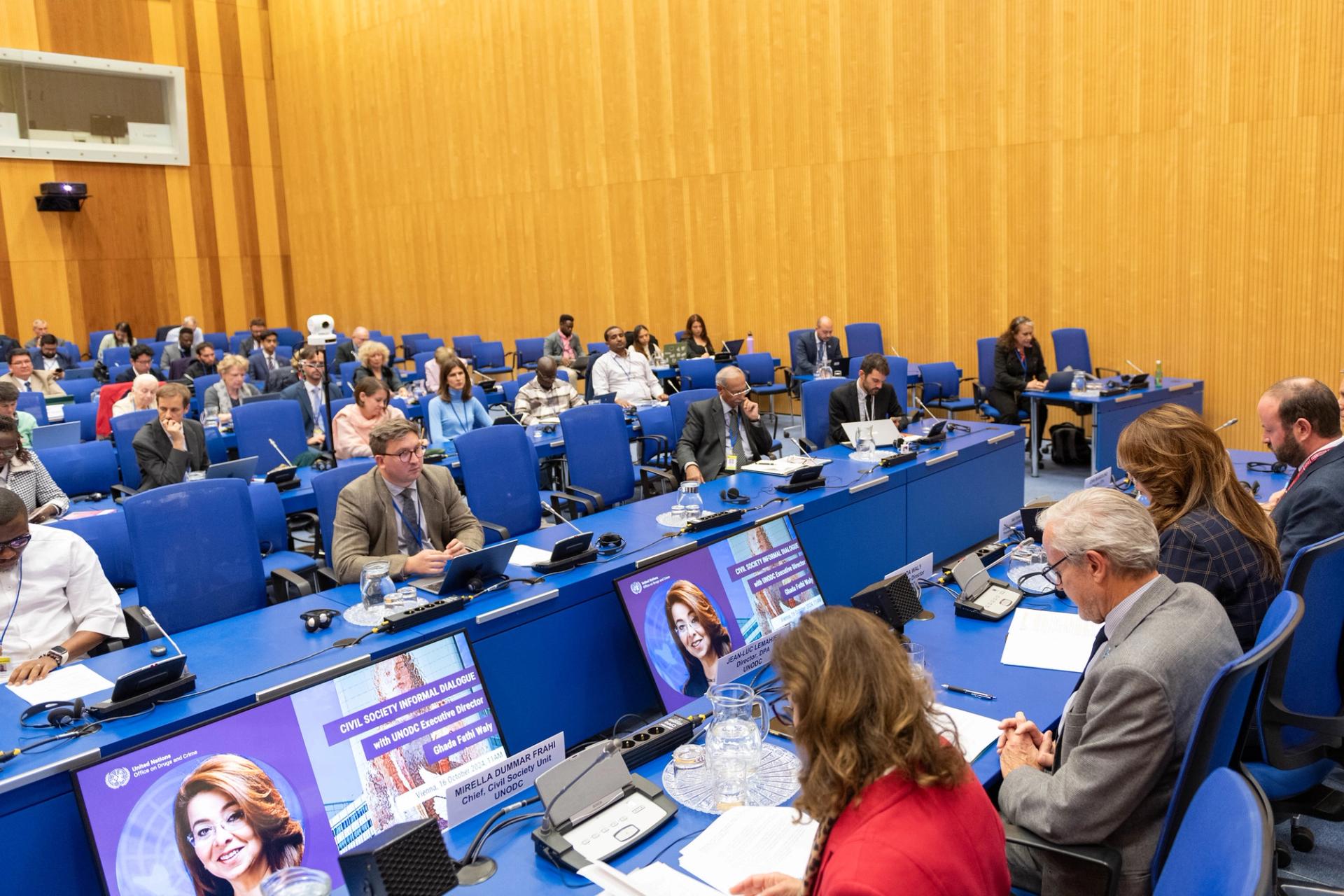
Other review processes have evolved to prioritise practical implementation, offering valuable models for UNCAC to follow. For illustration, the photo shows a dialogue with civil society at the 2024 Conference of the Parties to the UN Convention against Transnational Organized Crime. Photo:
UNIS Vienna
CC BY-NC-NDThe UN Convention against Corruption (UNCAC) enters a pivotal phase of reform, the question of how to meaningfully include civil society organisations (CSOs) in its Implementation Review Mechanism (IRM) is at the forefront of current discussions about the future of the review process.
Following the first phase of UNCAC implementation reviews, comprising the reviews of chapters III and VI in the first cycle, and chapters II and V in the second cycle – both delayed by several years – States Parties have for the past months been negotiating a draft resolution defining what the second, or 'next', phase of the UNCAC IRM should include, and when it should start.
After several rounds of negotiations, they are entering the final stretch of negotiations before the 11th Conference of the States Parties to the UNCAC (CoSP11) in Doha, Qatar, on 15-19 December 2025. The resolution is expected to be adopted by consensus at the CoSP. The negotiations are open only to States Parties, with civil society again made to inform the process from the sidelines.
A 2024 U4 Issue, Including civil society perspectives in UNCAC: Lessons from other international treaties, draws on anti-corruption, human rights, and labour-rights treaty frameworks and compares them to the UNCAC review process. It points to persistent pain points that CSOs encounter when trying to engage with the UNCAC review process. During CoSP11 negotiations, States Parties should advocate for more transparency and civil society engagement in this regard.
8 major pain points for CSOs in the UNCAC review process
1. Limited scope: De jure vs. de facto assessment
The UNCAC implementation review process has historically focused on legislative (de jure) compliance, often at the expense of examining how anti-corruption measures are implemented in practice (de facto). This matters because CSOs are uniquely positioned to provide on-the-ground insights into enforcement gaps that laws alone cannot reveal. Other review processes – such as of GRECO and the Istanbul Anti-Corruption Action Plan – have evolved to prioritise practical implementation, offering valuable models for UNCAC to follow.
2. Information sharing
A lack of centralised information is a fundamental barrier for CSOs. There is no public calendar of review schedules, and CSOs often struggle to access contact details for country focal points or peer reviewers. Our survey found that only 16% of CSOs considered timing information to be easily accessible, while 43% said it was not easily accessible and 19% said it was not accessible at all. By contrast, mechanisms like the OECD Anti-Bribery Convention and the Universal Periodic Review (UPR) for human rights publish multi-year calendars and clear contact points, enabling more predictable and strategic CSO engagement.
3. Self-assessment stage
While CSO consultation is 'encouraged' during the self-assessment phase, it is not required. 70% of surveyed CSOs cited a lack of government consultation as the biggest weakness in the process, and only 42% felt the process had been inclusive in their country. Other conventions, such as the Inter-American Convention against Corruption (MESICIC) and the Istanbul Anti-Corruption Action Plan, require CSO submissions and structurally embed civil society input into their review methodologies.
4. Access to peer reviewers
Country visits are optional (although in practice are almost universally undertaken), however, it is the state under review who is able to control which CSOs can meet with the peer reviewers. There is no requirement for private meetings with CSOs, nor can CSOs submit confidential written reports directly to reviewers. CSOs report that representatives from their government are often present during meetings with the peer-reviews, which likely impacts how critical they may be – particularly in restrictive contexts. In contrast, other treaties, such as GRECO and the OECD Anti-Bribery Convention allow for direct, confidential CSO input, while others also mandate independent panels, ensuring a broader range of voices are heard.
5. Opaque CSO inclusion data
UNODC reports that 95% of country visits involve non-state actors, (which can also include private sector, the media, and academics) but there is no disaggregated data on the exact number of CSOs consulted, which organisations shared their views, or the format of consultations. This lack of transparency makes it impossible to assess the true inclusivity of the process. Other mechanisms routinely publish lists of contributing organisations or make CSO submissions publicly accessible, creating accountability and trust.
6. Publication requirement
Currently, only executive summaries of UNCAC reviews are required to be published, and there is no notification system when new reports are published on the UNODC website. Full reports are published by around 62% of states, undermining public accountability and limiting CSO advocacy. By comparison, the OECD Anti-Bribery Convention, APRM, and Universal Periodic Review all require full report publication, often accompanied by press releases or parliamentary tabling to ensure findings are widely disseminated and acted upon.
7. Plenary discussion and CSO participation
UNCAC review country report findings are not discussed in plenary sessions, and CSOs are prohibited from participating in the Implementation Review Group (the subsidiary body conducting review work). There is no forum for CSOs to present their perspectives on country-specific findings to decision-makers. Other conventions, such as the Istanbul Action Plan and International Labour Organization, institutionalise non-state inclusion in plenary discussions – ensuring CSO voices are heard and can influence outcomes.
8. No follow-up mechanism
Despite the terms of reference contemplating a follow-up procedure, the IRM currently has none. 62% of CSOs cited this as a major limitation, and even States Parties identified it as a key weakness. Best-in-class models like the OECD Anti-Bribery Convention and Universal Periodic Review have robust, follow-up mechanisms –including dashboards, progress reports, and public statements – to ensure recommendations are tracked and implemented.
Consequences for policy and practice
The cumulative effect of these barriers is significant. When CSOs are sidelined, reviews rely solely on state-provided data, sensitive areas go underreported, and peer reviewers lack critical local insight. The result is lower credibility, weaker accountability, and a disconnect from operational realities. Without structured follow-up, even the best recommendations risk being ignored.
Recommendations for reform
1. Ensure a broad scope of the country review
This should address:
- Progress made to handle recommendations, successes, good practices, and observations.
- How to ensure effective implementation/review of anti-corruption measures in practice.
- How to provide technical assistance to address observations and recommendations of previous country reports.
2. Provide an explicit and detailed mandate encouraging States Parties to enhance participation
This should take place at key stages of the country review and follow-up process in a structured way. It should allow to solicit and consider information and data provided by:
- NGOs
- Community-based organisations
- Private sector
- Academia
- Media
3. Submit and publish periodic written progress reports on UNODC country profile pages
This should happen within a firm deadline following country review completion. The reports should adhere to a standardised UNODC template – to facilitate and ensure consistency in reporting. These reports should:
- Address progress made on the second phase country review recommendations and other findings.
- Identify ongoing challenges.
- Provide updates on technical assistance received, and if further technical assistance is needed.
A clear path to institutionalised transparency and engagement
For policy advisers and practitioners, the technical and procedural barriers to CSO inclusion in UNCAC reviews are well-documented, and so are the solutions. Drawing on comparative experience, the path forward is clear: institutionalise transparency, mandate structured CSO engagement, and implement robust follow-up mechanisms. The upcoming review cycle is a pivotal opportunity to embed these reforms and ensure UNCAC remains a credible, effective instrument in the global fight against corruption.
Further resources from the Global Civil Society Coalition for the UNCAC (UNCAC Coalition):
- Meaningful, transparent and inclusive UNCAC reviews (CoSP11 written submission)
- Key recommendations for strengthening the next phase of the Implementation Review Mechanism of the UNCAC (CoSP11 written submission)
- 20 years of UNCAC – How civil society participates in UNCAC Implementation Reviews
- UNCAC Review Transparency Pledge
- UNCAC Review Status Tracker
- Guide to transparency and participation in the UNCAC Implementation Review Mechanism
- Civil society parallel reports on UNCAC implementation
- Access to information campaign
Disclaimer
All views in this text are the author(s)’, and may differ from the U4 partner agencies’ policies.
This work is licenced under a Creative Commons Attribution-NonCommercial-NoDerivatives 4.0 International licence (CC BY-NC-ND 4.0)