The need for a sustainable anti-corruption agenda
Anti-corruption reforms in Ukraine have proceeded at a remarkable pace during wartime. This paper examines the sustainability of that agenda.
Maintaining effective anti-corruption efforts over the next five to ten years is vital to Ukraine’s political transition – and to social cohesion. However, there are significant challenges and uncertainties around this ambition. The war against Russia undermines the capacities and priorities of the Ukrainian government and civil society. International instability and backsliding among former proponents of robust anti-corruption measures, including the United States, add to the sense of hesitancy. And anti-corruption reform, in Ukraine as everywhere, is not something that can be ‘completed’. Even if reforms linked to EU accession, for example, are heralded as finish lines, governance institutions are ‘living’ bodies, and as such require constant nurturing and normative renewal.
Ukraine’s anti-corruption agenda is currently thriving and complex. Various frameworks – including national strategies and ministerial plans – set out immediate policy priorities across a range of sectors. This U4 Issue looks beyond these plans to ask: what strategic interventions are needed now so these kinds of anti-corruption efforts can become self-reinforcing, sustainable, and responsive to future domestic challenges?
Our starting point is that sustainability is a function of many things including resources, capacities, and sound policy design. Crucially, it is also a result of the extent to which (and the ways in which) anti-corruption is embedded in ongoing and future social and political dynamics. To capture this, in Section 1 we reframe anti-corruption in Ukraine as a ‘policy arena’: a social and political space in which various actors interact to shape patterns of policymaking and implementation.
Section 2 sets out four alternative policy arenas – possible paths that Ukraine might follow – to explore how anti-corruption may evolve over the next five years. The most sustainable arena is an open one, free from undue political interference: the ‘maturity and innovation’ policy arena. Each of the other three policy arena types – ‘tension and uncertainty’, ‘siloed’, and ‘decay’ – all present challenges that could make anti-corruption unsustainable.
Achieving the maturity and innovation model depends on a positive political economy: a balance of influence between key actors and the mechanisms through which they shape decision-making. Section 3 develops a new conceptualisation of political influence – the ‘kite’ model – to explain how political support for a more open and independent anti-corruption arena can emerge.
Section 4 sets out our recommendations. We suggest the single most important strategic transition that anti-corruption should make is towards broader-based domestic ownership. By this we mean that a wide range of domestic actors – beyond formal officeholders and a narrow circle of NGOs – meaningfully participate in the design and implementation of policy, share a common normative commitment to its purpose, and collectively shape the agenda so that external incentives support rather than substitute nationally grounded priorities and accountability.
1. Using policy arenas to understand the evolution of anti-corruption in Ukraine
It is worth restating: Ukraine has made remarkable progress in the last ten years and is one of the very few countries still showing mostly positive trends in anti-corruption.a75b994beafe Even so, it is important that deserved plaudits do not lead to complacency: an assumption that progress will from now on be incremental but inevitable. Such a view contradicts historical and contemporary evidence about how better governance emerges. The history of anti-corruption reform has generally been non-linear, with progress contingent on favourable social and political conditions.a87c226ecbea Indeed, the past ten years of anti-corruption work in Ukraine has been a fragmented story of ups and downs, progress and pushbacks.7a55e70a2d42
Ukraine’s responses to the ongoing Russian aggression – including operating under martial law – rightly prioritise security but they also constrain transparency and accountability, heightening corruption risks and narrowing the space for oversight.
So, with the future of Ukraine’s anti-corruption efforts uncertain and unpredictable, we must examine the different ways in which these might unfold.
1.1 Understanding anti-corruption through ‘policy arenas’
1.1.1 Going beyond tracking reforms
The ‘reform-based’ analytical model is the one most commonly used to track anti-corruption progress in Ukraine – both by governmental and international organisations. In this framework, progress is generally assessed according to technical milestones: laws passed, institutions created, procedures changed, or leaders hired. These milestones are important for EU accession, access to finance, and membership of organisations such as the OECD. The OECD Integrity Review is one example of this ‘reform-based’ approach. It compares Ukraine’s progress against OECD and EU averages, providing examples of international good practices to guide areas for improvement.d03a9329d24c The EU’s own progress reports broadly follow the same approach, aligning anti-corruption with the development of specific institutions.8e9a460dac79
The reform perspective, as a means of understanding the various ways in which anti-corruption may unfold, has strengths and limitations. By focusing on technical milestones it can stifle deeper analysis and understanding. Reform progress can be quick or slow, complete or incomplete, but these technical assessments can miss the bigger picture: the underlying political conditions of anti-corruption. Reforms may keep rolling out, but the sustainability of those reforms, the extent to which they are rooted in political commitment and social collaboration, remain largely hidden when anaylsed through a narrow lens.
Moreover, the reform model makes it harder to envision alternative futures. First, by focusing on technical milestones it implies that the policy field is on a steady, predetermined track, even though its speed of travel may be mixed. Second, it downplays the possibility of improvements outside of that track. Indeed, evaluating Ukraine according to international standards gives the sense that Ukraine is permanently in ‘catch-up’ mode. It minimises or conceals Ukraine’s innovative approaches to anti-corruption, some of which surpass OECD and EU standards, such as Prozorro (the online procurement portal) and Integrity Councils.50b72ab35ee3
1.1.2 The policy arena is a framework for deeper understanding
An alternative way to understand the array of anti-corruption trajectories is through the concept of a ‘policy arena’. While there is no single universally fixed concept, we define a policy arena as the social and political space in which public actors and stakeholders interact, compete, negotiate, and exercise influence over policy decisions and implementation.313a7253594b
The anti-corruption policy arena in Ukraine has expanded since 2014 to become a diverse and complex space. It spans enforcement to prevention, linking rule-of-law institutions with those responsible for public finance, service delivery, and reconstruction. Specialised anti-corruption and accountability institutions with differentiated mandates interact with civil society, subnational authorities, and state-owned enterprises.e55592b900ee International organisations and bilateral governments are embedded through conditionality mechanisms and technical assistance programmes. Overseeing the entire agenda are the executive and parliament.
While reform-based analyses track observable changes as outcomes, policy arena analyses treat these reforms as expressions of deeper, ongoing contests and collaborations between those actors with unequal power and competing interests and incentives.2162233cfa41 Examining policy arenas can also help explain developments that might otherwise seem puzzling, for example why some reforms stall, or are reshaped or reversed, even when they are technically sound and externally supported.b95c4228057d
2. The extent of political interference and openness will determine Ukraine’s anti-corruption path
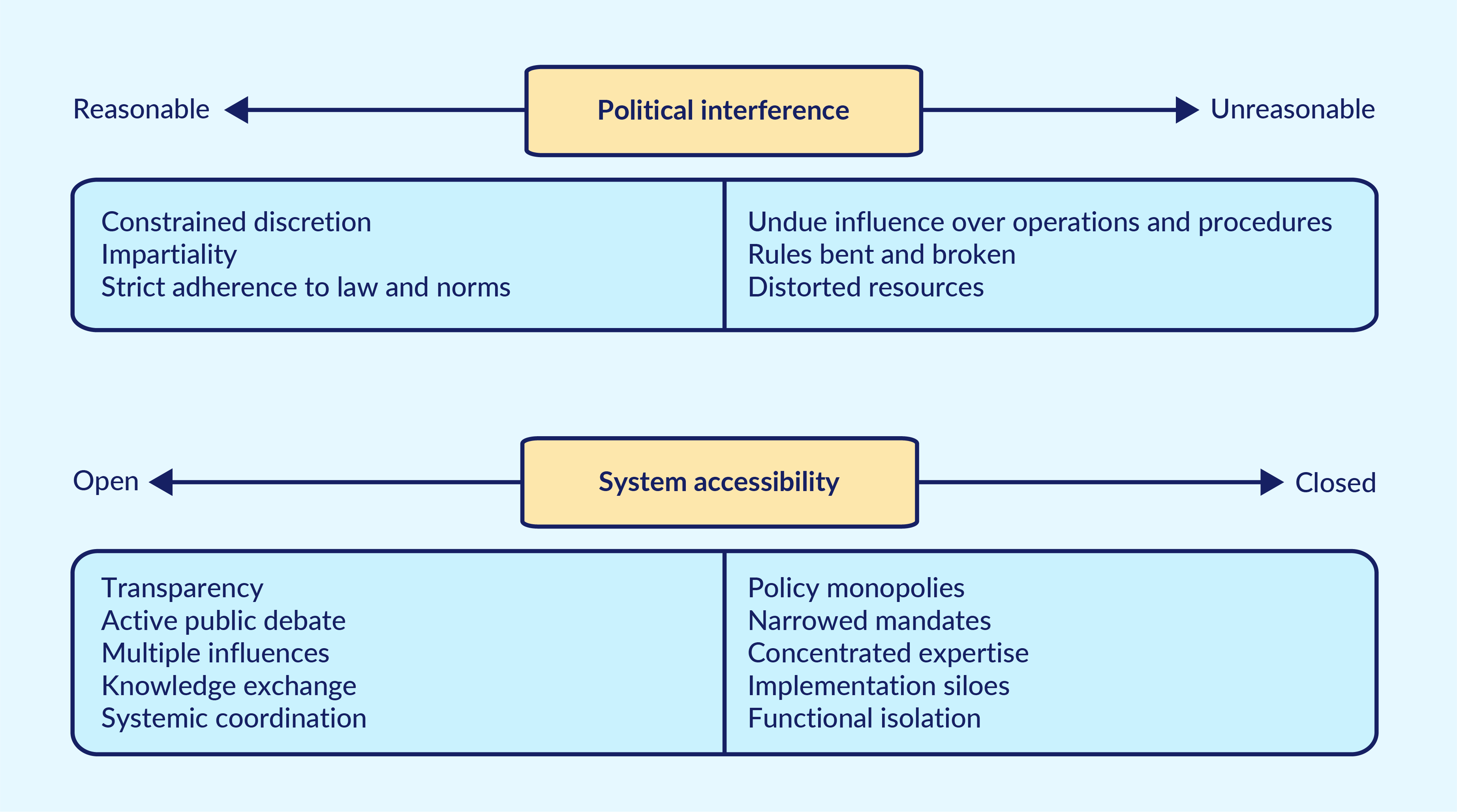
The point of this section is not to predict the future but to imagine different policy arenas that could emerge. This thought experiment can focus thinking on what needs to be done to prevent the emergence of negative futures – and how to strive for better. To distinguish between different policy arenas, two dimensions in Ukraine matter above all: the level of political interference and the level of openness of the policy arena.
Anti-corruption policy is a political domain: political choices affect prioritisation, the selection of investigations, and policy design. Reasonable political interference means while discretion still exists, it is constrained and reviewable and institutional autonomy is respected. The higher the degree to which anti-corruption policy creation and implementation can be impartial and proceed according to laws and norms, free from undue political interference, the more rational and productive the policy arena. Unreasonable political interference happens when policy is directed towards self-interested political goals and private interests rather than the public good. This could involve the instrumentalisation of anti-corruption to target political opponents or refraining from enforcing laws against allies.dc62f4ce8e1b Indications of unreasonable interference include the excessive influencing of operations and procedures, the bending of rules, and the deliberate limiting of resources or services. These damage trust and lead to the irrational allocation of resources.
The arena’s accessibility – the extent of its openness or closedness – is the next key dimension. Open public policy systems are characterised by transparency in decision making, multiple centres of influence and decision making, and exposure to a wide set of knowledge and ideas. Openness allows multiple viewpoints to compete and new solutions to emerge.633309fefc35 The technical quality of interventions is likely to improve. Broadly inclusive approaches often reflect a wider set of interests, enhancing legitimacy of action and accountability.5401db835151 Closed systems, by contrast, are characterised by policy monopolies, narrowed mandates, concentrated expertise, and implementation siloes. A limited set of actors define problems, acceptable solutions, and evidence standards, crowding out alternative perspectives and adaptive learning. When policy arenas are closed, change happens slowly, there is resistance to new evidence and critique and innovation is stifled.162410195b48 Closed systems are also more susceptible to policy capture via entrenched bureaucratic and interest group relationships.d5a4f14b9d3a
Figure 1: Ukraine’s possible anti-corruption futures will be defined by the level of political interference and the level of openness
2.1 The four ‘policy arena futures’ that will determine Ukraine’s anti-corruption path
Based on these dimensions of political interference and openness, we have imagined four different policy arena scenarios. Below, we show how each scenario can lead to different outcomes on some important variables, including the effectiveness of the specialised institutions; EU accession; reconstruction; reform momentum and scope; international technical assistance (ITA); and social engagement. These are ideal, stylised types: in reality, no policy arena will operate exactly to a type, but it is nevertheless possible to use this framework to identify the most likely policy arena.
Figure 2: There is one desirable policy arena for Ukraine’s anti-corruption future – and three that should be avoided
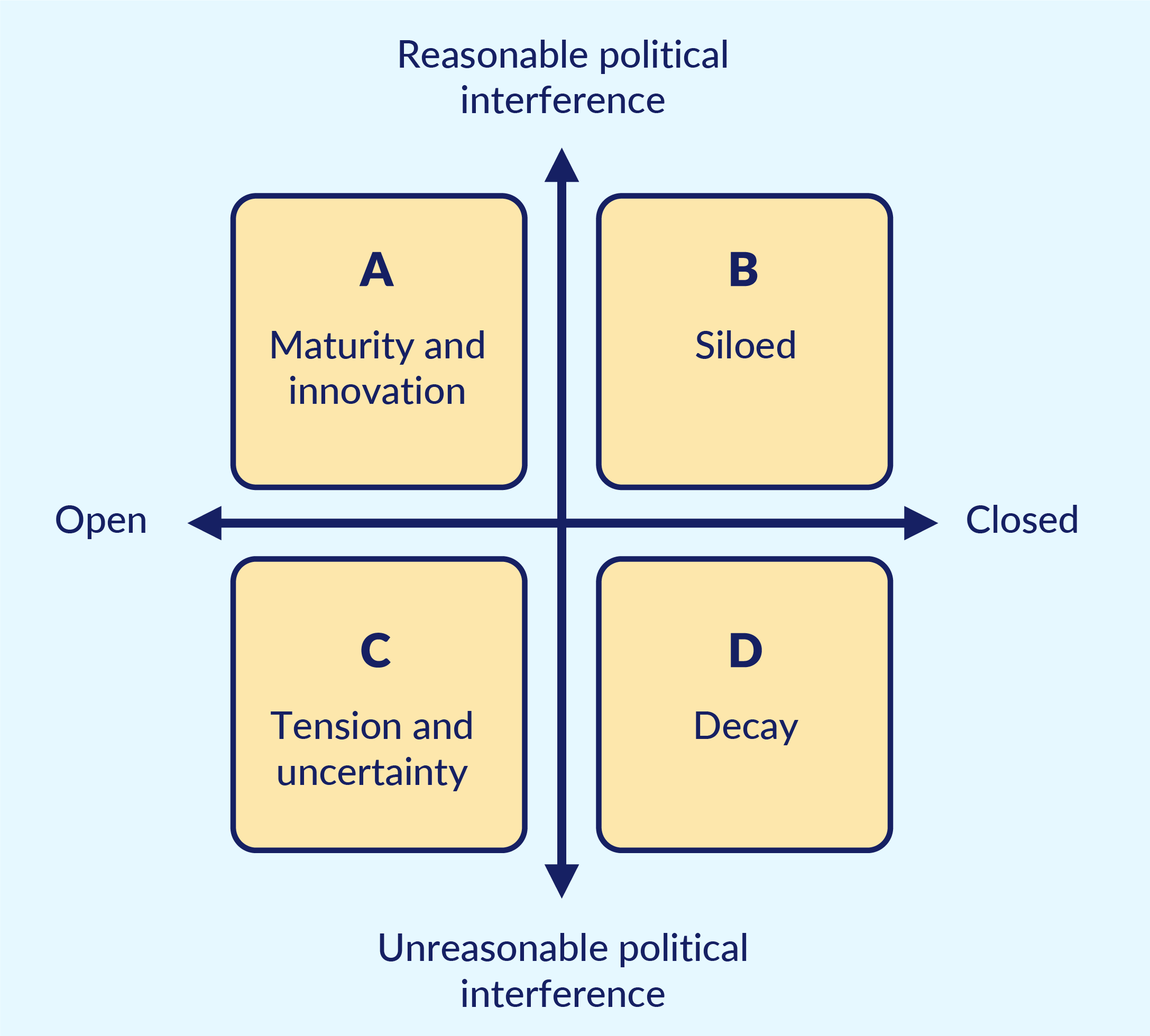
Scenario A: Maturity and innovation
The most sustainable form of anti-corruption: an independent, trusted anti-corruption system embeds integrity across governance, boosts innovation, and makes corruption riskier and less rewarding.
In this scenario, specialised anti-corruption bodies gain enhanced operational independence and leadership changes for these institutions are uneventful and rules-based. As the policy arena assumes greater credibility, ITA shifts towards an emphasis on problem solving and innovation, with support for sophisticated risk analytics as Ukraine becomes an ‘exporter’ of anti-corruption techniques. Forged through an active debate, reconstruction becomes a laboratory for integrity, with open contracting, digital monitoring and civil oversight embedded throughout. This all combines to help to speed EU accession. Because trust in the policy arena is growing, anti-corruption becomes increasingly mainstream in public financial management, reconstruction, industry and sector policy, and civil service reform. Reforms are implemented with momentum, and secondary legislation, budgets, staffing, and IT systems are aligned to make them operational. Anti-corruption meaningfully reaches municipalities, oblasts, and state-owned enterprises. Local journalists and auditors are empowered. Citizens increasingly believe that rules apply, even if imperfectly, and reporting wrongdoing feels worth the effort. Rents are harder to extract, and informal deals carry higher risks as genuine market competition becomes the norm.
Scenario B: Siloed
Anti-corruption systems become less sustainable over time as Ukraine keeps the architecture of reform but loses its collective spirit, as the specialised anti-corruption organisations struggle to influence sectoral policies and reconstruction at scale.
In this scenario, the specialised anti-corruption bodies perform reasonably well within their mandates but lack broader leverage. Most reforms are legally adopted but only partially implemented, with gaps in enforcement, staffing, resourcing, and political backing making them vulnerable to quiet erosion or neglect. Innovations suffer as openness dwindles. ITA focuses on sustaining minimum functionality and preventing backsliding. Reforms for EU accession proceed but are increasingly technical and de-linked from domestic political processes. Civil society organisations (CSOs) become highly specialised and professionalised, engaging mainly with institutions and donors rather than with the public. Watchdog functions narrow to case monitoring and compliance scoring, with reduced agenda-setting power. For citizens, scandals come and go, the penalties for bad actors seem selective – even arbitrary – and they find they need to navigate daily encounters with public services and other systems through informal means. Reporting corruption feels bureaucratic, and the payoff uncertain. Corruption is framed primarily as criminal behaviour to be investigated and prosecuted, rather than as a systemic governance failure involving incentives, administrative design and political economy.
Scenario C: Tension and uncertainty
The way in which the policy arena develops is not favourable to sustained anti-corruption, but it remains possible through lively public debate. Each reform step involves high transaction costs and is dependent on turbulent and shifting coalitions.
In this scenario, the specialised institutions are highly visible and politically contested, alternately praised and attacked depending on their targets. The appointment of their leaderships becomes a battleground for domestic interests. Institutional resilience depends heavily on individual leaders and public mobilisation rather than stable protections. Progress in EU accession is hard to predict as the combination of openness and increased political interference does create anti-corruption activity – but also strains and suspicion. Reconstruction is heavily scrutinised by civil society and the media, meaning abuses are regularly exposed but also leading to constant conflict over procedures. Anti-corruption is highly visible but difficult to mainstream, as line ministries (ie, those responsible for public-service delivery) perceive it as politically risky. New measures are possible but contentious, often becoming symbolic battlegrounds rather than operational reforms. ITA is politicised and fragmented, with donors pulled into domestic conflicts. ITA prioritises protection of institutions and crisis response rather than long-term system building. CSOs continue to shape narratives, litigate, mobilise, and confront those who hold power. For citizens, trust fluctuates with each scandal or court decision.
Scenario D: Decay
The anti-corruption agenda is hollowed out, enabling elite control, rent-seeking in reconstruction, and largely symbolic reforms that sustain external legitimacy while real accountability fades.
The specialised institutions are formally preserved but effectively neutralised through loyal appointments, jurisdictional constraints, and selective case approval. Their presence legitimises the system without constraining power. Strategy documents lose relevance, alignment with EU norms becomes rhetorical, and divergence is justified through claims of ‘local specificity’ or the need for stability. Reconstruction becomes a central source of rent extraction, with corruption embedded in complex contracting chains and exemptions. Reform language persists, but the substance disappears. Reforms are either cosmetic, or they are implemented selectively or symbolically, with little enforcement against politically connected actors. Anti-corruption is isolated from mainstream governance and used as a tool of political management. Engagement of the international community becomes symbolic and influence is minimal. Donors either withdraw, reduce ambition, or inadvertently legitimise the system by supporting it. ITA is tightly managed, being redirected to low-risk areas or compliance reporting. Some experts and CSOs are co-opted, others marginalised. Independent critique comes with a cost. The impunity of elites is slowly reinstated.
2.2 Ukraine’s current policy arena is a mix of scenarios
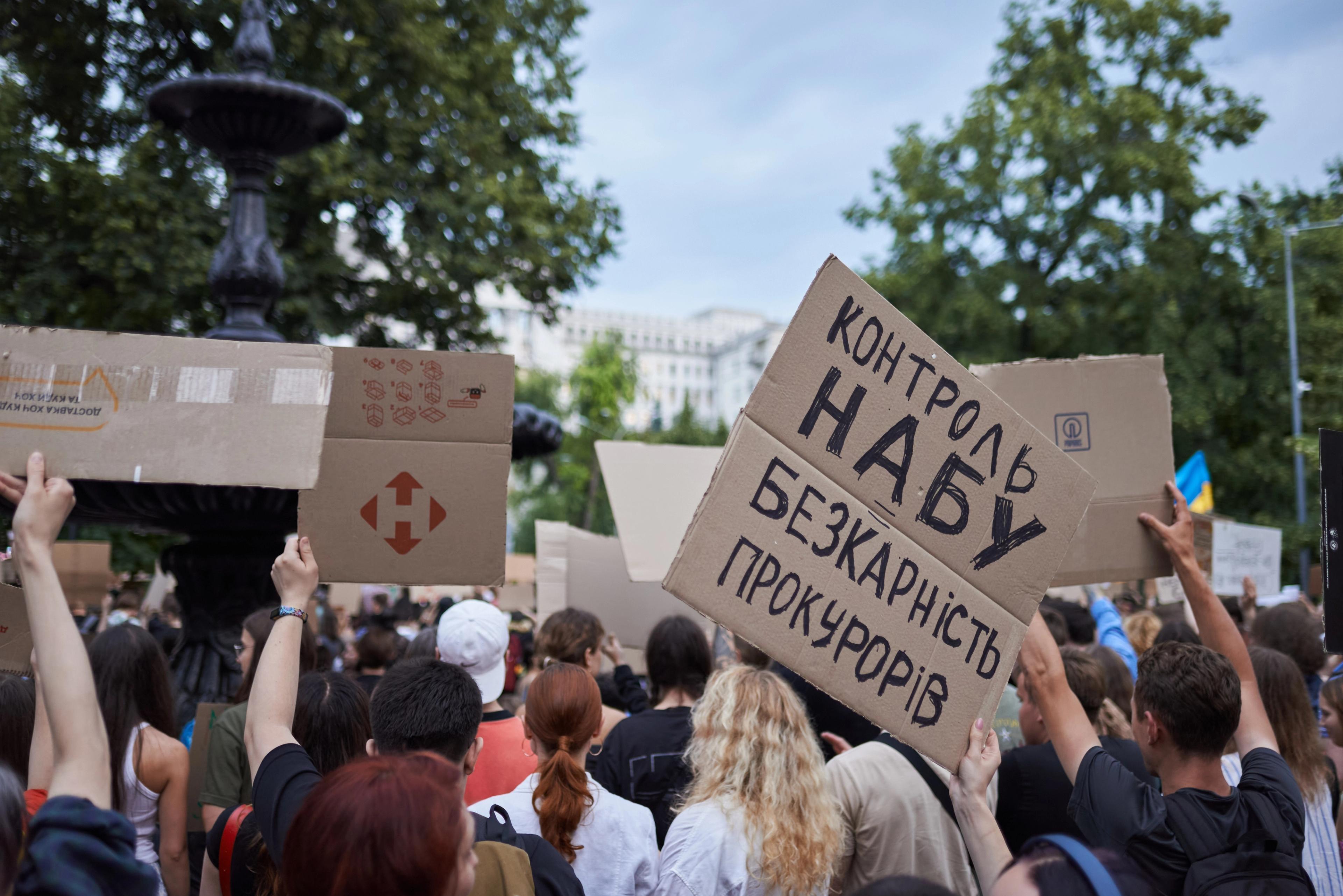
Anti-corruption systems, as we have said, never fall neatly into one of our four scenarios. Indeed, aspects of all four policy arenas have been visible in Ukraine in recent years. With EU accession as a driver, several important policy and legislative initiatives were launched, providing more staff, more resources, and more independence to anti-corruption institutions (Scenario A). Some reforms also showed expansive mainstreaming (Scenario A), as seen in judicial appointments; the selection of the leadership for the Bureau of Economic Security and the Asset Recovery and Management Agency; the National Agency on Corruption Prevention’s work in the education sector; and impartiality reforms of the Accounting Chamber.2916aca5e7fc The National Anti-Corruption Bureau of Ukraine (NABU) and the Specialized Anti-Corruption Prosecutor's Office (SAPO) have proved to be well insulated from political interference, yet they also became a distinct enclave within Ukraine’s governance system, and this has created policy silos (Scenario B). When the Security Service of Ukraine and the Prosecutor General’s Office launched an orchestrated offensive against NABU and SAPO in July 2025, accompanied by legislation rushed through parliament in breach of procedure, institutional decline was halted by an unexpected wave of mass protests, which reopened the anti-corruption arena to public contestation (Scenario C). Although corrective legislation formally reversed the changes, mistrust remains and concerns about renewed pressure persist, which may feed into elements of decay (Scenario D). This situation is compounded by the reduction of US support and policy engagement which diminished external political leverage against undue interference and reduced the opportunities for CSOs, investigative journalists, and civic-tech initiatives focused on anti-corruption to hold institutions and individuals to account.
3. Determining anti-corruption trajectories in Ukraine: The kite model
The scenario analysis above makes it clear that the maturity and innovation model should be Ukraine’s long-term policy goal. The next step is to think about how to achieve it.
According to the policy arena perspective, the structure of the arena depends on the interplay and relative influence of the most important actor groups – and on the various mechanisms they can use to shape it. This section offers a model that identifies those actors and explains their influence. In a way, this section can be thought of a constructing a political economy model that pinpoints the likely sources of political will for an open policy arena free from undue political interference.
3.1 Shaping the anti-corruption policy arena: Evolving the ‘sandwich model’
For many analysts of Ukraine’s anti-corruption policy arena, the ‘sandwich model’ has been the preferred framing: political actors are shaped by the international community ‘from above’ and by civil society ‘from below’.caa247c92f82 Domestic civil society’s role has been to elaborate policy ideas and monitor progress in implementation, while the international community provides technical assistance while pressing an often-reluctant political elite into adopting reforms. Progress in reform is most likely when the two sides of the sandwich closely cooperate.0d589ed1f733 The model itself has become a policy reference point: when anti-corruption efforts are disrupted, delayed, or sabotaged, the reflex is often to strengthen this particular model of action through more formalised involvement of civil society and explicit conditionality from the international community.
This model has certainly been helpful in understanding reform dynamics but it is in need of evolution. Ukraine of 2026 is not the same as 2014 or 2019. Our understanding of political will in contemporary Ukraine – where it resides, who generates it, and how it is used – needs to be updated, too. Evolving the sandwich model can also widen the scope for practical action and responses.
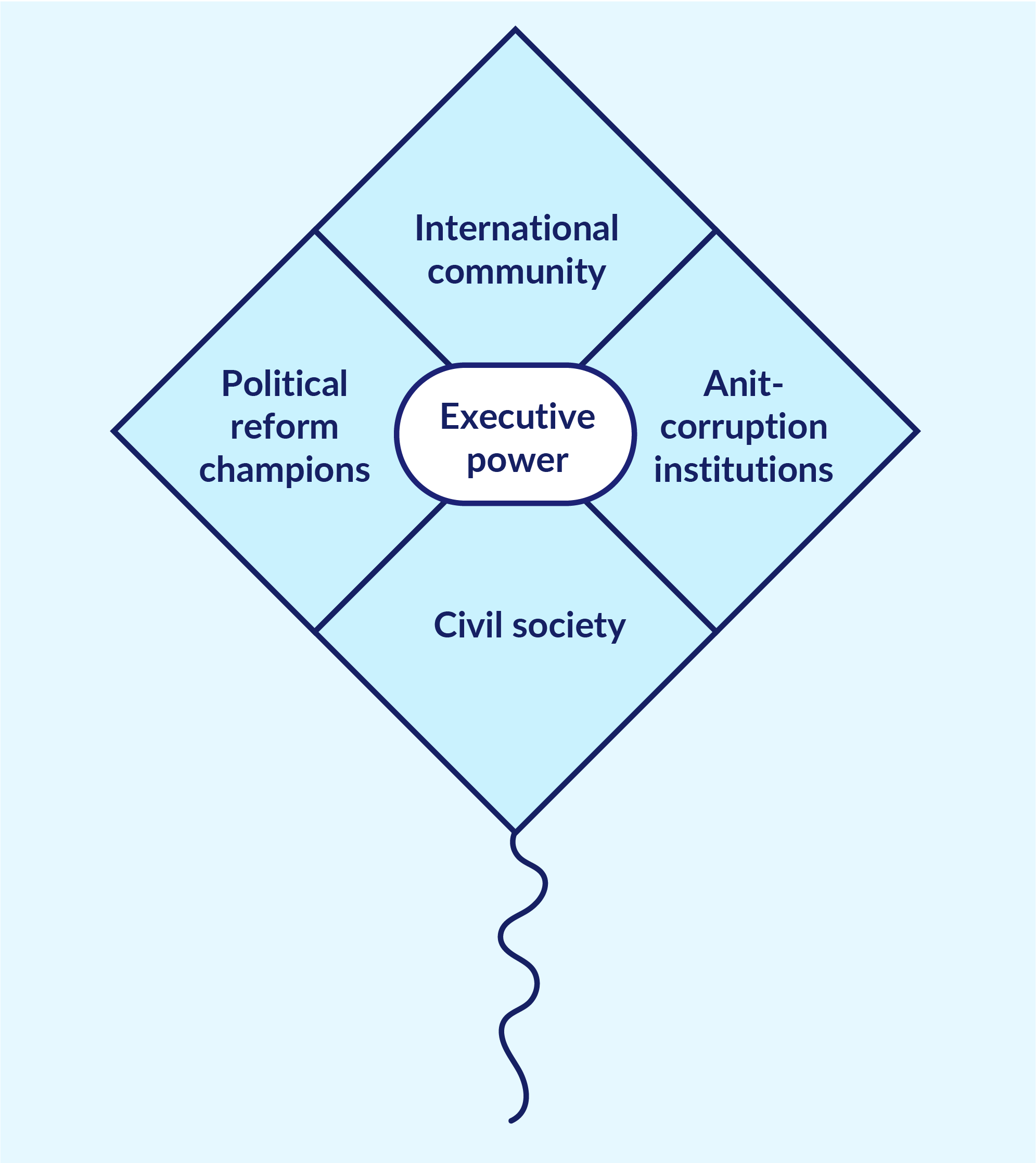
We offer a new analytical framework – the ‘kite model’ – that evolves the sandwich model in two main ways. First in the centre of the model, we reassert the role of executive power. The sandwich model treats the executive as a passive recipient of outside pressures rather than an actor and instigator of reform in its own right. Second, we place executive power in a broader constellation of influences, to include reformist politicians and the specialised anti-corruption bureaucracy. The sandwich becomes a diamond or, with the executive at the centre, a kite.
Figure 3: The kite model offers a new way to conceptualise political influence around the executive
3.2 Interactions of power and influence in anti-corruption: The kite constellation
3.2.1 Reasserting the role of executive power
Executive power is the power to ‘govern’, that is: to lead and direct the political community;693b3bd3a513 the ‘centre of impulse and decision’.76c6a638a1eb Executive power in Ukraine is primarily associated with the Cabinet of Ministers, Central Executive Authorities, and state regional administrations. The Cabinet is responsible for implementing laws, state policy, the budget, and coordinating ministries and other executive bodies. Constitutionally, the President also has significant influence over the executive branch, while the President’s Office (before 2019 known as the President’s Administration) has historically exercised de facto influence. Formally, the parliament is crucial for political guidance and accountability. However, in practice, the Ukrainian parliament is currently rather weak due to political fragmentation.
The nature of the current policy arena is determined primarily by this executive power, which is why it is at the centre of the model. Emphasising the central role of the executive in shaping Ukraine’s anti-corruption trajectory is a departure from the sandwich model, which often portrays political leaders as somewhat passive: reforms are seen as being driven primarily by civic actors and international partners, while governmental authority is generally seen as reactive.
The emergence of a stronger executive is mostly a recent phenomenon, but research has also demonstrated how the executive has steered, constrained, or enabled anti-corruption in the past.952ef60a8be6 Huss argues that, prior to Euromaidan in 2013–14, executive power framed anti-corruption priorities and sought to steer anti-corruption policy to fit the political regime’s needs in Ukraine.ec3ac1d27d50 Since then, ‘efforts to build functioning democratic institutions have clashed with countervailing incentives for politicians to shirk their responsibilities, engage in rent-seeking, or otherwise violate the spirit—if not the letter—of democratic rules.’f4ba3529cec7 For example, political factions deliberately constrained police reform – by manipulating hiring, promotions, and oversight institutions – in order to protect or expand their control.ca7e9d602e62 The events of July 2025 (ie, the proposed politically motivated changes to NABU and SAPO) showed just how central executive power is to the way in which anti-corruption policy is selected, designed, and implemented – or not.
The executive’s influence over the nature of the policy arena is both formal and informal. It exercises formal control over appointments and can indirectly steer selection processes. It also holds budgetary control over formally independent institutions, which may face underfunding, delayed disbursements, or staffing constraints that quietly limit their capacity. To a large extent, the executive also sets the anti-corruption agenda, determining which reforms advance, which stall, and how issues are framed. The executive’s coordination and information-sharing functions are also important: control over information, meetings, and procedural timing allows the executive to filter who participates and which ideas advance.
3.2.2 The executive interferes in the policy arena – and reduces openness
It would be rather optimistic to assume that executive power always aims for an open policy arena – in Ukraine or anywhere else. We take a realistic position on the natural inclinations of executive power. This is not a comment on the current political actors in Ukraine, but rather it reflects the motivations that political science theory has long asserted: ie, if political actors are rational, they will avoid fully open policy arenas because openness reduces control, increases uncertainty, and weakens their ability to maintain coalitions and manage risk.
For instance, political economy models suggest that bureaucrats may act in ways that could damage the reputations of incumbents;0a8ca632c3ed and the executive may legitimately fear ‘bureaucratic drift’, where anti-corruption institutions do not fulfil their mandate.873c61470d1e For the executive, then, retaining some degree of control could therefore be about managing performance when trust in institutions is low. From the perspective of political gains, ‘selectorate theory’ suggests that leaders are incentivised to retain discretion over policy and resources to maintain the support of key coalitions. This makes full openness with external actors strategically unattractive.733ed820b635 There could also be more cynical reasons: maintaining control can allow for the instrumentalisation of anti-corruption against rival factions.f45ff77e71c4
We have seen this tendency of excessive intrusion into the policy arena recently play out in Ukraine. Since January 2025, several legislative proposals – had they not been stopped in time – would have undermined judicial reforms and the ARMA, and restricted access to property data vital for anti-corruption investigations. At the policy implementation level, there have been efforts to prevent the High Qualification Commission of Judges from evaluating judges and to sabotage the appointment of the new Director of the Economic Security Bureau of Ukraine, both essential to Ukraine’s anti-corruption infrastructure.
Moreover, the exigencies of war have shifted Ukraine towards stronger executive coordination of policy and governance. Since Russia’s full-scale invasion in February 2022, Ukraine’s executive authority has become more centralised, largely due to the needs of wartime governance and legal adjustments under martial law. Discretionary powers, under the auspices of executive bodies, have been expanded.5f32afa559d9
3.3 How the four points of the kite model can reduce interference and support openness
We have seen that the executive currently engages in political interference and limits the openness of the policy arena. However, there are countervailing pressures that can shift political will in the direction of a more open, collaborative, and politically restrained policy arena.
Executive power is embedded in its own constellation of incentives and restrictions.637ab19f440f This section outlines the four most important influences on executive power, and their limitations and risks. We also identify the mechanisms – the capacities, incentives, and ideas – through which these actors exert that influence.
3.3.1 Civil society
Especially since the Revolution of Dignity in 2014, professionalised civil society in Ukraine has influenced the behaviour of the executive. Integrity NGOs, expert policy organisations, and networked community organisations have done so partly through their expertise and ideas. They have provided an independent vision of change and monitored progress to balance political interference in key spheres like the establishment of anti-corruption agencies, the judiciary, or defence sector reforms.
Expert consultees and non-governmental stakeholders have continued to contribute their specialist insights to national and sectoral anti-corruption strategies, even under the strains of the current conflict.1b3d8a745cdb By now ‘civil society input is expected, heeded, and engaged with, if not always solicited, by domestic and international stakeholders’.ad2ac526306b Anti-corruption NGOs in Ukraine can be understood as narrative entrepreneurs, using credible evidence to link corruption to everyday harm and national survival, raising the political costs of inaction.
Civil society has also helped ‘to open up the political system and foster wider representation of society’s interests’,cebe697cbd7e shifting political incentives towards the opening up of the policy arena. Public trust in the CSO sector has remained stable, even as trust in government and media has declined.011efee90b37
While scholars have talked of the ‘co-ownership’ of anti-corruption between civil society and government,948d12e3e260 this seems rather optimistic. Commentators have pointed out the limitations of civil society’s independence.ccf3f446dec3 Bader et al. (2019) argue, for example, that the impact of civil society depends on access to political allies, strategic use of expertise, and sustained donor and public support.fafbada02e20 Harasymiw (2019) has argued that Ukrainian civil society has been inherently limited because Ukraine lacks sufficient levels of press freedom, political party competition, and government transparency for them to function effectively.5ee0907fa766
The risk is that conditions for civil society deteriorate. During the full-scale Russian invasion, there are justified, constitutional reasons for restricting civic space, although doing so hinders whole-of-society approaches to anti-corruption. Constraints have included limiting transparency and open data, which has an impact on monitoring efforts; placing restrictions on the media when covering security-related information; and limiting citizens’ freedom of movement and travel. War has also created a significant personnel issue: many local and national activists, who previously identified and reported corruption, are now actively involved in security, defence, or humanitarian work – instead of, or in addition to, their anti-corruption work. Some have been killed in action.
3.3.2 International actors
International partners play an important role in influencing the policy arena in several ways. Above all, they shape core incentives by exercising conditionalities – frequently those tied to EU accession. These are often expressed as pressure to keep the policy arena free from undue political interference and speed up reforms. Even during war, analysis suggest that conditionality remains a credible approach.746c4a01df8e International partners, particularly the EU, also bring normative guidance, promoting standards of rule of law, transparency, and institutional accountability. These influence political will in Ukraine through processes of socialisation and domestic internalisation.0d0da8f6f99b Over time, these norms become embedded as benchmarks of appropriate conduct; as a result, political elites face not only material conditionality but also reputational and normative pressures, whereby deviation from EU-backed anti-corruption reforms risks both domestic and international legitimacy.
ITA shapes political will through its effects on capacity and incentives, rather than through normative persuasion. Financial resources, technical expertise, and institutional support reduce the costs and increase the feasibility of reform, and these have all been especially important in the Ukrainian context. ITA has played a critical role in building technical capacity to implement complex reforms, while simultaneously empowering reform-oriented actors within the state and civil society.
Even so, the influence of international donors and creditors is finite, and must be exercised carefully to achieve maximum possible systemic transformation.dad2396b6b3f For example, the EU’s leverage is currently undermined by political deadlock in the Ukrainian parliament, and by the shifting priorities of wartime governance. There are also signs that the EU is not making full use of the leverage it does have, for fear of setting conditions that Ukraine might not fulfil and consequently having to withhold the funding that it knows Ukraine sorely needs.
The main risk internationally is declining interest and willingness to spend political capital on anti-corruption. In February 2025, the new US Administration abruptly halted USAID activities, cutting off a significant part of Ukraine’s foreign funding. An unexpected cut in funding for think tanks, media, and journalists, as well as watchdog organisations, affects anti-corruption efforts in both civil society and public authorities, who are struggling to find alternative support for their activities, some of which contribute to fulfilling conditionalities. It also remains to be seen whether international actors are still able to provide the requisite normative guidance when the global anti-corruption consensus is under pressure. It is not only the United States’ suspension of the Foreign Corrupt Practices Act in 2025: the latest Rule of Law report by the EU Commission highlights the backsliding in anti-corruption legislation evident in Italy the Slovak Republic, and Romania.c223ad0a8b9e
3.3.3 Specialised anti-corruption institutions
Specialised anti-corruption organisations, such as NACP, NABU, SAPO, the High Anti-Corruption Court (HACC), and ARMA also have their own independent authority to shape the policy arena, although many perspectives view these organisations as dependent on political will.e1b84b1c9cfa However, recent research has shown that the influence goes both ways. Rojas-Salazar (2026) points out that ‘anti-corruption organizations operate in a complex environment but are not passive or submissive to political actors’.7093e08b5ad7 Oliver (1991) points out that public organisations can actively defy political pressure by mobilising support and building alliances with influential actors, maintaining the openness of the policy arena. By demonstrating (or claiming) technical competence and professional independence, these organisations have been able to reinforce their authority to defy political pressure.
That the specialised institutions are able to exert political influence and resist executive power is not well-recognised in the debate on Ukraine. An example of this resistance came in July 2025, when the Ukrainian parliament passed legislation that would have subordinated NABU and SAPO to the Prosecutor General, undermining their independence. Rather than yielding to political pressure, these agencies leveraged public opinion, institutional partnerships, and international norms to challenge legislative encroachment. Operation Midas offers another recent example, from October 2025. In this large-scale anti-corruption investigation involving the state nuclear power company Energoatom, NABU and SAPO used a deliberate public-facing communication strategy to reinforce the legitimacy of their investigation and resist political pressure. They issued frequent official statements and social-media briefings detailing the scope and key details of the investigation.
However, the ability to act independently – to resist and exert political pressure – is not a constant. It depends on access to resources, on legitimacy, and on alliances.ab4ebe6ffe4a Overlapping and confused jurisdictions have become a limiting factor, with at least six agencies tasked with anti-corruption of varying type and severity. Specialised anti-corruption law-enforcement agencies (LEAs), including NABU and SAPO, are responsible for the grand, political corruption cases only. All other LEAs – national police, State Bureau of Investigation, Bureau of Economic Security, and Security Service of Ukraine – working with the Prosecutors General (politically appointed and thus lacking impartiality), are responsible for all the other corruption cases that do not fall under the NABU and SAPO jurisdictions.
Anti-corruption agencies and the HACC have demonstrated resilience despite the war and continue to operate effectively. However, despite improvements in public perceptions since 2022, trust in anti-corruption and other state institutions in Ukraine remains uneven and comparatively fragile.3e1f6429be79 In part, this is due to the difficult position in which they find themselves in the media. They investigate political personalities, so their work can be polarising, and this makes them a target for domestic and international misinformation campaigns. The fact that these institutions are constitutionally restricted in their ability to share information and justify themselves in the public space compounds the issue.
3.3.4 Reform champions
The role of reform champions or constituencies is well understood in anti-corruption scholarship. Transitions require political constituencies and the importance of reform-minded politicians to shape the policy arena should be recognised.2d1ea2ec29d2 After the Revolution of Dignity in 2014, many reform-minded people entered different branches of national and local power and started changing the governance culture from within. The most prominent example is the cross-factional group of Euro-optimists in parliament, which was critical in pushing through legislative reforms between 2015 and 2019. Currently, executive power is also shaped by reformist elites, which can mean individuals (eg ministers or mayors) or groups, who can use their profile to resist political interference and apply pressure for more influence over the policy arena. An example from within the executive is Mykhailo Fedorov, whose political influence grew thanks to the success of digitalisation reforms when he was the Minister of Digital Transformation. He has since been appointed Minister of Defence.
Analysts have pointed out that an important dynamic in Ukraine is the balance of political power between reactionary and reform-oriented forces.9aa2275d55bd Reformist political actors risk being sidelined or their influence negated if they over-engage or push too hard. Reformists might see their resources cut, and in the worst cases they have been dismissed or investigated. For example, the change-oriented Deputy Prime Minister for Restoration, Oleksandr Kubrakov, and the head of the State Agency for Restoration and Infrastructure Development, Mustafa Nayyem (a former journalist and a member of the Euro-optimists group in the parliament of 2015), were both replaced in 2024 by less reform-minded leaders. There are other actors and groups on the pro-reform side who continue to operate effectively – partly because they purposefully avoid publicity, diminish the political side of their work, and generally try to keep a low profile, in order to avoid unwanted resistance.
As talk about possible elections in Ukraine increases, popular political figures are becoming more willing to criticise and challenge those in power. Corruption and anti-corruption are especially useful issues for this kind of political competition,fa2df79fd5a9 though care needs to be taken that they do not lead to greater polarisation. When political pressures rise, these issues can make it harder to strike the vital balance between necessary critique on the one hand and social cohesion and constructive politics on the other. This context reveals the compromise that affects many reform efforts: that quieter reformers who work in teams within institutions are often more effective at building long-term, sustainable reforms; but without strong public support, these reformers can easily be ignored or pushed aside.
4. Strategic considerations for anti-corruption
Despite the profusion of planned anti-corruption activities in Ukraine, our analysis has shown that progress is uncertain. The scenario analysis in section 2.1 clarifies where the anti-corruption sector should aim to go: it should strive for the maturity and innovation model as the long-term policy framework for Ukraine. We therefore do not recommend specifically which sectors need to be prioritised, how best to secure reconstruction, or how to strengthen integrity building. Our view is that no singular perspective on those immediate policy concerns is likely to be helpful: the most effective vision will emerge through debate, broad participation and political commitment – in other words, it will be a function of an open and collaborative policy arena.
The future risk for anti-corruption can be summed up as one of isolation: that the sector becomes siloed and thus unable to produce tangible results for society and that the four groups in the kite model are unable to assert themselves over the excesses of executive power. Reframing anti-corruption dynamics through the kite model opens up possibilities for how to maintain an open and collaborative anti-corruption policy space that is protected from excessive political intrusion. Primarily, it shows that the single most important strategic transition that anti-corruption should make is towards broader-based domestic ownership. These recommendations represent preliminary thinking of how this can happen. In making these recommendations, we acknowledge some of the difficult conditions and resource challenges that anti-corruption actors and institutions are under at the moment. As such, these not all these reforms are currently feasible and can be prioritised all at once. Such is the fast-moving pace of anti-corruption reform in Ukraine that some of these recommendations may be already happening.
Recommendation #1: Use the kite model as a diagnostic tool for shaping the domestic political economy
The kite model shows that the executive is influenced by – and influences – a constellation of actors. The strength of those influences is largely a function of political will. Scholars of political economy have argued that ‘the presence or absence of political will is not an external factor we must passively accept, but rather something we must actively seek to create and nurture’.f5bd6f7f133bThere are several mechanisms by which the kite-model actors influence the executive: capacities (ability to govern and implement); incentives (political costs/rewards); and ideas (legitimacy, norms, framing). Our examination of these reveals possible entry points for reform and ways in which capacity, incentives, and ideas can be exploited to support those efforts.
Table 1: The mechanisms through which the ‘points’ of the kite model can exert influence on the executive
|
Points of the kite model (actors beyond the executive) |
Mechanisms shaping executive capacities |
Mechanisms shaping executive incentives |
Mechanisms shaping executive ideas |
|
Civil society |
Policy expertise and analysis Monitoring and evidence generation Institutionalised participation in policy processes Strengthening state–society feedback channels |
Public scrutiny and reputational pressure Mobilisation of public support or contestation Media amplification and agenda setting Electoral and societal signalling |
Framing corruption as a national and governance issue Promoting accountability norms Communicating reform narratives to the public Linking anti-corruption to citizenship, justice, and EU integration |
|
International actors |
Technical assistance and operational support Financial and institutional resources Support for institutional coordination and reform implementation |
Apply conditionality to aid Diplomatic pressure and political signalling Access to international finance, security, and integration processes External validation or isolation |
Diffusion of international norms and standards Europeanisation and peer socialisation Exposure to comparative governance models Reinforcing long-term reform expectations |
|
Specialised anti-corruption institutions |
Investigations, prosecutions, and enforcement Strategic intelligence and data generation Asset recovery and resource mobilisation Development of anti-corruption strategies and coordination mechanisms |
Raising the political costs of corruption and interference Public exposure of elite wrongdoing Building domestic and international credibility Leveraging alliances with civil society and external actors |
Institutionalising integrity norms within the state Demonstrating the feasibility of impartial enforcement Shaping expectations around accountability and rule of law |
|
Reform champions |
Policy design and implementation expertise Coalition building across institutions Organisational leadership and coordination |
Elite persuasion and coalition mobilisation Raising the political salience of reform Creating momentum during crises or windows of opportunity |
Norm entrepreneurship Articulating strategic reform visions Reframing anti-corruption as state-building and national resilience Building shared reform identities and alliance |
Recommendation #2: Develop a shared domestic vision for anti-corruption
Collective ownership implies that all actors buy in to a shared set of norms. This means that everyone is on the same page in terms of the purpose and aims of anti-corruption and there is a common, durable core to anchor interactions. Shared visions are powerful integrators. A risk facing Ukraine today is not simply reform fatigue, or deprioritisation due to the war, but the absence of a shared vision about what anti-corruption is ultimately for. As ‘zero tolerance’ has lost some of its force as a unifying normative goal, especially in the face of the security threat, Ukrainian society has not yet articulated a new, common framework to guide institution building, democratic consolidation, and resilience in wartime.
Current reform discourse tends to prioritise technocratic and digital solutions. For anti-corruption reform to remain transformative, it requires a shared societal understanding of the ideal end-state: ie, what the opposite of corruption actually is, whether that is integrity, rule-bound governance, equality before the law, accountable power, or a renewed public-interest state – or a combination of these. Without agreement on that vision, reforms risk becoming procedural, fragmented, and politically vulnerable. With it, anti-corruption can once again serve as a coherent foundation for democratic state-building.
- Anti-corruption stakeholders should work on a short, government-approved ‘public integrity purpose statement’ for the next strategy cycle, explaining in plain language the end-state sought: accountable public power, equal treatment, clean reconstruction, and fair competition. This should include a small set of indicators that test whether the new purpose is actually being internalised, not merely broadcast.
- Anti-corruption stakeholders should support journalists and media outlets to inform the general public about anti-corruption efforts, to make sure that corruption scandals are analytically contextualised in the recent history of anti-corruption in Ukraine, in independent third-party assessments, and in peer-country benchmarks.
Recommendation #3: Expand anti-corruption in operational sectors
Anti-corruption efforts have so far been somewhat concentrated in a relatively narrow segment of public policy. They have not sufficiently translated into visible improvements in sectors that matter directly to the general public. As a result, many actors who are affected by corruption in their day-to-day operations do not yet perceive anti-corruption reforms as delivering tangible value. Sectoral expansion of anti-corruption policy could address this gap. Framing anti-corruption as a multi-directional sectoral agenda can enable broad and genuine domestic ownership. It recognises that anti-corruption is more than a set of institutions: it is embedded in a wider accountability ecosystem and therefore must be addressed through coordinated, cross-sectoral strategies rather than fragmented initiatives. Such an approach does not stretch the mandate of anti-corruption; it reflects its logic.
- The next anti-corruption strategy should choose a small number of highly visible sectors for the first strategy cycle and require each to produce a sector integrity plan. This can build on the existing sectoral approaches of NACP and the State Anti-Corruption Programme. Those plans should contain a risk map, named owners, annual milestones, budgeted measures, a limited set of key performance indicators (KPIs), and an ongoing requirement to publish specified data. The focus should be on sectors where state capacity, reconstruction money, and citizen expectations intersect most strongly, such as in housing, energy, and education.
- Make use of in-depth sectoral expertise to define and prioritise anti-corruption measures – and to assess them. This will create the high-quality analysis needed for evidence-based (sectoral) anti-corruption policies. This could include supporting NACP analysis as well as supporting independent analytical centres and fostering the culture of policy monitoring and assessment, creating platforms for a cross-sectoral dialogue.
- Increase decision makers’ awareness of the benefits of anti-corruption. Competent authorities, such as line ministries and members of parliament in respective committees, need to be aware of and interested in the payoffs that anti-corruption efforts have in achieving sectoral goals. These include economic growth, better education, and stronger defence capacities. Anti-corruption efforts should be designed, and their achievements communicated, in the context of other reforms, as exemplified by the ‘integrity in the school meal’ programme.de765d0fcb15
Recommendation #4: Support social capacity to strengthen the anti-corruption agenda
‘Broad-based’ ownership of the anti-corruption agenda means extending involvement beyond a narrow band of CSOs. The kite model shows that other groups – reformist politicians and emerging specialised bureaucratic organisations – have a right to ownership, but this should also mean the notion of civil society is extended to community groups, business associations, the media, and professional organisations. Those directly harmed by corrupt practices must have structured channels to speak, coordinate, and exert pressure. Channelling and integrating their collective voice is not incidental to reform; it is central to making it politically sustainable. In reconstruction settings in particular, business associations, trade unions, neighbourhood groups, and professional bodies may be more representative than CSOs.
- Ukraine’s public authorities should safeguard inclusive civic space despite the war of aggression. Societal engagement – including NGOs, media, the private sector, and cultural representatives – is key to maintaining the legitimacy of any reforms under martial law. Inclusion must come with representation rules, a duty to respond, and a stable platform for repeated engagement.
- The voice of the new collective stakeholders should be encouraged and built. This includes (business) associations, non-oligarchic political parties, and sectoral coalitions. This can be done by expanding participatory monitoring in high-risk spending areas through civic monitoring tools modelled on the European Integrity Pacts approach. The European Commission used this approach across 11 member states to embed civil society monitoring in public procurement, including access to documents and information, from planning to implementation.
- Establish Youth Integrity Labs embedded in priority sectors such as reconstruction and education. Small cohorts of young people work with public institutions like the NACP to analyse corruption risks, test transparency tools, and produce citizen-facing outputs. Drawing on experience from countries such as Finland and Estonia, participation should be structured, continuous, and tied to real decision-making rather than one-off consultations.
Recommendation #5: Internationally led processes should be mediated locally
Clearly the external, international dimension – incentives towards EU accession, access to international capital, technical assistance, and reconstruction efforts – will continue to be important to anti-corruption in Ukraine. Sustainable and responsive anti-corruption policy requires that international demands be grounded in, filtered through, and ultimately guided by domestic priorities, so that momentum endures even if external pressure fades, and reforms remain tailored to Ukraine’s own institutional and societal realities. There is already good practice in Ukraine for this, including civil society involvement in international monitoring.
- All major external anti-corruption conditionalities and technical-assistance projects should be mapped against a Ukrainian strategy objective, a domestic lead named, and a public timeline developed.
- International recommendations and conditionalities should include a formalised dialogue mechanism that obliges international partners to publicly acknowledge and respond to civil society recommendations. Embedding such a requirement would ensure that local expertise, particularly in detecting evolving forms of state capture, feeds directly into external leverage and incentive structures. At the same time, it would strengthen the agency of domestic reform actors and introduce greater accountability for international stakeholders themselves.
- Shared systems are vital. Donor-managed systems that run in parallel to Ukraine’s own systems may bypass domestic checks (eg national audit offices or local oversight mechanisms). Consequently they may be divorced from the politics and public accountability mechanisms that sustain lasting change, so accountable shared systems are essential. For example, interoperable digital platforms could be developed (or scaled) for procurement, registers, asset disclosures, and financial monitoring. These could be legally embedded within Ukrainian institutions (eg national e-governance agencies or state audits) and could also be used by international actors.
Recommendation #6: Bring the anti-corruption policy arena together
Cross-silo working and trust building are essential to embed broad-based domestic ownership.
Fragmented responses and siloed ways of working allow risks to shift rather than be resolved.
- Government should establish a smaller coordinating body with real decision-making authority and mandatory representation from the few ministries and institutions that matter most in each strategy cycle. Empowered coordination structures incentivise inter-agency cooperation, rather than relying on voluntary or ad hoc collaboration. This is clearly understood in the anti-corruption law but not properly implemented. The OECD has suggested reducing the size of the current coordinating working group of over 100 participants, being too large to function effectively. It points to Greece as a model where a central coordinating committee, cabinet supervision, and a specialised anti-corruption body were all given distinct roles in design, monitoring, and revision.
- National and sectoral corruption risk assessments and anti-corruption programmes should be aligned with national priorities, to increase their prominence and relevance.This should include alignment with defence, societal, and economic resilience. The existing analytical capacity of NACP can be consulted when designing sectoral reform strategies to ensure alignment between sectoral and anti-corruption priorities.
- The lessons learned by anti-corruption agencies should be shared with other public organisations. For example, the HACC provides training for the regular courts, and the NACP guides the work of anti-corruption officers in public organisations to support their methodological work. Such initiatives could serve as inspiration for additional partnerships.
- Herron 2020; Huss 2023; Lough and Dubrovskiy 2018.
- Cuèllar and Stephenson 2020; Fukuyama 2014; Jackson et al. 2026; Mungiu-Pippidi and Johnston 2017.
- Popova 2025; Transparency International 2025.
- European Commission 2025b.
- Organisation for Economic Co-operation and Development 2025.
- Biletskyi 2025.
- The idea of policy arenas has an existing track record in public policy scholarship; see Sabatier 2010; Ostrom 2010, p. 646.
- These include the National Anti-Corruption Bureau of Ukraine (NABU; responsible for the investigation of high-level corruption); the Specialized Anti-Corruption Prosecutor’s Office (SAPO; prosecution); the High Anti-Corruption Court (HACC; adjudication); and the National Agency on Corruption Prevention (NACP; prevention, asset declarations, political finance oversight, integrity policies). Broader accountability institutions include the Accounting Chamber; the State Audit Service; sectoral inspectorates; elements of the Prosecutor General’s Office; and the ordinary judiciary.
- Huss et al. 2024, p. 471.
- World Bank, 2017.
- Jackson et al. 2026; Jackson and Amundsen 2022.
- Carpenter and Moss 2014.
- Baumgartner and Jones 2009, p. 19.
- Sørensen and Torfing 2021.
- Fung et al. 2008.
- Organisation for Economic Co-operation and Development 2025.
- Nitsova et al. 2018.
- Nitsova et al. 2018.
- Bagehot 2001.
- Schütze 2012.
- Pehlman 2020.
- Herron 2020, p. 170.
- Huss 2020.
- Lough and Dubrovskiy 2018.
- Jackson and Amundsen 2022.
- Bueno de Mesquita 2003.
- McCubbins et al. 1987.
- Yazaki 2018.
- Rabinovych et al., 2025
- Persson and Sjöstedt 2012.
- Lashyn et al. 2023.
- Brick Murtazashvili et al. 2024.
- Ednannia 2025.
- Lough and Dubrosky 2018.
- Harasymiw 2019.
- Harasymiw 2019.
- Bader et al. 2019; Harasymiw 2019; Lough and Dubrovskiy 2018.
- Popova 2025.
- Checkel 2005; Schimmelfennig 2010.
- Popova 2025.
- Lough and Dubrovskiy 2018.
- European Commission 2025a.
- Rojas-Salazar 2026, p. 6.
- Pozsgai-Alvarez 2022; Quah 2015.
- Rojas-Salazar 2026.
- KIIS 2026.
- Mungiu-Pippidi 2015; Mungiu-Pippidi and Johnston 2017.
- Lough and Dubrovskiy 2018.
- Huss 2018.
- Malena 2009, p. 19.
- European Union Anti-Corruption Initiative 2025.