Query
Please provide an overview of strengths and weaknesses in interagency coordination in anti-corruption efforts in the UK, along with examples of good international practice, focusing on data sharing, referral processes and multi-agency coordination.
Introduction
Effective coordination between agencies with anti-corruption competencies is essential to reduce duplication, minimise institutional contradictions and strengthen accountability. Conversely, weak interagency coordination can lead to inefficiencies, fragmented responses and gaps in enforcement (e.g. Pillay 2017). Such coordination becomes particularly critical in cases of high-level corruption, which are often intertwined with other forms of criminality, including fraud, money laundering and organised crime, and therefore require sustained cooperation across multiple investigative, prosecutorial and regulatory bodies (Peters 2018; Jenkins 2019; Zinnbauer and Kukutschka 2017; Davis et al. 2014).
Consequently, to address corruption related offences effectively, institutions responsible for preventing and countering corruption, ranging from anti-corruption agencies to police forces, tax and customs authorities, and financial intelligence units, must cooperate closely and exchange information (Jenkins 2019: 3; OECD 2013). The importance of such coordination is also recognised in the United Nations Convention against Corruption (UNCAC), particularly in Articles 5 and 6, which call on states parties to develop coordinated anti-corruption policies and ensure the existence of one or multiple bodies responsible for coordinating the implementation of anti-corruption measures (UNODC 2004).
However, the achievement of effective coordination typically faces a number of challenges. These include insufficient legal powers and functional independence, overlapping mandates, and a lack of personnel, skills or technical capacity to fulfil institutional responsibilities (Zinnbauer and Kukutschka 2017; Jenkins 2019; Martini 2013). In some contexts, agencies may also lack autonomy from the executive, which increases the risk of politicisation and the use of anti-corruption institutions for partisan purposes (Jenkins 2019).
A further challenge arises from institutional fragmentation. This coordination challenge is particularly salient in countries such as the UK, which lack a single, centralised anti-corruption agency and instead rely on a dispersed prevention, investigation and enforcement architecture that involves multiple law enforcement bodies, regulators and oversight institutions5329b172f546 (Barrington 2016; 2020).
At a more general level, several conditions have been identified as critical for successful interagency coordination. These include adequate and dedicated resourcing, strong political leadership to drive cooperation, sufficient authority within coordination structures to enable decision-making, shared ownership of coordination responsibilities across core institutions rather than concentration in a single agency, and clear mandates and lines of responsibility (OECD 2015; Razzano 2016; Jenkins 2019).
The state of interagency coordination in the UK
The UK has recently intensified efforts to improve interagency coordination and investigative capacity. In 2021, the UK formally joined the Beneficial Ownership Leadership Group, an initiative aimed at promoting policy reforms towards open beneficial ownership data (UK Government 2026a), which is critical for identifying corruption risks and criminal activity, particularly in relation to public contracting. In 2024, a domestic corruption unit (DCU), based within the City of London Police was established and the new anti-corruption strategy, that places greater emphasis on coordinated responses and measurable outcomes, was adopted (Hawley 2024; Home Office 2025a). The creation of the DCU aims to enhance intelligence capabilities, lead proactive investigations and coordinate previously fragmented elements of the anti-corruption landscape. It has been welcomed by domestic anti-corruption stakeholders, who have also emphasised the need for sustainable funding to ensure its long-term effectiveness (Hawley 2024; Transparency International UK 2024a).
Nevertheless, evidence points to persistent interagency coordination and data sharing challenges within the UK’s anti-corruption framework. For example, a 2023 report by the National Audit Office (NAO) found that the UK government lacks a comprehensive understanding of the scale and nature of corruption in the public sector, highlighting ongoing weaknesses in data collection and information sharing. Similarly, the National Crime Agency (NCA) has repeatedly called for a more cohesive intelligence picture, drawing attention to limitations in information exchange between public authorities and the private sector (NAO 2023; Hawley 2024).
A recent survey of 2,293 members of the UK public aged 16 and over on corruption perceptions in the UK indicating widespread public concern about corruption risks in the public sector and the influence of corrupt actors from abroad on UK public affairs. Notably, 70% of respondents reported being very or fairlyc1e073d117c8 concerned about the possibility that UK professional services (such as accountants) could facilitate the activities of corrupt actors from abroad through financial structures, including shell companies, to conceal or transfer wealth (Pearce et al. 2025). Furthermore, research by Transparency International UK (2024b) found that £42 million in political donations over the past few decades came from donors alleged or proven to have been involved in corruption, fraud and/or money laundering, a significant proportion of which occurred abroad.
The UK anti-corruption strategy: commitments and challenges
The UK’s recently introduced anti-corruption strategy (Home Office 2025a; UK Government 2025a) explicitly recognises corruption as a threat to economic growth, national security and democratic governance, and commits to focusing on professional enablers who facilitate the flow of illicit funds, including lawyers, accountants and bankers. The strategy focuses on three priority areas (Home Office 2025a):
- countering corrupt actors and funds
- addressing corruption vulnerabilities within the UK
- strengthening global resilience to corruption through international cooperation
Within each of these areas, the strategy sets out commitments to address existing vulnerabilities, including measures aimed at improving interagency coordination, as well as to introduce a new local audit office,99d498b7407a an audit oversight body for local government. With regards to curbing corrupt actors and illicit funds, it proposes measurable outcomes such as early identification of potentially corrupt activities with effective triaging and the coordination of referrals across relevant agencies, and the disruption and accountability of professional enablers (Home Office 2025a: 9; 85).
In relation to domestic corruption vulnerabilities, the strategy emphasises improving the effectiveness of the public integrity framework to restore trust in the public sector (e.g. by abolishing the current common law offence and replacing it with two new statutory offences of “breach of duty in public office and seriously improper acts in public office”) and announces the establishment of the Ethics and Integrity Commission84973750b64a as an authoritative body intended to strengthen ethical standards across the public sector (Home Office 2025a: 24, 45-46). Regarding global resilience to corruption, the strategy commits to strengthening international coalitions to curb corruption and illicit finance through a more networked approach to corruption (Home Office 2025a).
Despite these commitments and the recognition of corruption related challenges, the strategy has faced criticism for neglecting certain areas considered critical to the anti-corruption agenda. For example, Transparency International UK (2025) highlights the strategy’s limited attention to political integrity risks, particularly the absence of caps on political donations and high spending limits, leaving space for undue influence by wealthy individuals and corporate actors.
Effective interagency coordination in anti-corruption efforts encompasses multiple components and stages of the anti-corruption cycle, including prevention and integrity promotion, investigation, and prosecution and enforcement. Within each of these areas, different coordination mechanisms may operate.a4654027810a This Helpdesk Answer primarily focuses on three such mechanisms of domestic interagency coordination in the UK context: data sharing, referral processes (with a particular focus on investigations and prosecutions of corruption and corruption related crimes, including those that are fully domestic and those which include a cross-jurisdictional dimension) and multi-agency coordination.20df4c424fd9 The following section first introduces the anti-corruption landscape in the UK, outlining the mandates and responsibilities of key state actors and providing a brief overview of relevant non-state stakeholders. The three subsequent sections then examine strengths and vulnerabilities in the UK system, alongside examples of relevant international good practice in data sharing, referral processes and multi-agency coordination.
Mapping the UK anti-corruption institutional landscape
The UK operates a decentralised anti-corruption system and does not have a single overarching body equivalent to a dedicated anti-corruption agency. A 2020 Independent Commission for Aid Impact (ICAI) review on the UK’s approach to countering corruption and illicit financial flows identified around 20 government departments, units, agencies and other bodies with overlapping remits related to corruption and illicit finance (ICAI 2020: 25-27; Barrington 2020: 4).
As discussed in the previous section, such a fragmented institutional landscape arguably presents both advantages and disadvantages. The principal risks include duplication of efforts, overlapping mandates and unclear allocation of responsibilities, which may undermine overall effectiveness. At the same time, the UK has sought to mitigate these challenges by placing significant emphasis on interagency coordination, including the establishment of taskforces and specialist units across different institutions, as well as a particular focus on coordinated responses to international corruption. An additional benefit of this model lies in the incentives it creates for agencies to identify areas of common interest and cooperate.
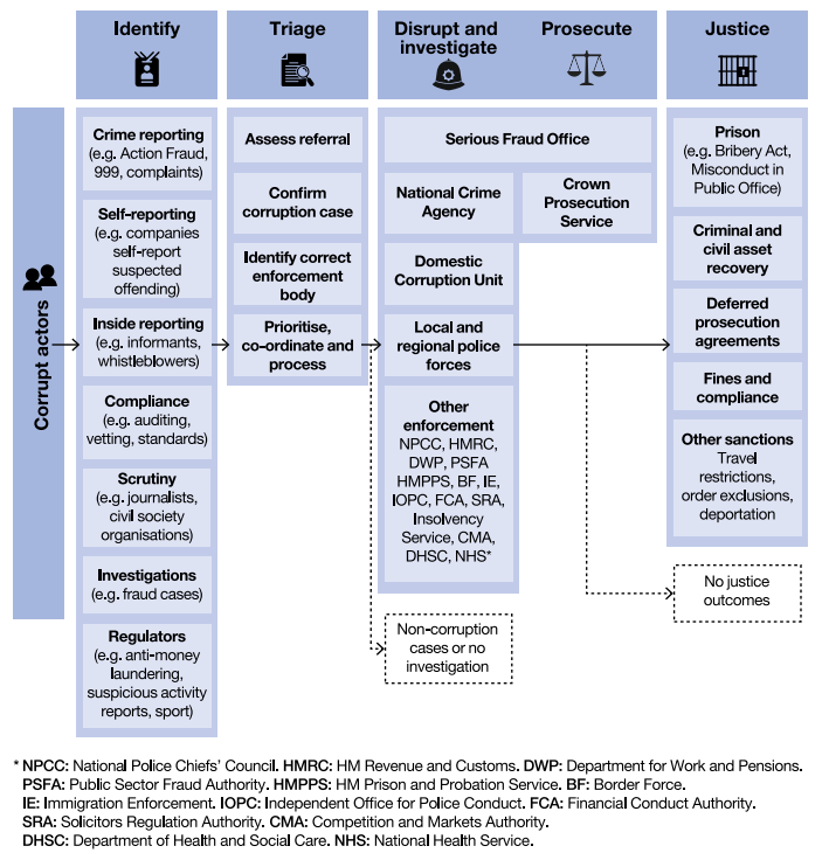
This section first outlines the key state actors within the UK anti-corruption landscape (see Figure 1 for a schematic overview). While not exhaustive, the overview covers the key bodies responsible for prevention and integrity in the public sector as well as those involved in investigation, prosecution and enforcement. It then examines key non-state actors, with particular attention to their coordination with public authorities in anti-corruption efforts.
Figure 1. The UK system for bringing corrupt actors to justice: An overview.
Source: Home Office (2025a: 19).
State actors
Serious Fraud Office (SFO)
The SFO is responsible for investigating and prosecuting the most serious cases of fraud, international bribery and corruption, and associated money laundering involving corporate entities linked to the UK. It has jurisdiction over offences committed in England, Wales and Northern Ireland9c7ea96e2a93 (UK Government 2026a). Together with the National Crime Agency’s (NCA) International Corruption Unit (ICU), the SFO shares primary responsibility for investigating allegations of international bribery and corruption (UK Government 2026a).
When deciding whether to authorise an investigation, the director of the SFO considers factors such as the actual or intended harm to the public, the reputation and integrity of the UK as an international financial centre and the broader impact on the UK’s economy and prosperity (UK Government n.d. a). The director also assesses whether the case is sufficiently complex to require the specialist expertise available within the SFO (UK Government n.d. a).
The SFO both investigates and prosecutes its own cases, reflecting the complexity of the matters it handles, which require close collaboration between lawyers and investigators from the outset (UK Government n.d. a). According to its annual report, the SFO’s (2025: 21) intelligence division is responsible for developing new cases, which may originate internally or arise from referrals submitted by law enforcement partners, government agencies, members of the public, whistleblowers or companies. In 2024, approximately 1,450 referrals were received and subsequently triaged, assessed and processed (SFO 2025: 21). The SFO has also begun modernising its referral system, with the aim of integrating its public reporting process into the central reporting portal managed by the City of London Police. This integration enables individuals to report allegations of serious fraud through a single platform, thereby simplifying the reporting process (SFO 2025: 21).
In recent years, the organisation has also strengthened its interagency coordination efforts. For example, in June 2025, the SFO joined the International Anti-Corruption Coordination Centre (IACCC) to enhance cooperation on cross-border corruption (UK Government 2025c; Harkavy 2025). Several months earlier, the SFO established an International Anti-Corruption Prosecutorial Taskforce with French and Swiss authorities, aimed at strengthening collaborative efforts to address bribery and other forms of corruption (UK Government 2025c; Anderson et al. 2025; Herbert Smith Freehills Kramer 2025). The taskforce is intended to create formal structures to share expertise and strategy, and identify opportunities for operational collaboration in anti-corruption efforts (Herbert Smith Freehills Kramer 2025).
National Crime Agency (NCA)
The National Crime Agency (NCA) was established in 2013 under the Crime and Courts Act as a non-ministerial civil service department, accountable to parliament through the home secretary (NCA n.d. a). The agency investigates a wide range of serious and organised crimes, including corruption and related offences such as sanctions evasion, cybercrime, fraud, money laundering and illicit finance (NCA n.d. b).
The NCA hosts specialised anti-corruption units focusing on corruption, bribery and sanctions evasion, notably the International Corruption Unit (ICU) and the International Anti-Corruption Coordination Centre (IACCC) (see below). The agency is also a member of the International Foreign Bribery Taskforce, which brings together bribery investigators from the UK, Australia, Canada and the United States. This taskforce provides a platform for knowledge sharing among law enforcement experts and supports a coordinated international approach to foreign bribery investigations (NCA n.d. c).
International Corruption Unit (ICU)
The key role of the NCA’s International Corruption Unit (ICU) is to investigate money laundering in the UK arising from the corruption of high-ranking officials overseas, as well as complex cases of bribery and corruption involving UK based firms or nationals with an international dimension that fall outside the remit of the SFO (UK Government 2026a; NCA n.d. c). The unit also investigates cross-border bribery cases where there is a link to the UK (UK Government 2026a; NCA n.d. c).
In addition, the ICU focuses on tracing and recovering the proceeds of international corruption and supporting the work of other actors, reflecting its interagency coordination role. This includes cooperation with HM Treasury on the enforcement of financial sanctions, collaboration with foreign law enforcement agencies in investigations, and partnerships with businesses and government bodies to reduce the UK’s exposure to illicit financial flows (NCA n.d. c). The unit also engages with the private sector to support compliance with the Bribery Act 2010 (NCA n.d. c).
For example, a former chief of staff to the president of Madagascar and his associate were charged following an investigation by the ICU for soliciting a bribe from the UK based company Gemfields in exchange for assistance in securing exclusive mining deals with the government of Madagascar (UKFIU 2025b: 12). The company reported its corruption concerns to the NCA, which launched an investigation that ultimately resulted in both individuals being found guilty by a jury at Southwark crown court and receiving prison sentences (UKFIU 2025b: 13).
International Anti-Corruption Coordination Centre (IACCC)
The International Anti-Corruption Coordination Centre (IACCC) is an international, multi-agency team of investigators and intelligence analysts established in 2016. It is based in London, with Interpol as its operational partner (NCA n.d. d). The IACCC provides operational support for grand corruption investigations, and any law enforcement agency worldwide can refer cases to the centre for operational assistance (NCA n.d. d).
The IACCC is reportedly the only organisation globally composed of active law enforcement officers who can directly support corruption investigations through case-specific mentoring and case coordination for asset recovery (NCA n.d. d). Specifically, its support activities include (NCA n.d. d):
- “Informing investigations with intelligence collection by all IACCC members
- Assisting the progression of investigations with sustained operational capabilities
- Coordinating international strategies with options for law enforcement interventions
- Case-specific mentoring and capacity building activities for investigation teams and prosecutors
- Collecting a strategic picture of global grand corruption”
The IACCC currently has nine law enforcement agency memberse62d57600cac and fourteen associate members.
The IACCC has been effective in asset recovery: as of May 2025, it had identified £1.8 billion in suspected stolen assets, with £641 million worth of assets frozen on IACCC supported cases and £70 million confiscated/forfeited (NCA n.d. d). With regards to referral processes, any law enforcement or prosecuting authority in the world can refer cases to the IACCC for support. Since 2017, more than a quarter of the states parties to the United Nations Convention against Corruption (UNCAC) have referred corruption cases to the centre (NCA n.d. d).
National Economic Crime Centre (NECC)
The National Economic Crime Centre (NECC) is a multi-agency centre founded in 2018 and housed within the NCA. It works alongside the UK Financial Intelligence Unit (UKFIU) and the Proceeds of Crime Centre (PoCC), bringing together law enforcement agencies, government departments, financial regulators and private-sector partners (NCA n.d. e; NECC n.d.). The NECC helps to direct and coordinate the cross-system operational response to economic crime, considering its complex and evolving nature (NECC 2024; NCA n.d. e). Recent efforts have focused on fraud and money laundering (NECC 2024).
The NECC builds on earlier public-private partnership initiatives, notably the Joint Money Laundering Intelligence Taskforce (JMLIT), and has since expanded this collaborative capability (NECC 2024: 2). It partners with other actors in the anti-corruption and economic crime landscape, such as the Financial Conduct Authority (FCA), including in efforts to tackle crypto-asset related money laundering.
JMLIT is a public-private partnership between law enforcement and the private sector, comprising more than 200 members, including law enforcement agencies, regulators, public sector bodies, financial institutions, insurance and investment companies, telecommunications firms, technology and social media companies, NGOs, and others, operating under a JMLIT+ model (NCA n.d. e). JMLIT supports investigations by facilitating access to private sector information and developing knowledge of typologies to address high-end money laundering and serious financial crime (NCA n.d. e). In addition, a developing data fusion capability enables the sharing of targeted datasets from the banking sector with the NCA, supporting the identification of new investigative targets (NCA n.d. e).
The NECC’s work is grounded in threat monitoring and coordinated responses through collaboration, including convening law enforcement, government and private-sector partners, establishing operational taskforces and coalitions, and analysing data at scale (NCA n.d. e). The NECC public-private partnerships team plays a central role in driving cross-sector initiatives that use financial intelligence to counter money laundering and broader economic crime (NECC 2024).
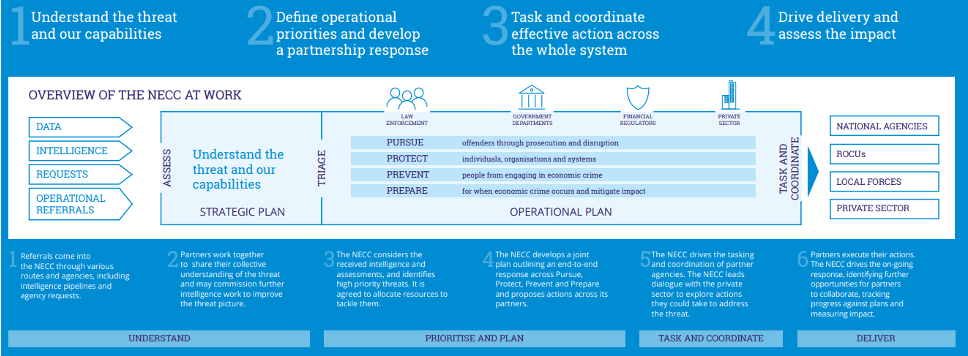
While this collaborative model promises a more effective system-wide response, the NECC also performs an important coordinating function in tasking partner agencies. As illustrated in Figure 2, the NECC receives referrals from multiple agencies, analyses them to identify priority threats, develops joint operational plans and coordinates the corresponding response.
Figure 2. The overview of NECC’s workflow.
The UK Financial Intelligence Unit (UKFIU)
The UK Financial Intelligence Unit (UKFIU) is responsible for receiving, analysing and disseminating intelligence submitted through the suspicious activity reports regime (SARs) (NCA n.d. f). This intelligence is then shared with law enforcement agencies in the UK and internationally. The UKFIU is housed within the National Economic Crime Centre (NECC) of the National Crime Agency (NCA) (NCA n.d. f).
SARs play a critical role in alerting authorities to potential cases of money laundering and terrorist financing. They are submitted by a range of reporting entities, including financial institutions’ professionals, such as solicitors, accountants and estate agents, as well as private individuals (NCA n.d. f). The banking and financial services compose the largest proportion of SAR submissions (UKFIU 2025a).
The UKFIU analyses SARs to identify reports that should be disseminated to law enforcement, including those that present potential investigative leads or asset recovery opportunities (UKFIU 2025a: 14). The unit receives over 850,000 SARs annually, which are stored in a secure central database (NCA n.d. g). In 2024-2025, of approximately 48,000 SARs involving politically exposed persons (PEPs) that were reviewed and triaged, 832 were disseminated to UKFIU law enforcement partners (UKFIU 2025a: 14). During the same period, of around 58,000 integrity related SARs (which include knowledge or suspicion of money laundering or terrorist financing concerning an employee of a law enforcement agency or government department), 533 were disseminated to law enforcement partners (UKFIU 2025a: 14). Other SARs, with some exceptions, are made available to UK law enforcement bodies via a secure channel (NCA n.d. g).
Domestic Corruption Unit (DCU)
The domestic corruption unit (DCU), within the City of London Police, is tasked with leading and coordinating the national policing response to domestic bribery and corruption (UKFIU 2025b). The unit serves as the UK’s central hub for corruption referrals, promoting an intelligence led approach to identifying, investigating and preventing corruption (UKFIU 2025b).
Historically, local police forces in the relevant parts of the UK led on domestic corruption cases. Marking a departure from this model, the DCU was established in 2024, when the City of London Police, supported by Home Office’s Joint Anti-Corruption Unit (JACU), created a pilot unit (Home Office 2025a). Its core objectives were to develop dedicated investigative capability, improve understanding of the nature and scale of domestic corruption and support regional and local police forces in ongoing corruption cases (Home Office 2025a).
The DCU receives and assesses referrals from across the UK, from policing and partner agencies, triages cases to understand threat levels and prioritise cases, with a particular focus on high-level threats, including national-level corruption and the role of professional enablers (UKFIU 2025b). The unit may lead investigations directly or allocate them to local or regional partners while providing operational guidance. It works closely with the Crown Prosecution Service’s (CPS) specialist team, as well as with policing and enforcement partners, including regional organised crime units (ROCUs) (Home Office 2025a; UKFIU 2025b).
Beyond enforcement, the DCU also plays a preventive role by identifying vulnerabilities and high-risk sectors through the analysis of intelligence gathered from referrals and investigations (UKFIU 2025b). For example, recent referrals have highlighted vulnerabilities within local government to corruption risks, especially housing services. Namely, operation Chandrila, a DCU led investigation into alleged housing fraud and bribery within a London local authority, identified several red flag indicators, including concentrated decision-making power, missing, falsified or duplicate documentation in procurement records, payments made through personal or unrelated third-party accounts, and referrals from whistleblowers (UKFIU 2025b: 11). The unit also contributes to capacity building across policing and partner organisations, through the sharing of experience and operational guidance (UKFIU 2025b).
The UK anti-corruption strategy reports that, during its first operating year, the DCU set up a team of investigative and intelligence officers and processed over 70 referrals across various sectors (Home Office 2025a: 22). The unit is expected to significantly expand in the coming period, with £15 million in additional funding (UK Government 2025a).
Prime minister’s anti-corruption champion
The position of the prime minister’s anti-corruption champion was established in 2004 to enhance efforts to curb corruption both domestically and internationally, and to address some of the coordination gaps resulting from the UK’s decentralised approach to anti-corruption (Barrington 2016; UK Government 2024a). The role has three core responsibilities: supporting the government in the development of the anti-corruption strategy, acting as the government’s entry point on anti-corruption issues for parliamentarians, the private sector and civil society, and engaging internationally to work on UK priorities (UK Government 2024a). The anti-corruption champion reports to the prime minister, providing annual updates on activities (UK Government 2024b).
This office also scrutinises the performance of departments and agencies to counter corruption. However, engagements with stakeholders outside the government require previous clearance through relevant departments, including the Joint Anti-Corruption Unit (JACU) in the Home Office, the Foreign, Commonwealth and Development Office (FCDO) where UK international interests are involved, and HM Treasury, where issues relate to illicit finance (UK Government 2024b).
As Barrington (2020) points out, the position is overly dependent on the incumbent prime minister with insufficiently clear responsibilities and remit.
Public Sector Fraud Authority
The Public Sector Fraud Authority serves as the government’s centre of expertise on the management of public sector fraud. It provides expert led services to ministerial departments and public bodies, while also sharing standards and best practices across the broader UK public sector (UK Government n.d. b).
The authority delivers seven groups of services and functions. Its services include risk, threat and prevention, where experts provide advice on the methods fraudsters use to attack government schemes and on how organisations can better protect themselves; a data analytics service, which provides data-driven tools to support public bodies in detecting and preventing fraud; and an enforcement and intelligence unit, which collaborates with government departments and public bodies to investigate fraud allegations and recover losses associated with fraud (UK Government n.d. b). Its functions include performance, assurance and evidence, through which the authority aims to increase understanding of the scale of fraud and error loss by strengthening the evidence base; practice, standards and capability, referring to its role in bringing together cross-public sector expertise to promote good practice; and policy, as it provides expert advice to ministers, government departments and public bodies (UK Government n.d. b).
Joint Anti-Corruption Unit (JACU)
The Joint Anti-Corruption Unit (JACU) was established in 2015 to strengthen cross-government coordination on anti-corruption efforts and was initially based in the Cabinet Office (Barrington 2020; ICAI 2020). In 2017, the unit was transferred to the Home Office to facilitate closer coordination of anti-corruption efforts and promote stronger ties between anti-corruption and other economic and organised crime (HM Government 2017: 10). JACU was also responsible for developing relationships with business, civil society and foreign governments (HM Government 2017: 10).
Its core responsibilities include supporting the implementation of the UK anti-corruption strategy and assisting the prime minister’s anti-corruption champion. The unit also plays a role in coordinating a strategic response to corruption threats and representing the UK in international anti-corruption fora (Home Office 2025a; ICAI 2020; Barrington 2020).
However, questions have been raised regarding its effectiveness. In particular, its location within a single government department has led to concerns about its impartiality and its capacity to operate as a neutral cross-government coordinating body (Barrington 2020).
National Audit Office (NAO)
The National Audit Office (NAO) is an independent public spending oversight body led by the comptroller and auditor general who has statutory authority to audit and report on the financial accounts of all government departments and other public bodies and examine the value for money (VFM) of how public money is being spent (NAO n.d.).
Ethics and Integrity Commission (EIC)
The Ethics and Integrity Commission (EIC) was officially launched in October 2025, superseding the Committee on Standards in Public Life (CSPL). However, there are as yet no meaningful assessments of its effectiveness, given that the commission is still in the early stages of operations. It operates as an advisory non-departmental public body of the Cabinet Office and reports to the prime minister (The Constitution Blog 2025; EIC n.d. a). The establishment of the commission reflects commitments in the recent anti-corruption strategy, which emphasised reforms aimed at strengthening public integrity and restoring public trust in institutions (The Constitution Blog 2025; Home Office 2025a). An implementation plan sets out the transition from the CSPL to the EIC over an 18-24 month period (EIC n.d. b).
The EIC’s key responsibilities are to (Ethics and Integrity Commission n.d. a):
- “Promote and safeguard the Seven Principles of Public Life
- Conduct research and thematic inquiries and make recommendations on changes to present arrangements to help ensure the highest standards in public life
- Advise public authorities on the development of clear codes of conduct with effective oversight arrangements, in line with the planned forthcoming obligations of the Public Office (Accountability) Bill
- Examine current concerns about standards of conduct of all public office holders, and report annually to the prime minister on the health of standards in public life
- Engage and inform the wider public on the values, rules and oversight mechanisms that govern standards in public life
- Convene ethics and standards bodies in central government (and parliamentary standards bodies, with their agreement) to share best practice and identify and address areas of common concern”
The commission therefore has an important coordinating role as it is responsible for convening and facilitating cooperation among ethics bodies and is intended to serve as a central point of reference for the public seeking information about standards in public life (UK Government 2025d). Coordination is undertaken through the EIC’s network of standards bodies, which brings together central government standards bodies and, where agreed, parliamentary standards bodies to promote a whole-system approach, share best practices and identify areas of common concern (EIC n.d. c). The network consists of (EIC n.d. c):
- central government standards bodies
- independent adviser on ministerial standards
- first civil service commissioner
- commissioner for public appointments
- chair, House of Lords Appointments Commission
- parliamentary standards bodies
- commons commissioner for standards
- lords commissioner for standards
- chair, Independent Parliamentary Standards Authority (IPSA)
- other bodies
- registrar of consultant lobbyists
- chair, Electoral Commission
- chair, UK Statistics Authority (UKSA)
Compared with the CSPL, the commission’s remit has been expanded to include annual reporting to the prime minister and providing advice to public authorities on the development of clear codes of conduct (EIC n.d. b). However, while the commission may examine systems designed to uphold ethical standards, such as those related to conduct, financial activities and commercial endeavours of public office holders, it does not investigate individual cases (EIC n.d. a).
Parliamentary commissioner for standards
The parliamentary commissioner for standards is responsible for monitoring the operation of the House of Commons code of conduct and registers and investigating alleged breaches of the code of conduct (UK Parliament n.d.).
The commissioner is an independent officer of the House of Commons and appointed by MPs after nomination by the House of Commons commission. With regards to investigations, the commissioner can begin investigations on their own initiative or in response to complaints or self-referral by MPs (Baker 2024). In 2024/2025 (covering the period between 1 April to 31 March) the commissioner received 2,955 written allegations and enquiries, 15 code of conduct inquiries were started, and 16 were completed, of which 2 were not upheld, 12 were rectified and 2 were referred to the standards committee (House of Commons 2025).
In Scotland, the commissioner for ethical standards in public life in Scotland performs a similar role for ministers and members of the Scottish Parliament (Ethical Standards Commissioner n.d.), as does the commissioner for standards for ministers and members of the Legislative Assembly in Northern Ireland (Commissioner for Standards n.d.).
Independent adviser on ministerial standards
The independent adviser on ministerial standards is appointed by the prime minister to provide advice on matters relating to the ministerial code, and the role has existed since 2006 (UK Government n.d. c).
The adviser’s responsibilities include providing independent scrutiny and advice to government ministers on the management of their private interests, publishing information on ministers’ relevant private interests, advising the prime minister on matters of conduct, and investigating alleged breaches of the ministerial code, among other functions (UK Government n.d. c).
The Crown Prosecution Service (CPS)
The Crown Prosecution Service (CPS) prosecutes criminal cases investigated by the police and other organisations in England and Wales (CPS n.d. a). The CPS has a specialised unit focused on asset recovery, CPS Proceeds of Crime Division (CPS POCD), which is based within the Serious Economic, Organised Crime and International Directorate (SEOCID).
CPS POCD cooperates with law enforcement agencies, including police, the NCA, HM Revenue & Customs and the Department for Work & Pensions, as well as regional asset recovery teams, asset confiscation enforcement teams (police and NCA), HM Courts & Tribunal Service and the Home Office (CPS n.d. b).
Non-state actors
There is a wide range of non-state actors in the UK that play a role in anti-corruption efforts. The two highlighted below have been selected based on the extent of their engagements with and cooperation with the UK government on advancing anti-corruption reforms.
UK Anti-Corruption Coalition (UKACC)
The UK Anti-Corruption Coalition (UKACC) works collaboratively to counter corruption in the UK and abroad, with its members including Open Government Partnership (OGP), Global Witness, Natural Resource Governance Institute, Open Ownership, The Sentry, Transparency International UK (TI UK), and others.
The UKACC’s focus areas include illicit finance, political integrity, public procurement, sanctions and climate transition (UKACC n.d.). In the area of political integrity, it emphasises the need to strengthen integrity standards at the highest levels, prevent rogue conduct in parliament, improve the transparency and regulation of political finance, and reform the House of Lords (UKACC n.d.). With respect to integrity standards, the UKACC highlights the importance of greater lobbying transparency and stronger post-government employment rules to prevent abuses associated with the “revolving door”, among other priority areas (UKACC n.d.).
Transparency International UK (TI UK)
Transparency International UK (TI UK) is an independent, non-profit charitable organisation that works with the UK and devolved governments, parliamentarians, civil society and the private sector to curb corruption.
TI UK works on a range of domestic corruption issues, such as political finance, lobbying reform, local government planning, procurement and others. For example, its research into the influence of big money in UK politics identified millions of pounds in donations to political parties and their members coming from unknown or questionable sources and recommended lowering spending limits for elections and introducing donation caps, among other suggestions (TI UK 2024b).
TI UK has played important role in the development of several anti-corruption tools and legislative reforms in the UK, such as unexplained wealth orders (UWOs), an investigative tool that enables law enforcement agencies to act on suspected corrupt assets (TI UK n.d.). Specifically, in 2014, TI UK convened a taskforce of experts, including lawyers, law enforcement and anti-corruption campaigners, to identify weaknesses in the UK’s asset recovery regime. This work ultimately led to recommendations supporting the introduction of UWOs (Davies Teka 2017).
University of Sussex’s Centre for the Study of Corruption
The Centre for the Study of Corruption at the University of Sussex is a research and teaching centre known for its policy relevant work in the area of corruption. The centre maintains multiple channels of collaboration and partnership with the UK government.
One area of collaboration involves providing advice on anti-corruption policy, including through the participation of its researchers in specialised taskforces, advisory roles on procurement reform and international anti-corruption programmes, and the preparation of studies commissioned by government departments on a range of anti-corruption issues (University of Sussex n.d. a).
Another area relates to financial support for its research. For example, in 2024, the centre signed a grant worth £3.4 million with the FCDO for their research on global corruption (Allen 2004).
The centre also hosts the governance and integrity anti-corruption evidence research programme (GI ACE), which delivers practical, policy relevant research on curbing corruption, illicit financial flows and serious organised crime (University of Sussex n.d. b). The programme is funded by the FCDO and comprises three research streams: governance & integrity ACE (GI ACE), SOAS ACE, and serious organised crime ACE (SOC ACE) (University of Sussex n.d. b).
Spotlight on Corruption
Spotlight on Corruption focuses on the UK’s role in corruption both domestically and abroad by conducting evidence-based research on how the UK implements its anti-corruption laws and international commitments. It also monitors, analyses and disseminates information on how UK courts address corruption cases, while campaigning to strengthen the UK legal system and the enforcement of laws (Spotlight on Corruption n.d.).
Its work covers a range of corruption related issues, including money laundering, bribery enforcement, asset recovery, political finance, political integrity and public procurement (Spotlight on Corruption n.d.).
For example, Spotlight on Corruption has long campaigned to curb the influence of dirty money in politics and has advocated for political parties to undertake meaningful “know your donor” checks on the sources of donations (Spotlight on Corruption 2024). Under their new election reform strategy, the government announced in July 2025 that parties would be required to implement such measures (Spotlight on Corruption 2024).
The organisation has also worked to address corruption risks associated with corrupt firms participating in public procurement. It partnered with the UKACC, academics and other experts to advocate for a stronger procurement regime within the Procurement Act 2023, which provides for the establishment of a central debarment register in the UK (Spotlight on Corruption 2022).
Protect
Protect is a UK whistleblowing charity that works to promote safe whistleblowing practices (Protect n.d. a). The organisation operates a free advice line (the only specialist whistleblowing legal advice service in the UK) which supports whistleblowers who have witnessed malpractice, risk or wrongdoing in the workplace. In addition, Protect works with organisations that support, advise and train teams to improve their “speak up” arrangements, and it campaigns for stronger legal protections for whistleblowers by lobbying the government, MPs, regulators and other stakeholders (Protect n.d. a).
Protect is also engaged in anti-corruption efforts, advocating for whistleblowing to remain central to national integrity reforms. It closely collaborates with the UKACC and the all-party parliamentary group on anti-corruption and fairer taxation and has contributed to the development of the new anti-corruption strategy through engagement with the Joint Anti-Corruption Unit (Protect n.d. b). The new anti-corruption strategy also includes a commitment to review whistleblowing protections by 2027 (Protect n.d. b).
Other relevant non-state actors include the Royal United Services Institute (RUSI) and the Open Government Partnership (OGP).
Data sharing
Data sharing is a cornerstone of effective interagency coordination in anti-corruption efforts. At the preventive level, it enables access to and the systematic linkage of political integrity datasets, such as asset and interest declarations, political finance records, lobbying registers and public procurement data, with tax and financial records. These linkages support corruption risk analysis, enhance transparency and facilitate the early detection of corruption vulnerabilities, undeclared interests and potential conflicts of interest (Mineva et al. 2023; Resimić 2024).
At the operational level, data sharing underpins cooperation between investigative, oversight and prosecutorial bodies. It allows for the exchange of financial intelligence, tax information and corporate ownership data in the context of anti-money laundering (AML) investigations, joint taskforces and complex domestic and transnational corruption cases. Effective information exchange in these settings is essential for evidence-building, case coordination and the tracing of illicit financial flows, particularly where corruption schemes span multiple jurisdictions or institutional mandates (Owens et al. 2020; EPAC and EACN 2025; Parvanova 2025).
Strengths in the UK data sharing system
The UK has an established legal foundation for data sharing, while its regulatory and institutional environment for data infrastructure is currently undergoing significant reforms to address identified challenges.
First, two key pieces of legislation underpin the government’s efforts to improve data sharing across the public sector. The Digital Economy Act 2017 provides a legal basis for data sharing between public authorities, specifying which organisations may share data, for what purposes and with safeguards to protect individuals’ privacy. The Data Protection Act 2018 incorporates a direction to the information commissioner’s office (ICO) to prepare a data sharing code of practice, which was issued in 2020 (NAO 2022; Hogan Lovells 2020). Together, these frameworks have clarified legal gateways for information exchange across public authorities and helped address longstanding uncertainties that previously made data sharing agreements slow and cumbersome (Shepley and Freeguard 2023). Most recently, the Data (Use and Access) Act 2025 introduces updates to digital information legislation, with implementation to be phased in until June 2026 (ICO 2025).
Second, the recent anti-corruption strategy (Home Office 2025a) and ongoing data infrastructure reforms acknowledge several structural weaknessesa4574e506470 that may hinder effective cross-institutional data sharing, such as institutional fragmentation and siloed data (DSIT 2025a). A number of reforms are currently underway. In January 2025, the Government Digital Service (GDS), within the Department for Science, Innovation and Technology (DSIT), was created from existing teams in the Central Digital and Data Office (CDDO), Geospatial Commission, GDS, Incubator for Artificial Intelligence (i.AI) and Responsible Tech Adoption Unit, addressing previous institutional fragmentation (UK Government n.d. d).0cc00fea71f5 The GDS now serves as the UK government’s digital centre, responsible for setting digital strategy, maintaining guidance and tools to support best practice, and advancing priorities such as integrated public services, the use of artificial intelligence (AI), transparency and accountability, among others (UK Government n.d. d).
In addition, the Data Standards Authority (DSA), established in 2020, aims to improve public sector data management by developing standards that facilitate more effective and efficient data sharing across government (UK Government n.d. d). The DSA also plays a coordinating role by working with experts across the public sector, devolved administrations, academia and the private sector to support the implementation of data standards and lead cross-government conversation about data standards (UK Government n.d. d).
At the operational level, several cross-government cooperation initiatives seek to enhance corruption prevention, detection, investigation and prosecution through improved data sharing protocols. For example, recent initiatives demonstrate growing capacity for public-private data sharing in measures to counter financial crime. Notably, a data sharing project involving seven UK banks and the National Crime Agency (NCA) has enabled the joint analysis of financial intelligence to identify and disrupt complex criminal networks (Gibbon and Fisher 2025).
In the anti-money laundering (AML) domain, the UK has established comparatively robust mechanisms for intelligence sharing. A wide range of regulated entities, including banks, accountants and other obliged entities, are legally required to report and share information on suspected money laundering activities (Bociga et al. 2024).
There are also examples of good practice at the local level, particularly in public procurement oversight. Some local authorities have developed integrated fraud hubs that consolidate data from multiple sources and are used by Fraud and Enforcement Functions both for investigations and for analytical reporting across datasets to identify fraud and corruption risks (Ministry of Housing, Communities and Local Government 2020). In a survey about the risks of fraud and corruption in local government procurement, 27% of respondents stated that they share data with other councils to identify red flags, while 48% share data to assist in investigations (Ministry of Housing, Communities and Local Government 2020: 42).
Weaknesses in the UK data sharing system
At the most general level of the quality of data infrastructure in the UK, a recent report by the DSIT (2025a: 9-11, 2025b) to map the state of digital services across the public sector identified the following key challenges:
- institutionalised fragmentation, referring to digital services and technology dispersed across organisations resulting in broken customer journeys and duplication
- persistent legacy systems, referring to a large share of organisations’ services depending on unsupported legacy technology systems
- under-digitisation, with only around half of public services digitised
- cyber and technology resilience risks, reflected in a number of high-profile incidents across the public sector
- siloed data, which continues to hinder effective collaboration, with data-sharing agreements often taking significant time to negotiate
- inconsistent leadership, as most senior leaders lack training to run digital organisations, and related skills shortfall as salaries are not competitive with the private sector
- diffuse buying power, undermining value for money
Among these challenges, fragmentation and the underutilisation of data are particularly relevant to anti-corruption efforts as they constrain the adoption of artificial intelligence based technologies and advanced data analytics. Notably, 70% of survey respondents across select public organisations reported that “their data landscape is not well co-ordinated, interoperable, and does not provide a unified source of truth” (DSIT 2025b).
One of the underlying causes of these challenges relates to the structure of the UK public sector, where fragmentation is a defining feature. In such a system, public sector organisations typically develop their own technological infrastructure, which limits standardisation, interoperability and the reuse of data and digital solutions (DSIT 2025b).
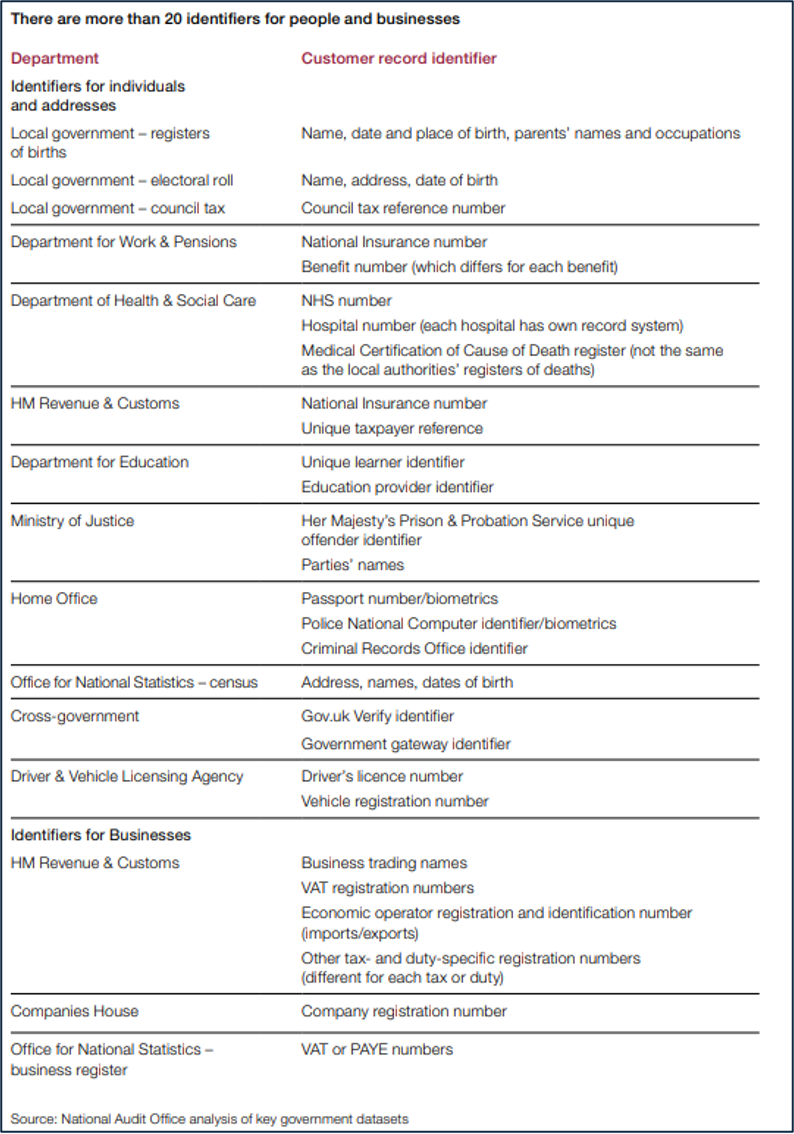
Moreover, although the UK has a relatively strong legal basis for data sharing, as discussed in the previous section, barriers in practice persist. These include uncertainty regarding the lawful disclosure of personal data, risk-averse interpretations of data protection requirements by some departments and shortages of technical and analytical skills needed to operationalise data sharing effectively (NAO 2022; Shepley and Freeguard 2023). The NAO’s (2022: 10) guide for improving government data also highlights siloed data as a major obstacle to integrating information across government systems. For example, an NAO (Davies 2019) report on data use across government found a lack of common standards, leading to inconsistencies in how the same data are recorded. Specifically, the NAO (Davies 2019: 10) report found more than 20 ways of identifying individuals and businesses across ten government departments and agencies, with no standardised formats for recording information like names, addresses and dates of birth, making it difficult to connect the data across different sectors (Figure 3) (see also NAO 2022).
Figure 3: Identifiers for businesses and individuals across different departments in the UK.
Source: Davies (2019: 32).
Furthermore, the UK continues to face significant weaknesses in understanding the scale and nature of corruption, partly due to limitations in how corruption is categorised, recorded and measured across departments. As a result, available data do not provide a comprehensive or consistent picture of corruption risks in the public sector (RAND Europe 2018; NAO 2023; Home Office 2025b). At the local level, particularly in public procurement, some councils continue to encounter difficulties in securing data sharing agreements and overcoming structural and capacity constraints, despite the existence of good practice examples elsewhere (Ministry of Housing, Communities and Local Government 2020). According to the NAO, the UK government is still at an early stage in the use of data matching and advanced analytics for the prevention and detection of fraud and corruption (NAO 2023). Data sharing processes within and between departmental groups are frequently described as burdensome and slow, resulting in incomplete, fragmented or time-lagged data being exchanged, which limits their operational value for prevention and investigation (NAO 2023: 10). The latest anti-corruption strategy emphasises the fragmentation of relevant datasets. Namely, key information is dispersed across multiple public bodies and held in diverse formats, many of which are not designed for bulk download or interoperability. This lack of standardisation hinders systematic data linking and reduces the effectiveness of cross-institutional analysis (Home Office 2025a: 77). The strategy goes on to state that “addressing these issues requires a targeted, long-term approach, aligned with the measures set out in the forthcoming Economic Crime Data Strategy, to be published in 2026” (Home Office 2025a: 78).
Box 1: The state of beneficial ownership transparency in the UK and its offshore jurisdictions
Beneficial ownership (BO) registers contain information about the individuals who ultimately own or control an asset (i.e. a company or a trust fund) (Resimić 2024; Transparency International n.d.). Such registers can help uncover the illicit use of corporate entities for political corruption, bribery, tax evasion and money laundering, and can reveal potential conflicts of interest, particularly when connected with other political integrity datasets, such as political finance and public procurement records (Resimić 2024: 22; Arista et al. 2024).
Leaks of offshore records, beginning with the Panama Papers in 2016, exposed the extent of using shell companies and complex networks of corporate ownership structures to conceal corruption and related financial crimes (Goodrich 2025). The UK has been criticised for its role within these global financial networks, particularly through the City of London and the network of overseas territories and crown dependencies (Goodrich 2025). For example, an investigation by Transparency International UK identified £5.9 billion in suspicious funds used to purchase UK properties through shell companies registered in Britain’s overseas territories, while the Tax Justice Network estimated that the UK and its offshore financial centres account for US$169 billion in annual global tax losses (Mansour 2024; Transparency International UK 2024c; 2025).
To address these concerns, overseas territories committed at the November 2024 Joint Ministerial Council in London to implement legitimate interest access registers of beneficial ownership (LIARBOs), with the maximum possible degree of access and transparency.838146bc4be2 Transparency International UK subsequently published guidance to support implementation of this commitment (Goodrich 2025; Transparency International UK 2025).
However, a recent assessment of the progress of these guidelines in overseas territories found that implementation has been slow, especially in jurisdictions facing heightened risks of money laundering (Mollat 2025). The legitimate interest model of beneficial ownership registers is not only more complex and costly to administer but offers substantially less transparency than fully public registers (Mollat 2025). Proposed frameworks in overseas territories adopting this approach risk producing incomplete or unusable data, and only three jurisdictions – Gibraltar, Montserrat and St Helena – have so far established public registers (Mollat 2025).
The UK government has maintained the people with significant control (PSC) register since 2016, but concerns have been raised about its accuracy (UK Parliament 2022; UK Government 2020; Parvanova 2025: 10). The database records only personal details and discloses ownership and voting rights only in broad percentage bands (over 25% and up to 50%; over 50% and less than 75%; 75% or more), thereby limiting micro-level analysis (UK Parliament 2022; UK Government 2020; Parvanova 2025: 10).
Good international practices in data sharing
There are different models of data sharing practices that have shown to be effective in supporting anti-corruption efforts. This section focuses in particular on the following:
- guidelines for data sharing
- standards for connecting data across departments
- corruption risk assessments
- multi-disciplinary institutional models
Standards and guidelines for data sharing
International standards and guidance provide practical tools to reduce legal uncertainty and risk aversion surrounding data sharing. A range of international frameworks and guidelines directly address challenges identified in the UK context, particularly the lack of data standardisation across institutions and concerns within some departments regarding the permissibility and legal barriers associated with data sharing.
At a general level, the Open Data Institute (ODI) – a non-profit private company – has developed guidance to help organisations assess risks associated with data sharing, identifying potential challenges and conduct structured risk assessments (Yates 2022; see also NAO 2022). The guidance covers the management of legal and regulatory risks when sharing data (such as breaches of data protection laws), ethical risks (for example, enabling unethical data collection or use), reputational risks (e.g. suffering reputational damage from sharing or using data that breaches trust) and commercial risks (such as loss of competitive advantage in the market). Relatedly, an NAO (2022: 16-22) report provides an evidence-based set of recommendations for improving government data in the UK, including the adoption of data standards to enable interoperability across government, taking a structured approach to managing data that addresses legacy systems and facilitates data sharing through systematic risk assessment.
Additional thematic guidance, such as that developed under the Open Government Partnership (OGP), illustrates how data sharing can be tailored to address specific corruption risks (OGP 2022; 2023). In particular, OGP (2023) emphasises the importance of interoperability to enable comparisons across jurisdictions internationally, as well as between different levels of government within countries.
Various studies emphasise the importance of publishing integrity related data in line with the Open Data Charter, ensuring that datasets are timely, interoperable and in formats suitable for bulk download. Systematic domestic data sharing and linkage across institutions, such as tax authorities, corporate and beneficial ownership registries, procurement agencies and anti-corruption bodies, may enhance corruption detection and prevention when supported by clear principles and procedures (Resimić 2024; Mineva et al. 2023).
For example, Mineva et al. (2023: 77), in a study focusing on asset declaration systems in southeast Europe, propose a strategy for interconnecting public registers based on a two-step process: first, linking primary registers, such as physical persons registers, business registers and the property registers, and second, joining all remaining registers one by one. Such integration can enable the use of big data analytics to develop early corruption detection tools and risk analysis models (Mineva et al. 2023).
This approach is particularly relevant for the UK, given the previously discussed evidence of inconsistent unique identifiers across government systems, which currently limits data interoperability and cross-institutional analysis.
Corruption risk assessments (CRAs)
There are also examples of international good practice in corruption risk assessments (CRAs) that may provide useful lessons for the UK, particularly given the identified lack of systematic CRAs across many parts of its public sector.
For example, Italy’s national anti-corruption authority (ANAC) has developed a structured, data-driven approach to CRAs that addresses gaps commonly observed in public administration systems (EPAC and EACN 2025: 14; Poltoratskaia and Fazekas 2023). A notable strength of this approach lies in the first phase of risk assessment, which focuses on analysing the external context and mapping institutional processes, while incorporating cultural and socio-economic factors to strengthen risk prevention strategies (EPAC and EACN 2025: 14).
ANAC’s methodology is based on four core components: context analysis, process mapping, risk assessment and risk prevention, supported by the use of real-time public procurement data. Their approach consists of a two-phase corruption risk monitoring system: the first involves context analysis and process mapping to identify institutional vulnerabilities and identify high corruption risk areas. The second phase focuses on risk management, including evaluating risks based on probabilities and impact, and implementing preventive measures, such as staff rotation. This system is underpinned by a national database of public contracts, which consolidates public procurement data and is interoperable with financial, tax and corporate registries, thereby facilitating the monitoring of various corruption risks across sectors (EPAC and EACN 2025: 14).
Particularly relevant for the UK is the fact that the ANAC system goes beyond national oversight by developing region-specific corruption risk indicators based on statistical data to inform targeted anti-corruption strategies. This model could potentially be adapted to other contexts through the establishment of a national-level corruption risk assessment framework, interoperable databases and region-specific indicators (EPAC and EACN 2025: 14).
Based on an analysis of different CRA models, Poltoratskaia and Fazekas (2023: 32-36) identify four main challenges and propose corresponding recommendations:
- Political and institutional constraints can limit the effectiveness of CRAs as interagency collaboration is necessary, for example, to give access to data and key experts. The authors therefore recommend ensuring adequate resources for CRA processes and participating bodies and, where possible, mandating participation through legislation.
- Data quality and data availability are another challenge, particularly with regards to reliability, accuracy, completeness and consistency. Recommended responses include establishing cooperation with reliable data providers and investing in dataset development.
- Methodology and analytical focus also create challenges as these decisions may introduce bias by neglecting some forms of corruption, resulting in incomplete and inaccurate assessments. While decentralised approaches may help address resource constraints, they can also lead to inconsistent methodologies across institutions. Clear criteria for methodological approaches are therefore essential.
- There is a general lack of systematic monitoring of the impact of CRA recommendations, while the evolving nature of corruption risks requires frequent updates to CRAs that can hinder comparability over time. The authors therefore recommend embedding follow-up mechanisms within accountability frameworks to support implementation and evaluation.
Multi-disciplinary institutional models
There are various institutional models and operational mechanisms that enable agencies to collaborate more effectively and facilitate data sharing. Owens et al. (2020) suggests that a whole-of-government approach can be particularly effective in this regard. Given that different government agencies collect and hold information on individuals, businesses and transactions that may be relevant to multiple aspects of corruption, cooperation between institutions, for example, between tax authorities and other public bodies, can significantly improve the prevention and detection of criminal offences, including those involving corruption (Owens et al. 2020: 270).
The Netherlands provides a notable example through the Financial Expertise Centre (FEC), a joint project between the national tax and customs administration, the national police, the general intelligence and security service, the public prosecution service, the Netherlands financial markets authority, De Nederlandsche Bank and the Ministry of Finance and Ministry of Security and Justice (Owens et al. 2020: 270-271). The FEC was established to counter money laundering and strengthen the integrity of the financial sector through coordinated action and information exchange (Owens et al. 2020: 270-271).
Such multi-disciplinary teams, bringing together expertise from multiple institutions, represent one approach to facilitating data sharing while also helping to manage associated risks and bottlenecks that may arise when agencies operate in isolation. Numerous case studies demonstrate the effectiveness of this type of collaboration in enabling more efficient and seamless data sharing (see Box 2).
Box 2: Multi-disciplinary institutional models to overcome barriers to data sharing in anti-corruption efforts: Selected examples
In Estonia, institutionalised data sharing arrangements support interagency cooperation in countering corruption and financial crime. For example, the police and the tax and customs board share information through a common intelligence database, enabling more efficient coordination of investigations (Owens et al. 2020: 271).
In Italy, the financial intelligence unit (FIU) has direct access to the account and deposit register maintained by the tax administration. This register includes information on accounts and financial transactions carried out by financial intermediaries such as banks and trusts (Owens et al. 2020: 271). The FIU also has direct access to the tax register, and tax officials are obliged to report any suspicious transactions to the FIU (Owens et al. 2020: 271).
In Portugal, the asset recovery unit incorporates experts from the Portuguese tax office and the institute of registers and notaries to facilitate swift and lawful access to key administrative data for corruption and asset recovery cases (EPAC and EACN 2025: 12). Moreover, this model of interagency cooperation, through direct support of financial experts within criminal investigation units, strengthens the analysis of financial transactions (EPAC and EACN 2025: 12). In addition, direct access to property and financial databases enhances investigators’ capacity to trace illicit assets (EPAC and EACN 2025: 12).
Referral processes for investigating and prosecuting corruption
Effective referral processes are another essential feature of interagency coordination. In complex corruption and serious crime cases, no single authority typically has all the necessary investigative powers, intelligence or prosecutorial competence. Therefore, clear referral pathways reduce duplication, prevent jurisdictional conflicts and mitigate the risk that cases fall through institutional gaps (Jenkins 2019).
In the context of anti-corruption enforcement, referral systems are particularly important because cases often involve overlapping mandates between, for example, police, tax authorities, financial intelligence units (FIUs), specialised anti-corruption bodies and prosecutorial bodies. Effective referral frameworks enable early case assessment, coordinated evidence collection (see the example of SFO below) and timely prosecutorial engagement, thereby strengthening efficiency.
Strengths in the UK system of referral processes
Notable strengths of the UK referral processes include:
- solid referral processes for serious crimes and the integration of investigation and prosecution functions – SFO (HMCPSI 2023)
- established referral pipeline for suspicious activity reports (SARs)
- international referral capacity and mutual legal assistance
The UK system benefits from well defined institutional remits and referral pathways among agencies responsible for investigating serious crimes, such as the SFO and the NCA, which helps to reduce duplication and clarify responsibilities. The SFO operates under the Roskill model, where a single organisation has both investigative and prosecutorial powers, supported by multi-disciplinary teams in which investigators and lawyers work together from the outset (HMCPSI 2023). Case teams are led by a case controller who oversees lawyers, investigators, forensic accountants and other specialists (HMCPSI 2023). This structure is particularly well suited to the high complexity of cases handled by the SFO.ae7e9ee6e41c The organisation also follows a staged process: during the pre-investigation phase, it receives information from various sources (e.g. whistleblowers, victims, law enforcement agencies, media), which is then analysed by the intelligence division to determine whether an investigation should be opened. The director may authorise a criminal investigation where the case meets the statement of principle and there are reasonable grounds to suspect serious fraud, bribery or corruption (HMCPSI 2023).9f021a667cf3
Another strength of the UK system is the SARs regime, which serves as a central mechanism for alerting authorities to potential money laundering. SARs are submitted by financial institutions and regulated professionals, such as solicitors, accountants and estate agents, as well as by private individuals (NCA n.d. f). These reports are submitted to the UKFIU, part of the NCA, which analyses and disseminates relevant intelligence to law enforcement bodies. This process is supported by a secure central database currently holding approximately 4.5 million SARs, enabling intelligence led referrals and investigations (NCA n.d. g).
The UK also benefits from a well established architecture for reporting and investigating international corruption. The International Corruption Unit (ICU) within the NCA leads investigations into bribery and corruption involving UK interests overseas, while the International Anti-Corruption Coordination Centre (IACCC) operates as a multi-agency and international hub, bringing together investigators and intelligence analysts to support complex cases of grand corruption. As IACCC members have officers all over the world, referrals are typically channelled through them (NCA n.d. d). These mechanisms facilitate coordinated referrals and operational support across jurisdictions, strengthening the UK’s capacity to respond to transnational corruption (NCA n.d. e; NCA n.d. g; Home Office 2025a: 25).
More recently, the establishment of the domestic corruption unit (DCU) within the City of London Police has contributed to improved operational coordination at both regional and national levels. The Home Office (2025a: 22) argues that the DCU represents a positive development in addressing domestic corruption by providing a clearer focal point for referrals and interagency cooperation within the UK’s otherwise fragmented enforcement landscape, although its full effects are yet to be seen as the unit is still in its early stages of operation.
Weaknesses in the UK system of referral processes
Despite the existence of multiple referral channels, the UK’s framework for initiating and advancing corruption investigations continues to face significant structural and operational weaknesses. Some sources have cited weaknesses in the SFO’s referral process. Notably, disclosure failures led the SFO to drop the prosecution a major corruption case related to mining deals in Sierra Leone in February 2026 (Crosby 2026; Ring 2026; UK Government 2026b). The decision followed the discovery of approximately 600,000 items that had been missed when using its old disclosure software, Autonomy, meaning that some evidence files may not have been examined. This incident highlighted weaknesses in the current disclosure regime, particularly in the context of rapidly evolving digital technologies (Saleem and Taylor 2026; Ring 2026; Crosby 2026; UK Government 2026b; Spotlight on Corruption 2022b). This discovery also means that 20 other cases will need to be revisited. Earlier inspections had already identified vulnerabilities.
Further, inspections of the SFO revealed that although the agency has clear and well documented internal casework processes set out in its operational handbook, inconsistencies arise in their application. Individual case managers sometimes adopt different working practices, which can negatively affect case progression (HMCPSI 2023: 21). These inconsistencies are particularly evident when team changes occur, a common situation given the complexity and duration of SFO cases, some of which take many years to complete (HMCPSI 2023: 21).
Resource constraints and case prioritisation challenges also represent significant weaknesses. Among recent reforms, a new system requires cases to be reviewed by the general counsel to assess the evidence, determine whether charges should be brought and decide on the appropriate charges (HMCPSI 2023: 45). Under this system, case controllers are expected to submit a separate resourcing plan after the charge, outlining the resources required to progress the case. While intended to improve planning, this reform has reportedly contributed to delays in charging decisions and communication challenges (HMCPSI 2023: 45).
The system is further constrained by a substantial backlog of economic crime cases, driven by both structural and practical factors. Structural challenges include increased complexity in international cooperation following the UK’s exit from the European Union (EU), while practical constraints relate to the scale and technical complexity of datasets involved in financial and corruption investigations (Home Office 2025a: 24; Penhale 2024; Fisher 2024).
In addition, technical capacity varies significantly across law enforcement agencies, particularly with respect to managing disclosure obligations in complex economic crime cases (Penhale 2024: 7). These disparities can slow investigations, increase procedural risk and contribute to attrition between referral, investigation and prosecution stages (Penhale 2024).
Another persistent gap concerns inadequate mechanisms for whistleblowers to safely and effectively report corruption, which limits the flow of high-quality, case-specific intelligence into law enforcement and prosecutorial bodies (Home Office 2025a). A pressing concern consistently raised by anti-corruption and whistleblowing organisations, such as Protect, is that there is currently no legal obligation for employers to investigate whistleblowing concerns (Fraser 2025).
Another challenge is the absence of a unified approach to risk assessment and prioritisation of corruption cases, as noted earlier in this Helpdesk Answer in the context of data sharing challenges. The lack of common risk-scoring methodologies across agencies complicates referral decisions and resource allocation, potentially leading to the inconsistent handling of cases and delays in progressing investigations (Home Office 2025a: 21).
Finally, these weaknesses are reflected in the UK’s poor record of convictions for economic crimes, raising concerns about the effectiveness of referral pathways in translating intelligence and investigations into successful prosecutions (Beizsley and Hawley 2022).
Good international practices in referral processes
International experience highlights several approaches that can strengthen referral systems and improve the progression of corruption cases from reporting to investigation and prosecution.
This section focuses on the following areas:
- robust whistleblower protection frameworks
- standardised corruption recording systems and structured risk scoring
- the use of artificial intelligence (AI) and data-driven technologies in investigations
- investment in specialist units, as well as uniform reporting and data collection procedures
Robust whistleblower protection frameworks
In addition to safe reporting channels and strong protection against retaliation, some systems use financial incentives to encourage high-quality reporting, which can increase the provision of actionable information to law enforcement (Home Office 2025a; Lockhart 2024). However, Lockhart (2024: 41-46) emphasises that whistleblower reward schemes must be carefully embedded within the broader regulatory context. One criticism is that such programmes may benefit regulators more than whistleblowers, as evidenced by relatively low numbers of payments in some jurisdictions. More importantly, for reward schemes to function effectively, they must be integrated into a comprehensive whistleblower protection framework that includes robust anti-retaliation provisions, confidentiality safeguards and access to equitable remedies. Effective implementation also requires an empowered and proactive regulator administering the programme, as well as a dedicated office of the whistleblower responsible for processing submissions, referring tips to law enforcement and determining eligibility for rewards (Lockhart 2024: 41-46).
Good practice also includes awareness raising, accessible reporting mechanisms and institutional coordination, including cross-border cooperation where relevant. The Netherlands is frequently cited as a model for comprehensive whistleblower protection and institutional arrangements (EPAC and EACN 2025). Its whistleblowing authority adopts a holistic approach, combining secure reporting channels with protective measures, legal assistance, psychological support and preventive actions (EPAC and EACN 2025: 10). Additionally, it engages in international cooperation through participation in the NEIWA Network, which offers European wide cooperation on whistleblower protection (EPAC and EACN 2025: 10).
These measures directly address weaknesses identified in the UK’s current whistleblowing infrastructure and have the potential to improve the early-stage flow of credible referrals into investigative and enforcement processes.
Standardised corruption recording systems and structured risk scoring for better corruption categorisation and case prioritisation
Weaknesses in corruption categorisation and inconsistent case prioritisation can be mitigated through the development of more standardised recording systems and structured risk-scoring methodologies.
Comparative research on international approaches to measuring and recording corruption highlights good practices across multiple jurisdictions, including clearer classification frameworks and more consistent recording procedures, which support better strategic oversight and prioritisation (Shipley et al. 2025; Poltoratskaia and Fazekas 2023). Shipley et al. (2025) note that the main data sources for estimating levels of corruption are surveys and law enforcement records of corruption cases (which often are disaggregated into investigations, prosecutions and convictions) but emphasise that these should be complemented with additional analytical tools to provide a more comprehensive picture. The authors identify several promising recent initiatives, such as the work of the French anti-corruption agency (Agence Française Anticorruption), which is developing a national corruption risk map, informed by the analysis of recorded cases (Shipley et al. 2025).
Establishing a unified approach to risk scoring can further reduce inconsistencies across agencies and support more effective triaging of referrals, enabling resources to be directed towards the highest risk cases.
Harnessing AI and other emerging technologies in the investigation and prosecution of corruption cases
Several countries have adopted data-driven tools to improve the triaging of large volumes of information and to identify higher risk cases, an approach that is particularly relevant given the UK’s stated commitment to leveraging AI and data-driven investigative techniques (Home Office 2025a: 23; Resimić 2025). Examples include automated tools for detecting procurement risks and scrutinising public spending (e.g. “Alice” and “Rosie” in Brazil), AI supported analysis of asset declarations (e.g. Armenia) and automated triaging of suspicious transaction reporting (e.g. Peru), alongside broader approaches such as procurement analytics, large-scale e-declaration risk scoring and beneficial ownership-based network analysis to guide investigations and asset recovery (Odilla 2023; Harutyunyan 2023; OAS 2023; GIZ 2024; Parvanova 2025) (see Box 3).
Box 3: Harnessing AI for corruption detection, investigation and prosecution: Selected examples
In Brazil, the office of the comptroller general developed a bot, Alice, to tackle corruption in public procurement (Odilla 2023; Gerli 2024). Using machine learning, the tool enhanced the federal court of accounts by conducting regular data mining to spot corruption risks in tenders (Odilla 2023). It helped to suspend or cancel over US$1.75 billion between 2019 and 2022 (OPSI 2024).
In Peru, Inspector AI, based on natural language processing (NLP) techniques using neural networks, can evaluate suspicious transaction reports, significantly reducing the time required to process large volumes of submissions and enabling financial intelligence analysts to focus on higher value analytical work (GIZ 2024; OAS 2023). The software automatically extracts and filters relevant data, such as names, addresses and payment types, and flags high-risk cases for further investigation (GIZ 2024).
The European Anti-Fraud Office (OLAF) has been using machine learning and NLP to sift through various sources including e-mail exchanges, combining keywords that may signal corruption red flags (European Parliament 2021; Gerli 2024; Nicaise and Hausenkamph 2025).
Another example of good practice is provided by the Finnish national enforcement authority, which uses data analytics to process large datasets to identify high-risk cases in economic crime investigations (Huss et al. 2023: 193). Under the Harmaa (Grey) project, the key objective was to develop data-driven analytical methods capable of processing large volumes of enforcement data and identifying cases that require more detailed investigation. A key motivation for the project was to improve communication between authorities and to develop more efficient investigative processes (Huss et al. 2023: 192). This project was expected to result in “more investigation requests and notifications of money laundering made by the enforcement authorities” as well as “more notifications related to suspected abuse made to the tax authorities and parties granting public subsidies” (Huss et al. 2023: 192).
The Finnish national enforcement authority’s enforcement data system consists of the entire enforcement process and all the data in one single database. The Harmaa project is intended to connect the national enforcement authority’s database with data from other authorities (such as the tax authority and legal register centre) through new technical interfaces, enabling more efficient data access, analysis and decision-making, with further development planned to incorporate machine learning tools (Huss et al. 2023: 193). The analysed data is provided in a user-friendly format to the special enforcement unit, enabling inspectors to more quickly identify complex or non-routine cases, including potential avoidance of foreclosure and to apply targeted investigative measures based on visualised analytics drawn from large datasets (Huss et al. 2023: 193).
These examples speak directly to challenges around backlogs and the complexity of economic crime datasets in the UK. Despite the existence of multiple referral channels, the UK’s framework for initiating and advancing corruption investigations continues to face significant structural and operational weaknesses. Tools such as Brazil’s procurement analytics systems or Armenia’s asset declaration risk scoring demonstrate how standardised, data-driven risk indicators can support more consistent prioritisation across institutions. For the UK, adopting shared analytical frameworks and interoperable datasets could help establish a more coherent national approach to case triage, improving coordination between agencies in the process of investigation of corruption cases.
Investing in specialist units, uniform reporting and data collection procedures
Variation in technical capability, particularly around disclosure and the handling of complex evidence, can be addressed through the development of specialist units, as well as the introduction of uniform reporting and data collection procedures.
Lithuania’s special investigation service has adopted a data-driven model combining AI, open-source intelligence (OSINT) tools and advanced analytics to improve investigative outcomes (EPAC and EACN 2025: 18). One effective strategy employed by the agency is to leverage data analytics in criminal investigations. For instance, geospatial analysis is used to identify anomalies in road construction projects, while financial data visualisation tools help detect irregular transactions in bank statements and procurement documentation (EPAC and EACN 2025: 18).
In Germany, the North Rhine-Westphalia State Office of Criminal Investigation (LKA NRW) uses standardised corruption reporting forms and specialised software to support the analysis of large datasets (EPAC and EACN 2025: 20). The agency maintains direct contact with case officers and has access to general police databases, which facilitates the collection of additional evidence during investigations (EPAC and EACN 2025: 20). Specialised software environments store corruption related data, which is simultaneously sent to the centralised database, overseen by the federal criminal police office (BKA), which facilitates cooperation and data sharing across Germany (EPAC and EACN 2025: 20).
More broadly, Penhale (2024) proposes practical reforms to strengthen the investigation and prosecution pipeline in the UK, including intelligence led case selection, the development of more manageable cases for court proceedings, incentives for early cooperation and more consistent adoption of emerging technologies. Such measures may help to improve the conversion of referrals into investigations, prosecutions and ultimately convictions.
Multi-agency coordination
Multi-agency coordination is essential for effective anti-corruption efforts, both in countries with a centralised anti-corruption agency and in those, such as the UK, that rely on a more fragmented institutional approach. In practice, anti-corruption actors are often weakly connected as they may have diverse mandates, overlapping responsibilities, competing priorities and varying degrees of independence from political influence (Chêne 2009). Where effective coordination mechanisms are absent, duplication of effort, redundancy and inefficient use of public resources can result (Chêne 2009: 3).
Existing case studies also point to weak and inconsistent coordination of anti-corruption efforts, even when roles and responsibilities of various agencies are well defined (e.g. Hussmann 2007). Contributing factors include a lack of proactive leadership by coordinating bodies as well as insufficient visibility, authority and political leverage to fulfil coordination mandates effectively (Chêne 2009: 4). These challenges are often exacerbated when coordination mechanisms are established hastily in response to scandals or when they lack adequate personnel, technical capacity and resources (Jenkins 2019; Martini 2013). Nevertheless, the OECD notes that progress in countering corruption tends to be even slower in contexts where sustained efforts to establish and strengthen interagency collaboration are absent (OECD 2015).
As discussed in the introduction to this Helpdesk Answer, coordination mechanisms can take various forms. These include agreements among monitoring bodies on data collection responsibilities, shared databases developed by investigative agencies and cross-functional coordination arrangements where, for example, oversight bodies and investigative agencies agree on the types of incidents that should trigger referrals (Davis et al. 2014).
Strengths in the UK system of multi-agency coordination
The UK benefits from a relatively well defined institutional framework for coordinating corruption related intelligence and enforcement activities, with the NCA playing a central role. The NCA is responsible for gathering, storing, processing, analysing and disseminating intelligence related to serious and organised crime, including corruption and associated economic crimes. This central intelligence function provides an important backbone for multi-agency coordination across law enforcement and other relevant authorities (Maxwell and Cowdock 2016).
In addition, the UK has established dedicated coordination bodies tasked with overseeing and facilitating anti-corruption efforts across government and beyond. These include the prime minister’s anti-corruption champion, who serves as a focal point on anti-corruption issues and acts as a bridge between government, parliament, industry, civil society and the UK’s international anti-corruption engagements, as well as the Joint Anti-Corruption Unit (JACU), which coordinates anti-corruption policy and implementation across government departments (HM Government 2017; Jenkins 2019; Barrington 2020; ICAI 2020). Together, these bodies contribute to strategic alignment, policy coherence and cross-sector engagement within the UK’s anti-corruption architecture (HM Government 2017; Accountability Lab 2022; UK Government 2024a, 2024b).
Further coordination capacity is provided by cross-sectoral mechanisms such as the National Economic Crime Centre (NECC), which brings together law enforcement agencies, government departments and private-sector actors to address economic crime. The NECC supports multi-agency taskforces, embeds private-sector and technological capabilities within enforcement efforts and enables large-scale data analysis (NECC 2024). Notably, it has recently strengthened its focus on professional enablers through the publication of a dedicated professional enablers strategy, which explicitly emphasises the need for coordinated, multi-agency responses to address the role of facilitators in corruption and illicit finance (NECC 2024). Relatedly, the JMLIT supports the exchange of actionable intelligence on money laundering and related illicit finance risks, which are often closely linked to corruption and provides a platform for joint work on complex cases and emerging threats (NCA n.d. e).
Planned reforms to AML supervision may strengthen coordination and consistency across sectors. Proposals to assign AML supervisory responsibility for certain professional sectors, such as lawyers, accountants, and trust and company service providers, to the Financial Conduct Authority (FCA) are expected to reduce fragmentation and promote more consistent supervisory standards (Home Office 2025a: 41; Transparency International UK 2015). The FCA’s experience with data-driven supervision in financial services, combined with closer channels for information sharing and coordination with law enforcement, could improve the effectiveness of the wider UK AML and anti-corruption ecosystem (Home Office 2025a: 41; Transparency International UK 2015).
Weaknesses in the UK system of multi-agency coordination
Despite the presence of multiple coordination mechanisms, the UK’s anti-corruption system remains highly fragmented, with oversight arrangements being excessively complex (Barrington 2020). Rather than operating through a single, centralised anti-corruption agency, the UK relies on a dispersed institutional architecture. This institutional dispersion complicates strategic coordination, increases the risk of duplication and gaps, and makes it more difficult to establish clear leadership and accountability for anti-corruption efforts (Barrington 2016).
Fragmentation also creates challenges for cross-government coordination. Analyses of the UK’s anti-corruption framework point to persistent difficulties in aligning priorities, sharing intelligence consistently and coordinating action across departments and agencies with overlapping or adjacent mandates. These challenges can weaken the overall coherence of the anti-corruption response, particularly in complex cases that span multiple policy areas and enforcement bodies (Barrington 2020).
While public-private partnership models are an important feature of the UK approach, evidence suggests that some of these mechanisms face operational constraints. Studies of financial intelligence sharing initiatives such as the Joint Money Laundering Intelligence Taskforce (JMLIT) highlight limitations in operational capacity and uneven levels of private-sector engagement, which can restrict the depth and effectiveness of collaboration in practice (Maxwell 2019).
Good international practices in multi-agency coordination
The literature identifies several conditions for effective multi-agency coordination. At a general level, these include dedicated resources, strong political leadership to drive cooperation as well as commitment to coordination across relevant stakeholders (OECD 2015; Razzano 2016; Jenkins 2019).
At the operational level, comparative research highlights the value of formal coordination mechanisms, such as central policy coordination units and structured secondment arrangements between agencies. These mechanisms facilitate a shared understanding of priorities, promote trust across institutions and reduce duplication by embedding coordination into everyday working practices rather than relying solely on ad hoc cooperation (Jenkins 2019). Such approaches are particularly relevant in jurisdictions with dispersed enforcement architectures, where no single agency holds overarching responsibility.
Huss et al. (2023) highlight the Netherlands as a strong example of interagency coordination in addressing subversive crime. Theknowledge platform against subversive crime (KPO) was developed to facilitate information sharing, knowledge exchange and the dissemination of practical experience. It was created by the national information and expertise centre (LIEC), the ten regional information and expertise centres (RIEC) and the subversive action team (ATO) (Huss et al. 2023: 197). While part of the platform is publicly accessible, a confidential component is reserved for public officials working on subversive crime. The initiative emerged in response to fragmentation within a multi-agency law enforcement system dealing with corruption and organised crime, with the aim of providing a more integrated approach through enhanced cooperation (Huss et al. 2023).
Considering that the LIEC and the regional RIEC share responsibilities for curbing organised and subversive crime, which includes corruption, the KPO was designed to increase cooperation among these bodies as well as public-private partnerships. The development process included the temporary establishment of a multi-agency support group on subversive crime, bringing together representatives from the public prosecution service, the police, tax authorities, the Ministry of Justice and Security and other stakeholders. The group’s mandate was to identify bottlenecks in cooperation, raise awareness and mobilise partners before the platform was formally launched (Huss et al. 2023: 198).
More broadly, as Owens et al. (2020) note, interagency cooperation mechanisms are widespread across EU countries and are expanding globally (Box 4).
Box 4: Multi-agency coordination: Selected examples
In Malaysia, the National Revenue Recovery Enforcement Team (NRRET) was established to enhance cooperation between law enforcement agencies. Headed by the attorney general, NRRET is an interagency initiative tasked with countering tax and other financial crimes and includes members from tax administration, Company Commission Malaysia, Central Bank of Malaysia, Malaysian Anti-Corruption Commission and Royal Customs Department (Owens et al. 2020: 271).
As well as improving cooperation between law enforcement agencies, NRRET also monitors information sharing and supports the planning of joint operations in high-profile cases (Owens et al. 2020: 271).
In Kenya, a taskforce reviewing the institutional, legal and policy framework for curbing corruption identified significant coordination gaps among agencies, which had led to a duplication of efforts. In response, Kenya established a multi-agency team (MAT) to enhance cooperation among different agencies, composed of the Kenya revenue authority, the ethics and anti-corruption commission, the office of the director of public prosecutions, the directorate of criminal investigations, the national intelligence service, the financial reporting centre, the asset recovery agency and the office of the president (Owens et al. 2020: 273).
The MAT was tasked with enhancing coordination among participating agencies, engaging additional stakeholders, identifying resource needs and developing communication strategies to support awareness raising. The initiative contributed to improved collaboration and the progression of high-profile cases to court (Owens et al. 2020: 273).
However, it also reportedly faced challenges, including questions regarding the legal basis of certain operations, outdated court procedures and the politicisation of cases (Owens et al. 2020: 273), highlighting the importance of a supportive broader institutional and political framework.
Well-coordinated asset recovery frameworks illustrate how sustained interagency cooperation can be institutionalised. In Portugal, the Polícia Judiciária operates a highly integrated asset recovery model that brings together tax authorities, financial intelligence units and law enforcement agencies. This approach enables timely information exchange, coordinated investigative strategies and more effective tracing and recovery of illicit assets, demonstrating how clear mandates and embedded cooperation can overcome institutional silos (EPAC and EACN 2025: 12).
In the UK context, proposals for a more integrated model of economic crime policing emphasise a clearer allocation of responsibilities, improved coordination across national and local bodies, and stronger strategic oversight, while preserving specialised capabilities across agencies (Wood and Baxter 2022). Specifically, Wood and Baxter (2022) propose a model with a new set of core functions, including a strategic system and data analytics leadership role vested in the NECC, enabling more agile public-private data sharing. The proposal also envisages a single command structure, with the City of London Police acting as the policing lead for economic crime, supported by proactive investigative capability, through a network of regional “super-hubs”. These hubs would bring together existing policing assets under a unified platform and could subsequently expand into multi-disciplinary public-private centres aimed at strengthening large-scale disruption and prevention capabilities (Wood and Baxter 2022). Such a model offers a potential pathway for addressing fragmentation while building on existing institutional strengths within the UK system.
- However, there is no clear consensus regarding the optimal institutional model for achieving effective interagency coordination (Jenkins 2019). The absence of a centralised anti-corruption body is therefore not necessarily always a disadvantage. Some scholars argue that systems comprising multiple, even overlapping, institutions with a high degree of autonomy, while requiring stronger coordination mechanisms, can generate benefits by fostering healthy competition and reducing the risk of systemic capture by corrupt actors (see Jenkins 2019: 8; Davis et al. 2014).
- Other responses included not very/not at all concerned (18%), don’t know (11%) and prefer not to say (1%) (Pearce et al. 2025).
- This body is intended to simplify and help streamline the current fragmented system of oversight and would be responsible for appointing auditors to local authorities and some other local bodies, such as police authorities, as well as to provide quality oversight of local audits (UK Government 2025b).
- Launched in October 2025. See the section “Ethics and integrity commission (EIC)” below for details.
- This Helpdesk Answer primarily focuses on criminal enforcement but also considers civil enforcement matters (e.g. infringement of codes of conduct).
- By coordination mechanisms, this Helpdesk Answer considers “all sorts of patterns of communication and methods conducive to the achievement of a common goal” (Davis et al. 2014). While their definition included both interagency and intra-agency coordination mechanisms, this Helpdesk Answer focuses only on the former.
- Corruption allegations which involve Scotland are usually referred to both the NCA and Police Scotland (UK Government 2026a).
- Australian Federal Police, Royal Canadian Mounted Police, National Directorate of Judicial Police of the French National Police, Netherlands Fiscal Information and Investigation Service, New Zealand Police, Corrupt Practices Investigation Bureau of the Republic of Singapore, UK National Crime Agency, USA Federal Bureau of Investigation and US Department of Homeland Security, Immigration and Customs Enforcement and Homeland Security Investigations (NCA n.d. d).
- For further discussion about digital infrastructure bodies in the UK, see: ODI (2021).
- To be discussed in detail in the following section.
- For additional details about their investigation and prosecution process, see: HMCPSI (2023: 19-20).
- Fisher (2024) notes that the largest investigation on the SFO system had 48 million documents, amounting to 65 terabytes of data.
- The 2022 European Court ruling, which found that “fully public registers conflicted with privacy rights” likely influenced the behaviour of Oversees Territories regarding their registries, as many cited the ruling while scaling back on their stated ambitions for public registers (Mollat 2025).