Query
Please provide a summary of the key corruption risks and anti-corruption interventions in Benin, with a focus on the financial sector.
Background
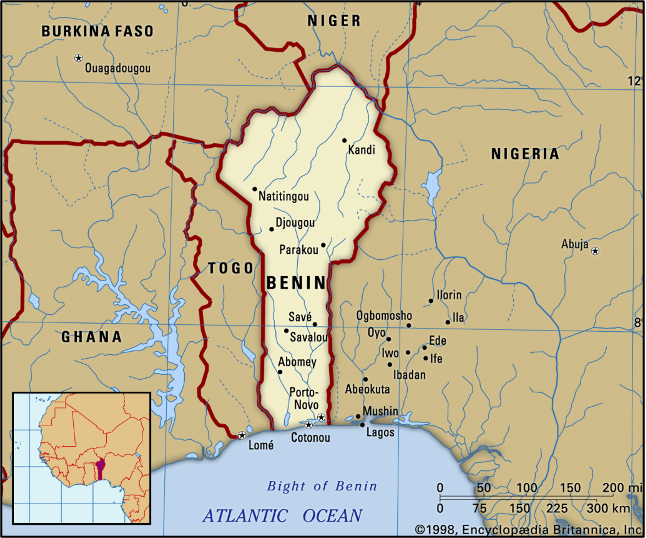
Benin is a West African country with a population of approximately 14.5 million (World Bank 2024). It borders four countries: Nigeria, Togo, Niger and Burkina Faso, with its southern border located at the Atlantic Ocean and forming part of the Gulf of Guinea. It ranks low globally in terms of human development, although its development has steadily increased in recent decades (UNDP 2023). Benin had its most recent legislative elections in January 2026 where the two parties supporting the incumbent president won as the opposition did not reach the threshold by electoral district required to sit (World Bank n.d.).
Figure 1: Map of Benin and surrounding countries
Source: Adotevi 2026.
The structural transformation of Benin’s economy has been highlighted as a top priority for the current government, with their aim to establish new growth-enhancing and high-value-added sectors, particularly in agriculture (cotton, palm oil, etc.), agribusiness, textiles and tourism (Vasse 2025:16). In 2019, Benin gained access to international capital markets,918c25d4c9f9 where it issued its first Eurobond, and foreign direct investment (FDI) now accounts for approximately 2.5% of its gross domestic product (GDP) (Vasse 2025:7; World Bank 2024). Between 2020 and 2025, bilateral and multilateral partners have disbursed approximately US$2.1 billion, representing approximately 43% of external financing (the remainder coming from private investment, remittances and other flows) (Vasse 2025:7).
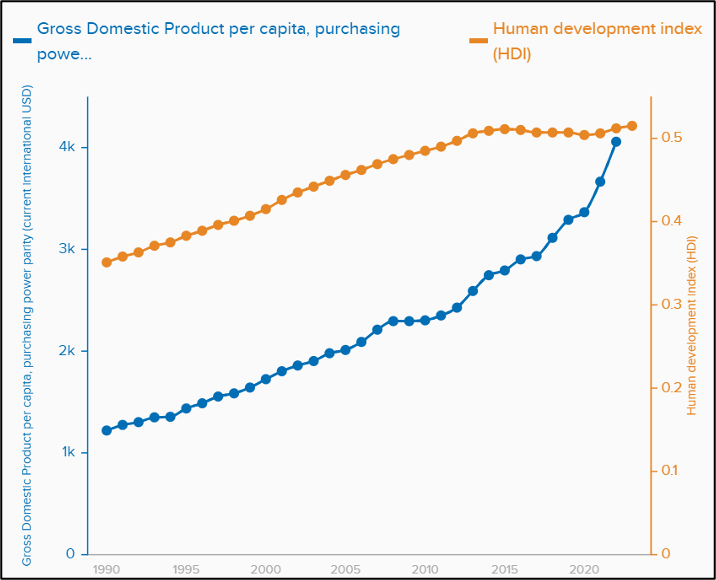
The country has grown around 6% yearly between 2020 and 2022, showing moderate economic growth, and between 2018 and 2022 the share of social spending in the country rose from 32.6 to 43.8% (Vasse 2025; BMZ n.d.). The country has also made improvements in its public financial management and tax collection, which has been commended by both the International Monetary Fund (IMF) and the World Bank (BMZ 2024).
Figure 2: Benin’s Gross Domestic Product and Human Development Index
Source: UNDP 2023.
Benin’s economic activity is concentrated in the south of the country, around the Port of Cotonou, and its informal sector employs around 85% of its population, particularly in services and agriculture (IMF 2023). The general census of 2024 found that self-employed artisans and traders accounted for 46% and 39% of business entities, with informal jobs estimated at 96%, which is the third highest proportion in Africa (Vasse 2025:12). Despite recent economic growth in the country (see Figure 2), benefits have been distributed unequally, and poverty remains widespread in rural areas and the northern region (Al Jazeera and AFP 2026). In response to these issues, there were cost of living protests in the country in 2024 that were shut down by the authorities (Al Jazeera and AFP 2026).
Benin also experienced an attempted coup in December 2025, when segments of the military launched a mutiny in an effort to overthrow the president, which was thwarted with support from external forces (RFI 2025; BBC 2025). This event formed part of a broader wave of coups and attempted coups across the sub-region between 2020 and 2025, underscoring growing regional instability. In the aftermath of the attempted coup, the government introduced a series of restrictions on civil liberties, including the use of a special court to prosecute individuals accused of inciting rebellion on social media (RFI 2026). These developments also weakened the authority and legitimacy of the Economic Community of West African States (Ecowas) and created conditions that allow external actors, such as Russia’s Wagner Group (now Africa Corps) to expand their influence1d1c027ec682 (Jamiu 2025; Tisserand 2025; RLI 2025). In addition, Benin serves as a transit hub for regional smuggling networks, notably for the movement of fuel from Nigeria through Benin to countries such as Burkina Faso, Togo, Niger and Mali (Organised Crime Index 2025.).
Corruption remains a problem in the country and is further aggravated by its geographical location, large informal economy, inequality, and insecurity in the north. Despite significant recent reforms that include the restructuring of anti-corruption institutions and public financial management and transparency, international assessments (e.g. IMF 2023; Transparency International 2025) find that governance and corruption vulnerabilities remain. Corruption risks range from petty bribery at the point of access to public services, to larger scale transnational schemes, all hindering the country’s development potential. In terms of the broader governance infrastructure, there have been recent limits on freedom of expression, restrictions on the media, and political interference of the justice sector.
As such, this Helpdesk Answer reviews the existing literature and data on current corruption related vulnerabilities in Benin, as well as recent anti-corruption and governance reforms. It places particular emphasis on the financial sector, examining the impact of corruption on the sector and its role in generating and perpetuating broader corruption risks within the country.
Overview of corruption
Table 1: Benin’s rank and scores on selected governance indicators:
|
Corruption Perceptions Index (Transparency International) |
Worldwide Governance Control of Corruption Indicator (World Bank 2025) |
Ibrahim Index of African Governance (Mo Ibrahim Foundation 2023) |
Basel Anti-Money Laundering Index (Basel Governance 2025) |
Freedom House classification (Freedom House 2026) |
|
Rank: 70/182 (a lower rank indicates lower levels of public sector corruption) Score: 45/100 (0 means highly corrupt and 100 means very clean) |
Score: 42.90/100 (0 is the weakest control of corruption and 100 is the highest) |
Rank: 13/54 (a lower rank indicates stronger governance) Score: 58.9/100 (0 is the weakest governance and 100 is the strongest) |
Rank: 33/177 (a lower ranking indicates a higher risk jurisdiction) Score: 6.33/10 (0 is lowest risk and 10 is highest risk) |
Score: 61/100 partly free (a lower score indicates less freedom) |
As seen in Table 1, Benin ranks middle to low in global indices used to measure corruption and governance quality. However, it should be noted that in terms of regional rankings, Benin tends to perform fairly well. For example, on the Mo Ibrahim Governance Index, Benin scored 58.9 out of 100, which places it 13 out of 54 countries in Africa, which is a high score both for the continent and for the regional average of West Africa (52.6 out of 100) and the African continent (49.3 out of 100) (Mo Ibrahim Foundation 2023). Similarly, Freedom House (2026) notes that Benin is among the more stable democracies in sub-Saharan Africa; however, there are significant deficiencies in its justice sector and civil liberties, as well as questions over whether there were fair and free elections in the country (Freedom House 2026).
Survey based indicators provide a more nuanced and ground-level perspective on corruption in Benin. The 2019 Global Corruption Barometer (Pring and Vrushi 2019: 14) found that 27% of public service users reported paying a bribe within the previous 12 months. In terms of perceptions, 34% of respondents believed that corruption had increased over the same period, while a majority (54%) felt that the government was performing poorly in curbing corruption (Pring and Vrushi 2019: 26). Respondents identified the police (55%), business executives (53%) and public officials, including judges and magistrates (both 46%) as the institutions most affected by corruption (Pring and Vrushi 2019: 26).
More recent evidence from the 2024 Afrobarometer survey presents a mixed picture. The majority of respondents (60%) reported that corruption had decreased “somewhat” or “a lot” over the past year (Babadoudou 2026). However, this apparent improvement is tempered by persistent concerns regarding accountability: 68% of respondents indicated that ordinary citizens risk reprisals or other negative consequences if they report acts of corruption (Babadoudou 2026).
Forms of corruption
Bribery
Both petty and higher level bribery is reported in Benin, with frequent reports of citizens paying bribes for access to public services and to facilitate official processes as well as more elaborate bribery scandals involving high ranking officials and larger sums of money. As an example, in 2025, two public officials from the Directorate of Political Parties and Electoral Affairs (DPPAE) and the Directorate of Internal Affairs and Religious Affairs (DAIC) were reportedly involved in a bribery scandal where both officials received money in return for manipulating an administrative procedure involving recruitment (Aka 2025). The two were arrested as well as the individual that paid the bribe. Another recent case includes the leader of the political party Le Libéral who was investigated in 2025 by the special court for the repression of economic offences and terrorism (CRIET) for paying large sums of cash to obtain official party recognition (Wadr 2025).
In terms of petty bribery, the police in Benin have been identified in both research and media reports as frequently demanding bribes from citizens. Almost half of citizens surveyed by Afrobarometer in 2024 reported that they had paid a bribe in the previous 12 months to avoid problems with the police (Babadoudou 2026). The police were also identified at the time as a particularly high risk in the Global Corruption Barometer (Pring and Vrushi 2019:16), with 52% of survey respondents saying they had paid a bribe to the police in the previous 12 months. Additionally, rural communities reported having more difficulties with the police than those in urban areas, as well as those without formal education (Babadoudou 2026).
A recent example is in 2025 when a police officer appeared before the CRIET for abuse of office and receiving a bribe to release a suspect (Daily Mail Africa 2025). Bribery has also been noted in the health sector at points of access to services and medicine (Houensou and Saliga 2019).
However, available research and data on bribery in Benin do not present a uniform picture. For instance, findings from the World Bank Enterprise Survey show a marked decline in the proportion of firms (companies) reporting at least one request for informal payments, falling from 34.5% in 2009 to 11.4% in 2024 (World Bank, 2024). Certain sectors are particularly vulnerable however, with evidence from the Maritime Anti-Corruption Network showing that the Cotonou port in Benin was one of the top ports worldwide in terms of reported corruption and bribery incidents in 2022 (MACN 2022).
Embezzlement
There are a number of media reports from Benin media on cases including public officials in embezzlement scandals. For example, in 2020, a former finance minister was sentenced to 20 years in prison for money laundering and embezzlement of state funds while being director for the state-owned National Micro-Credit Fund (Ahissou 2020).
In 2025, the Beninese government announced judicial proceedings against two senior public officials for embezzlement of public funds, where they had conducted a scheme of inflated billing involving the secretary and director local development and planning (Ikeh 2025). They have been accused of overcharging by a total of 3 million CFA (approximately US$5000) and pocketing an illegal commission that was paid by the contractor (Ikeh 2025). In another case, a police officer assigned to the department of emigration and immigration was accused of embezzling 150 million CFA (approximately US$250,000) in the late 2010s and was given an eight-year prison sentence in 2025 (Djogbénou 2025).
Patronage and clientelism
Some literature argues that Benin’s political system operates as a neo-patrimonial regime with multiple oligarchs, where clientelist practices prioritise public goods (such as education, nationwide communication and power infrastructure) to specific groups in the country (Bourguignon and Platteau 2023:386). Indeed, there is evidence to suggest that patronage networks are involved in the awarding of public contracts to firms in Benin (Bourguignon and Platteau 2023). There are also reportedly beliefs among some of the population that presidents favour the interests of their home region over others (BTI 2026).
Similarly, Lassou et al. (2021) argue that the normalisation of bribery and corruption in Beninese society undermines the ability of oversight institutions to conduct their work effectively. They conclude that this normalisation was caused when colonialism ruptured traditional governance in the state, where colonial regimes encouraged tribalism in distributing power and resources through their networks, the impact of which is still observed in the country today.
Some concerns have also been raised regarding the fairness of elections in Benin, particularly since restrictive provisions have recently been introduced to the electoral law to make it difficult for political parties to obtain a seat in parliament (Djogbénou 2026). Voter turnout in Benin has historically been low, with the electorate voicing concerns that opposition parties are sidelined (Al Jazeera and AFP 2026).
Reforms to the electoral code in 2024 raised the threshold for parties to win seats in parliament, meaning that they now must take 20% of votes in a district instead of the previous 10% (RFI 2026). Critics have noted that this leaves limited space for political participation (RFI 2026). This has seen a national assembly in 2026 that is composed exclusively of the two parties that support the incumbent (Yabi 2026). An additional constitutional reform in November 2025 extended the terms of both the president and MPs from five to seven years (RFI 2026). Moreover, opposition parties and candidates do not have the same access to state-owned media outlets as the incumbent government (Africa Integrity 2025). This lack of political pluralism potentially further increases the risk of potential patronage networks.
Sexual corruption
Gender-based violence and sexual harassment is a widely reported problem in Benin (US DoS 2023), with it being particularly prevalent in workplaces and in schools. This could include students and lower-level staff being requested for sexual favours in return for grades or promotions and/or favourable treatment. Bjarnegård et al. (2024) define sexual corruption as:
Sexual corruption occurs when a person abuses their entrusted authority to obtain a sexual favour in exchange for a service or benefit that is connected to the entrusted authority.
While there is legislation focusing on the sexual harassment, gender-based violence, women’s rights with respect to their spouse and home in Benin (see Legal Information Institute n.d.), an estimated 70% of women in the country suffer some form of gender-based violence in their lifetime (World Bank 2023). Moreover, in regard to sexual corruption specifically there is no dedicated law.
There have been several recent reports from the health sector and education sector indicate cases where entrusted authorities (teachers and healthcare professionals) have requested sexual favours from students and patients. Indeed, the pervasiveness of students passing grades in exchange for sexual favours has reportedly undermined meritocracy in Benin’s education system, with students expressing distrust in the system and fearing social stigma when reporting sexual harassment (O’Neil 2014; Eller 2016). Other data indicates that around 6% of girls aged 15 to 19 have experienced sexual violence, although the data does not show where the incidents took place (CGD n.d.).
In 2023, a headmaster was charged with sexually harassing and abusing a student and was sentenced to five years in prison and a substantial fine (US DoS 2023). However, reports of sexual corruption in Benin may be low as survivors of sexual violence often do not report the acts, mainly due to the fear of social stigma and retaliation and because the police, examining magistrates and prosecutors lack the legal knowledge and capacity to pursue such cases (US DoS 2023). This is also reflected in the data on broader corruption where the majority of citizens believe that they will face reprisals when they report acts of corruption (Babadoudou 2026).
In 2026, in response to the problem of sexual corruption in Benin, a consortium called the SOS Civisme Bénin was launched to reduce corruption and gender-based violence in Benin, with a focus on sexual corruption and sextortion (Matin Libre 2026). It intends to do so through encouraging people to report sexual corruption and to strengthen the mechanisms for reporting and protecting victims, improving the legal and institutional framework, and equipping the media to document the facts through training investigative journalists and creating a network of professionals that are committed to the topic (Matin Libre 2026).
Land corruption
Land corruption is defined as the abuse of entrusted power for private gain in the management and administration of land (Barnes 2024). It often affects already vulnerable communities, such as lower income groups and rural communities, and benefits the government and investors, leading to further discrimination of certain groups (Barnes 2024). It is an issue in many African countries, particularly in a post-colonial context where land was divided by colonial countries and the tendency towards private ownership over communal practices in the decades since (Barnes 2024:52). While Benin is comparatively less affected by land corruption than other African countries, it remains an issue that affects its most vulnerable citizens.
Ekpodessi and Nakamura (2023) examine the impact of insecure land tenure in Benin, noting that the authorities’ lack of recognition, lack of protection from eviction or expulsion, and informal community based rights are the primary drivers of insecurity. Many people in the country live in precarious conditions, lacking the provision of basic needs. Also, in Benin, the same tract of land may be sold to several individuals (due to mixed land tenure systems), which often creates a legal dispute favourable to the individual with the highest income (Ekpodessi and Nakamura 2023).
A 2023 Amnesty International report found that several thousand people in Benin had been forcibly evicted since 2021 due to the needs of tourism and development projects (Amnesty International 2023). Local residents of Djègbadji district of Ouidah (where a monument was being built) reported when interviewed that they did not inform residents of when the demolition of houses would occur and that there was no official documentation regarding eviction (Amnesty International 2023). Some stated that they received no compensation and that the administrative process was costly, so they had given up. In another village, Avlékété – where a coastal resort was being built – fishermen were evicted with compensation payments made only a few days prior and some even after, which is in contravention of Beninese and international law (Amnesty International 2023). In the four sites Amnesty International researchers visited they found that residents had been unfairly displaced, were not consulted appropriately, were inconsistently compensated and that residents lost access to drinking water, sanitation and electricity (Amnesty International 2023:10).
Another issue noted by the researchers is that in the event that there is a mandatory demolition of a house, the only person recognised as the owner is the one who first registered the house in the tax and estate departments. This means that any subsequent purchases of the house can be evicted without compensation or resettlement help, which results in any other purchaser being evicted with neither compensation or re-settlement measures (Ekpodessi and Nakamura 2023). This is reportedly exacerbated by judicial corruption in relation to the issue of land as well as illiteracy in some of the population (Ekpodessi and Nakamura 2023). Often, lower income families are unable to pay the bribes that are demanded by public officials during the process of registration.
Similarly, in the urban settlement of Cotonou there were reports of forced evictions by the Ministry for the Living Environment, which claimed that informal settlements were illegal and that they planned to clean up the riverbank through their removal (SDI Net 2025). In this case, the government officials agreed to consult with residents once complaints were made to develop solutions to the problem together (SDI Net 2025).
Nonfodji (2017) also investigated land grabs in the villages in Djidja, a commune in south-western Benin, and found that it was a mixed group of actors engaged in the land grabs. These grabs were instigated by governmental decrees adopted to promote the development of biofuel, resulting in state national political and economic elites, as well as international investors from China and the West grabbing land in the country (Nonfodji 2017:283). While proponents of these policies assert that this would increase the economic activities of rural areas and reduce its reliance on imported energy, opponents such as the peasant union, Synergie Paysanne, argued that this law has made it possible for investors to consolidate large areas of land and destabilise national food security (Nonfodji 2017:286-287). For example, one village lost over 80% of its farmland to domestic and international investors, affecting the food security of its lower income rural community (Nonfodji 2017).
Indeed, the IMF’s 2023 technical assistance report on Benin emphasises the need for the creation of a court specialising in land matters to be completed promptly, particularly as a lack of compliance with the Land Act of 2017 is widely noted in the report as well as several structural weaknesses in the protection of property rights in the country (IMF 2023). Land disputes counted for the majority of cases in Beninese courts, but these often face significant delays (IMF 2023).
Sectors affected by corruption
Financial sector
Benin’s financial sector is moderately affected by corruption, largely due to weak regulatory enforcement and vulnerability to money laundering in its banking system, particularly illicit financial flows (IFFs). While the established banks in Benin are vulnerable to money laundering risks, there is also a large informal financial sector, and microfinance is a particularly under-regulated.
Benin’s three state-owned banks were liquidated in the 1980s and 1990s as part of the country’s economic privatisation and four private banks opened, including the Bank of Africa-Benin (Law 2026). During this time, foreign aid and assistance grew, and the European Economic Community (now the EU) agreed to help pay the wages of civil servants (Law 2026). Today, private banks dominate the financial sector, which accounts for over 90% of total assets and there are now two small state-owned banks, although these have recently reported losses (IMF 2023).
Commercial banks and other credit institutions are governed by regional banking law and supervised by the banking commission, while the Central Bank of West African States (BCEO) supervises large microfinance institutions (MFIs), ten of which are in Benin (World Bank 2018:8).
However, there are reportedly still gaps in the regulation of banks in Benin. One study conducted between 2017 and 2021, including investigative reports from the Anti-Corruption Observatory (OLC) and the Front of National Organizations against Corruption (FONAC), examined the impact of forensic accounting on public sector financial crime in Benin (Laourou 2023). The study highlighted the need to strengthen the institutional and legal framework governing financial crime investigations. In particular, it emphasises the importance of enhancing prosecutorial capacity, ensuring that legal provisions adequately address complex financial offences and imposing credible sanctions to deter misconduct (Laourou 2023).
Money laundering risks in the financial sector
The main corruption related risk facing the formal financial sector is money laundering. Benin’s geographic location places it at a particular risk, due to it being a key regional transit hub, making it easy to move goods (such as medicines, cigarettes, and wildlife and forestry products) and illicit money across borders (Anqa Compliance 2025; Ministere de L’Economie et des Finances 2018:7). These include informal cross-border trade with Nigeria, trade-based money laundering risks through the Port of Cotonou (West Africa’s busiest transit port) (Anqa Compliance 2025). Cases of bribery, embezzlement and misappropriation of public funds (as mentioned in the previous and following sections) also result in the laundering of these proceeds through Beninese banks. An illustrative example of this is a former financial official at the Beninese presidency who faced charges of mismanagement of public contracts and was found to have reinvested this money (laundered it) in “personal activities” (Tognon 2025).
The real estate sector in Benin has been highlighted as having high vulnerabilities to money laundering due to its informality and absence of oversight (IMF 2023). Significant financial resources are invested into the land and real estate sector, sometimes for the concealment of their (illegal) origin (Ministere de L’Economie et des Finances 2018:8). More recently, authorities have moved to digitalise the cadastre which helps to verify land ownership; however, the IMF (2023) notes that this could be expanded to include beneficial ownership information for legal entities that hold property in Benin.
Additionally, tax evasion and avoidance by multinational companies is also reportedly an issue, and these companies use methods such as transfer mispricing and treaty shopping (Organised Crime Index 2025). Social Watch Benin (2021:42) notes that the register of companies and businesses is not public or online and, other than legal announcements made by the investment and export promotion agency on the creation of companies, no other data on companies and their beneficial owners is accessible or online. This is a concern also echoed by the Financial Action Task Force (FATF) (see Box 1 below).
Box 1: Benin’s FATF reports
The Inter-Governmental Action Group against Money Laundering (GIABA 2021)’s most recent mutual evaluation report highlighted a number of strengths and weaknesses in Benin’s anti-money laundering framework. At the time of the report, Benin had just issued its national AML/CFT strategy and action plan, and it was in its early stages of implementation (GIABA 2021:6).
The report noted low effectiveness across all outcomes, meaning that its AML framework was considered to be overall ineffective at the time. While the country had legal frameworks in place, this did not necessarily translate into effective detection, investigation, prosecution or prevention of money laundering. For example, some deficiencies noted in the report included low cooperation between specialised agencies and that the financial intelligence authorities were not fully competent in their ability to detect money laundering risks, nor had the confiscation of assets related to crime been fully prioritised (GIABA 2021:6-7). However, while challenges were identified, Benin was not placed on the FATF grey list.
The most recent follow-up report and technical compliance re-rating (GIABA 2025) identified several actions that were taken to correct the shortcomings identified in its previous mutual evaluation report. The recent report noted that the country had shifted from systemic weaknesses (GIABA 2021) to more meaningful technical progress, despite there still being significant gaps. The progress includes the adoption of the legislative and regulatory framework, particularly the adoption of the new Uniform AML/CFT Act N° 2024-01 of 20th February 2024, Decisions N°021 of 21/12/2023 and N°003 of 28th March 2024 (GIABA 2025:2). The country also established the Directorate for Cooperation and Mutual Legal Assistance within the Ministry of Justice and Legislation and established the registry of beneficial owners (GIABA 2025:2). The government also conducted AML training with various actors and stakeholders (GIABA 2025:2).
However, as of the 2025 report, there are still vulnerabilities in Benin’s AML framework, which include (among others2605b6deec45):
- a lack of supervisory mechanism for designated non-financial businesses and professions (DNFBPs)
- no legal clarity or precedent regarding whether it is not necessary for a person to be convicted of a predicate offence (such as corruption) to prove that an asset is the proceed of a crime
- the legal framework does not provide a mechanism for seizure and confiscation of property of equivalent value for underlying offences, or specific provisions for confiscation in such cases
- there is no explicit provision that the records relating to transactions should be adequate for the reconstitution of individual transactions that could be used as evidence in any prosecution or criminal activity
- while it has introduced legislation for a beneficial ownership registry, it still needs to specify the mechanisms for collecting this information as well as the methods for publishing it
- there is no sanctions regime in Benin, nor any proportionate and dissuasive instrument specifically provided for against any natural or legal person that fails to provide basic and beneficial ownership information; neither are there sanctions provided for failure to update this information
- trusts are not regulated (GIABA 2025:22-25)
Microfinance and informal financial sectors
The microfinance and informal banking sectors are significant in Benin and carry their own unique corruption risks. A World Bank review (World Bank 2018) of Benin’s financial sector noted that the microfinance sector serves a large percentage (around 37%) of adults in Benin, with women being the highest users (World Bank 2018:15-16). As of 2018, there were 600 microfinance institutions, 87 of which were authorised by the Ministry of Finance and the remaining unauthorised institutions (World Bank 2018). These primarily include:
- financial cooperatives
- limited companies
- credit direct associations
- non-governmental organisations (NGOs)
These offer a range of financial services, including basic transaction services, savings, microinsurance, instant money transfer between cashier and credit products, and others (World Bank 2018:17). The primary credit product that they supply is short-term loans for the trade sector, and they have built partnerships with instant money-transfer companies and insurance companies (World Bank 2018:18-20).
In 2018, the World Bank (2018:15) found that the microfinance sector is exposed to numerous risks in terms of governance, financial and accounting management, internal control, and the credit processing of MFIs. These risks are particularly pertinent considering the large number of unauthorised MFIs (at the time of the report) in Benin (World Bank 2018:30). Additionally, the capacity of officials to effectively manage MFIs (particularly financial cooperatives) is limited, particularly as many officials in Benin have limited experience in microfinance (World Bank 2018:31). Fraud is reportedly widespread, there is a lack of enforcement of regulatory requirements in MFIs, and there have been numerous cases of MFI managers and staff dipping into cash reserves for personal use (World Bank 2018:31).
For example, an unregistered financial institution called ICC Services (originally set up as an NGO but presented itself as a savings/microfinance institution) caused a financial scandal uncovered by the IMF (Topona 2018). ICC Services, as well as other investment structures, defrauded around 150,000 savers between 2006 and 2010 of around €230 million after promising their clients attractive interest rates. Family members of the former head of state had been recruited by companies affiliated with ICC Services, and other government officials may have been implicated in the scandal (Topona 2018).
Informal cross-border financial networks are common in Benin, particularly with neighbouring Nigeria, and also carry corruption and money laundering risks due to their lack of oversight and weak enforcement capacity. One case study identified the border town of Sèmè-Kraké, situated between Benin and Nigeria, as having a central role of informal financial networks facilitating cross-border monetary flows (CENOZO 2025). It is reported that along the Beninese side of the border, informal money changers operate extensively, providing not only currency exchange services but also functioning as key intermediaries in parallel remittance systems linking Cotonou and Lagos. These systems are highly organised and, at times, partially embedded within formal financial infrastructures, thereby creating an appearance of legitimacy (CENOZO 2025).
Benin’s borders with Niger, Burkina Faso and Nigeria face considerable security issues due to the jihadist violence in the region. The African Security Analysis (2026) assesses that these groups exploit the cross-border economic flows in the region for their own gain, using smugglers, local intermediaries, bandit networks and communities facing weak state protection to support their supplies, intelligence and recruitment (ASA 2025).
Transactions in these networks typically rely on a hybrid mechanism in which funds are deposited into mobile money accounts within one country and settled domestically in the destination country, rather than physically transferred across borders. This system effectively allows users to circumvent cross-border financial regulations while maintaining efficiency and speed. These informal transfer systems operate largely outside the purview of central banks, undermining monetary control and contributing to exchange rate volatility (CENOZO 2025). Notably, informal financial flows support the illicit fuel trade between Nigeria and Benin, which accounted for a substantial share of informal imports in 2023 (CENOZO 2025).
Public financial management
Public procurement is considered to be one of the most corrupt sectors in Benin (Da Silva 2024). In 2024, the court for the repression of economic offences and terrorism (CRIET) convicted the former national director of public procurement control and several other defendants for fraud related to public procurement (Africa Press 2024). This case involved 35 public contracts between 2019 and 2022, totalling approximately US$26.6 million. The allegations included abuse of office, false certifications in the public procurement process, money laundering and kickbacks (Africa Press 2024).
There have been instances where companies have been excluded from public procurement for “failure to observe public procurement rules” and for “presumed submission of forged documents, which allegations were subsequently substantiated” (African Integrity 2025). The public markets regulatory authority (ARMP) has recently sanctioned civil servants and several companies for various misconducts related to public procurement (Benin Web TV 2026). However, the application of sanctions has not been systematic; for example, one official in the Bohicon municipal authority proceeded with a procurement process despite noted irregularities (Africa Integrity 2025). The official reportedly disregarded the necessity to suspend the procurement process while it was pending review (Africa Integrity 2025).
Additionally, in a previously mentioned case, a former director and businesswoman were on trial before the same court for malpractice in the awarding of public contracts, similarly involving fraud and kickbacks (Tognon 2025). The former director is accused of facilitating the awarding of contracts in exchange for commissions ranging from 15% to 25% of contract value (Tognon 2025). The Front of National Organisations Against Corruption (a local civil society organisation) also reported that state officials have established companies on behalf of their relatives and spouses in order to award themselves public tenders (Da Silva 2024).
Transparency International Defence & Security (2025) identifies defence procurement as an area of public procurement that is particularly vulnerable to corruption risks, exacerbated by the fact that military expenditure in the country is opaque. However, despite the ongoing jihadist violence in its northern region, the government only spends 0.7% of its gross domestic product (GDP) on the military per year (Defense Budget 2026).
The IMF’s assessment of Benin noted that public procurement contracts are often not published, which hinders the transparency of the process, as well as other notable deficiencies in the process, leaving it open to corruption risks (IMF 2023). While there has been work underway since 2017 to develop an e-procurement system, this has not yet been rolled out (IMF 2023), although training sessions on the system have recently started (ARMP 2025).
Similarly, the Africa Integrity assessment of Benin finds that although there is an integrated public procurement management system (SIGMAP) which allows users to view current calls for tenders, it has not been inaccessible since March 2020 (Africa Integrity 2025). Moreover, access to information regarding contract awardees and the final results of procurement contracts are limited as these are not systematically and comprehensively published for all contracts (Africa Integrity 2025).
State-owned enterprises are heavily involved in public contracts for infrastructure and service delivery in Benin, meaning that they are exposed to corruption risks. Indeed, Africa Integrity (2025) found that access to the financial records of state-owned enterprises in Benin is limited, raising red flags in terms of oversight and transparency. While the Ministry of Economy and Finance publishes reviews, these are not done on a regular basis (Africa Integrity 2025). However, it should be noted that there are currently few fully state-owned enterprises operating in the country (World Countries 2024).
Nonetheless, despite the risks noted in public procurement, in terms of broader public financial management, the open budget survey (International Budget Partnership 2023) ranks Benin fairly high in transparency of its public budget (with a score of 79/100, which indicates that it is publishing enough material to support an informed public debate on the budget). This is significantly higher than other countries in the region. However, the survey does note that the supreme audit institution’s audit reports are not published which undermines accountability (International Budget Partnership 2023:4). Moreover, its public participation scoring is lower than its transparency score, and the report notes that formal mechanisms should be established for public participation in developing its audit programme by the Court of Auditors and to contribute to relevant audit investigations (International Budget Partnership 2023:7). However, notably, in November 2024 Benin joined the Open Government Partnership, indicating the government’s commitment to citizen participation (Chaou 2025).
Box 2: Opacity in Chinese credit loans
The Chinese credit loan system is active in Benin and has been used to address Benin’s infrastructure deficit particularly where traditional donors have decreased or abandoned financing infrastructure projects (Soulé-Kohndou 2018:4). These include non-reimbursable subventions and technical assistance, donations, zero-interest loans and concessional loans (where interest is not higher than 2%) (Soulé-Kohndou 2018:4).
Due to the speed required in the relations with China, the Ministry of Foreign Affairs has reportedly circumvented regular processes to accelerate project execution, which has resulted in labour unions accusing the government of favouritism and unfair competition, connivance with dumping strategies from China in Benin, contribution to national unemployment and the closing of local businesses in the road infrastructure sector as companies like China Railways Suisiju Group Corporation took over work (CRSSG) (Soulé-Kohndou 2018:8). While this may not constitute direct corruption, it may contribute to a wider issue of a lack of oversight and accountability in public financial management in the country (Soulé-Kohndou 2018).
Justice sector
Since 2012, judges and prosecutors in Benin have repeatedly gone on strike to protest allegations of corruption, irregular appointments, punitive transfers and political interference (Kolloch 2022). While their independence is enshrined in the constitution, Article 127 stipulates that the president guarantees this independence (Kolloch 2022). However, in practice, the heads of state in Benin faced allegations of political interference in the judiciary, particularly regarding the Court for the Repression of Economic Offences and Terrorism (CRIET) which has the mandate to combat corruption and financial crimes (WADR 2025).
For example, one recent case in 2024 saw a potential presidential candidate sentenced to 20 years for an alleged coup d’état, corruption and the use of a forged certificate (Africa Integrity 2025). The trial proceeded without legal counsel for the potential candidate as the lawyers had withdrawn in protest against the composition of the court, leading some to question whether the judiciary is under the authority of the executive (Africa Integrity 2025).
The findings from the Africa Integrity Indicators also support this perspective, noting that the lack of independence fosters a sense of dependence of indebtedness among magistrates towards the executive branch (Africa Integrity 2025). Moreover, in 2024, observers noted that the round of judicial appointments to the constitutional court were perceived as being closely tied to political affinities with the government (Africa Integrity 2025).
However, it should be noted that the attacks on the independence in the judiciary is not a form of corruption in itself but can be easily used for corrupt gains and consolidating power, as well as restricting the judiciary in prosecuting any corruption cases that involve political officials.
Anti-corruption institutional framework
International legal framework
International cooperation is considered to be a strength of Benin, with it being party to major conventions and having strong relationships with the United Nations, African Union and ECOWAS (Organised Crime Index 2025.). Benin is signatory to the United Nations Convention against Corruption (UNCAC), ratified in 2004, the African Union’s Convention on Preventing and Combating Corruption, ratified in 2007, and the Economic Community of West African States Protocol on the Fight against Corruption, ratified in 2001 (IMF 2023; PPLAAF 2025).
The West African Development Bank (BOAD) and Benin’s High Commission for the Prevention of Corruption (HCPC) have recently signed a cooperation agreement to strengthen efforts against corruption, fraud and financial crime in the West African Economic and Monetary Union (WAEMU) region. The partnership creates a framework for preventing, detecting and prosecuting illicit activities, combining both institutions’ resources and expertise to promote transparency and good governance (Financial Afrik 2025).
Domestic legal framework
Governance in Benin is centralised, with the 1990 constitution providing for a presidential regime and granting it significant powers as the executive (IMF 2023). However, this has raised concerns that there is a lack of full separation of powers (IMF 2023). Following reforms to anti-corruption legislation, the key provisions are now mainly in the penal code. Law no. 2011-20 (2011) initially created a comprehensive anti-corruption framework but was later repealed, partially by Law no. 2020-09 and fully by Law no. 2020-23 (IMF 2023). Today, the principal anti-corruption rules are found in these 2020 laws and primarily in Law no. 2018-16 (2018), which defines corruption offences and penalties (IMF 2023).
The UNCAC Coalition and Social Watch Benin UNCAC shadow report noted that there were significant penalties on a number of public officials for fraud, extortion, misappropriation and embezzlement, noting that the government did enforce sanctions for corruption in these cases (Social Watch Benin 2021:14-15). The same report notes that this also indicates that the Beninese government is committed to ending impunity for corrupt officials (Social Watch Benin 2021:16).
The current legal framework on asset declarations for politicians and senior public officials is deemed inadequate in the IMF’s (2023) assessment, as the repeal of the 2011 law removed provisions that required a large number of public officials to submit asset declarations, although the new provisions have addressed this aspect (Law 2020-09 Art. 9 and Decree 2024-1088). The Africa Integrity Indicators also had similar findings, noting that not all public officials comply with their obligations to submit asset disclosures and that there is no binding mechanism in place to sanction them if they do not (Africa Integrity 2025). As of 2021, the UNCAC Coalition and Social Watch Benin noted that no public official had been punished for making a late asset declaration (Social Watch Benin 2021:26). Similarly, donations to political parties are not always disclosed regularly and on time, despite there being a legal requirement to do so (Africa Integrity 2025).
Additionally, although the Court of Auditors consistently publishes campaign accounts and forwards its reports to the public prosecutor in Cotonou, individuals who fail to submit accounts on time or exceed spending limits have, in practice, never been held accountable (Social Watch Benin 2021: 23).
The right to access public information is guaranteed by Law no. 2015-07, providing citizens with access to official records, including orders, laws, decrees and ordinances (IMF 2023), however, its implementation remains limited, according to the Africa Integrity Indicators (2025). Despite legal provisions, citizens often face delays or even a lack of response, such as the long-standing unanswered requests about government officials’ salaries (African Integrity 2025). There is a lack of an easily searchable company register. Although there is a database that is available to banks for their due diligence when considering loan requests to companies, this is not publicly available (IMF 2023).
Article 375 of the penal code sanctions public officials who reveal the identity of whistleblowers, however, this does not contain a definition of a whistleblower, and it does not establish whether any protection will be offered to the whistleblower or not (IMF 2023). The protections granted to whistleblowers are limited and weak, according to analysis by the organisation PLAAF (PLAAF 2024). This legal framework also does not make a provision for penalties for non-compliance (IMF 2023).
Law no.2011-20 from October 2011 on measures to counter corruption prohibits anyone retaliating against a whistleblower, but these measures do not provide any effective means of communicating information and disclosures to other entities (PLAAF 2024). Whistleblowers have the right to register the police station as their domicile, and if their life is in danger a judge may authorise the anonymous collection of the whistleblower’s statement; however, anonymity is “impossible” where “knowledge of the person’s identity is essential to the rights of defense,” and the law specifies that “defamatory or false testimonies” can be prosecuted under other legislation (PLAAF 2024).
Institutional framework
In 2020, Benin dissolved the national anti‑corruption authority (ANLC) and replaced it with the High Commission for the Prevention of Corruption (HCPC). The HCPC is the main anti-corruption authority in the country and notably collaborates with civil society organisations in its work. The Government Action Program (2021-2026) emphasises the importance of the HCPC’s work in the:
- promotion of ethical culture and a sense of the public good,
- operationalisation of the National Charter for Governance and Development of Benin
- implementation of the recommendations of the evaluation by the National lntegrity System (SNI), especially digitisation in all sectors of the Administration in order to reduce contact between users and agents
- awareness training for all socio-political levels in Benin on civic values, and
- the fight against impunity by effective application of sanctions (Presidency of the Republic of Benin n.d.:47).
Other relevant institutions include the National Financial Information Processing Unit (CENTIF) which promotes the implementation of anti-money laundering, terrorist financing and other threats to the international financial system. The Complaints and Reporting Analysis and Processing Unit (CPD) operates under the authority of the presidency. Its members are directly appointed by the head of state and can be disciplined, recalled or transferred (Africa Integrity 2025).
Benin’s judiciary includes the constitutional court (the highest authority on constitutional matters), the supreme court (handling administrative and judicial issues) and the high court of justice, which tries cases against government officials (Law 2026). The CRIET (Cour de Répression des Infractions Économiques et du Terrorisme) is responsible for prosecuting economic crimes, terrorism and corruption. However, it has been criticised for a perceived lack of impartiality, with prosecutions often targeting political opposition figures, resulting in accusations of political manipulation (IMF 2023; Diarrah 2026).
Box 3: Selected internationally funded anti-corruption and governance programmes in Benin
The World Bank provided US $30 million between 2016-2021 to fund the Public Investment Management (PIM) and Governance Support Project for Benin
USAID’s Benin Blanket Purchase Agreement (BPA) between 2018 and 2021 included providing political and economic advisory services to address key governance challenges that limit the impact of broader development investments
USAID funded the Advancing Rights in Benin between 2021 and 2023 in collaboration with the American Bar Association Rule of Law Initiative (ABA ROLI) and Benin Human Rights Commission (BHRC) to support human rights and strengthening access to justice
The Africa Development Fund supported Benin through a $60 million loan to finance the second phase of the country’s Economic Governance and Private Sector Development Support Programme between 2023 and 2024
The Ministerie van Buitenlandse Zaken is providing EUR 1,739,000 for the Sustainable Development through Improved Local Governance project running from 2024 to 2026
The European Union is providing funding to civil society in Benin between 2025 to 2030 which includes supporting democratic governance
The European Union and Embassy of the Kingdom of the Netherlands in Benin funds governance-related projects implemented by the Netherlands Institute for Multiparty Democracy (NIMD) and the Institut pour la Gouvernance Démocratique (IGD)
Media
There are restrictions on the freedom of the press and freedom of speech in Benin (BMZ 2024). Reporters Without Borders (2026) ranks Benin 113th out of 180 countries worldwide, noting a sharp decline in freedom of expression in recent years and a lack of large, viable news organisations in the country. An independent media is an important component of accountability and independent oversight, meaning that this reflects a gap in the country’s anti-corruption landscape.
Journalists are governed by the information and communication code (2015) and the digital code (2017). PLAAF (2024) has raised concerns regarding the rights of journalists, particularly through its defamation fines and prohibition of certain media and encouragement of censorship practices. For example, the Beninese media regulator suspended the Gazette du Golfe media group in mid-2023 (BMZ 2024).
The US Department of State’s report on human rights similarly notes that there are significant human rights issues in Benin, including the independence of the media, freedom of expression, interference with the freedom of assembly, among others (US DoS 2023).
In 2023, police arrested a journalist for posting a statement on Facebook alleging some representatives of the Democrats opposition party were denied access to a poll station in Abomey during the legislative elections (US DoS 2023). Later, the CRIET convicted the journalist of “incitement to rebellion” and sentenced him to a one-year suspended prison term (US DoS 2023).
Civil society
Lassou et al (2021:30) note that civil society in Benin has grown, particularly local minority advocacy NGOs, which have been – according to the authors – more successful than government agencies in revealing and publicising cases of corruption.
For example, civil society was also actively involved in the development of the national integrity system assessment and the integrity promotion and anti-corruption action plans, which constitute the current strategic framework in the measures to counter corruption (Social Watch Benin 2021:16).
There is indication that the government collaborates with civil society in Benin, as seen with the recent meeting between the High Commission for the Prevention of Corruption (HCPC) and a number of anti-corruption CSOs, including representatives of the Association for the Fight Against Racism, Ethnocentrism, and Regionalism (ALCRER), Social Watch Benin,19f0415f1741 and the Front of National Organizations against Corruption (FONAC) (Tokponou 2026). It was reported that this meeting aimed to clarify priorities, harmonise actions and establish a permanent framework for consultation (Tokponou 2026).
Article 2 of Law no. 2012-15 on the act of criminal procedure allows CSOs whose explicit statutory purpose is to defend the collective interests of certain victims to bring civil action for compensation for damage caused by a crime, offence or contravention in relation to acts that directly or indirectly harm their collective interest (Social Watch Benin 2021:19). As such, the CSOs ALCRER and Social Watch Benin filed civil action complaints for corruption cases, with ten corruption cases filed since 2018 before courts by these organisations (Social Watch Benin 2021:19).
- Prior to 2019 Benin was mainly financed through multilateral lenders, bilateral loans and regional debt markets and had a small, low-income economy; however, key structural reforms, strong economic growth and the reduction of the budget deficit made it more attractive to investors (Ministry of Economy and Finance 2019).
- The Africa Corps does not currently have an active presence in Benin as it does in other African countries, although it is reportedly expanding its “soft” influence there. This is seen in a cooperation agreement signed between the Beninese and Russian government in 2025 which potentially paves the way for their deployment in the country in the future (RFI 2025).
- Social Watch Benin is an international network of civil society organisations that works on social development, gender discrimination and is engaged in the development and monitoring of policies that have an impact on inequalities and on people living in poverty (Social Watch n.d.).
- For the full list, see GIABA 2025 pages 22-26.