Systemic corruption and human rights violations are chronic issues in Latin America. Since the 20th century, the region has faced waves of autocratic regimes, with corruption consolidating their power and facilitating human rights violations.43f1709331e5 At the same time, Latin America boasts a strong regional system designed to protect rights and advocate for anti-impunity measures,a42abb87e993 and it has made significant strides in enacting laws and establishing internal and external mechanisms to tackle corruption.*
As is the case globally, anti-corruption efforts have generally focused on the misappropriation of resources and its impact on state stability, often overlooking how corruption creates structural inequality and discrimination, which harm the very same people states are meant to protect.77c27f9debb6 Latin America is emblematic of this tension.
Bridging this gap faces three main challenges:
- Measuring corruption’s impact on human rights.
- Establishing causation and identifying victims.
- Conducting strategic litigation in states unwilling or unable to provide redress.
Despite these challenges, a growing number of scholars and practitioners are questioning the effectiveness of anti-corruption efforts separate from those focused on human rights. State and non-state actors in Colombia, Honduras, Mexico, and Venezuela have developed distinct strategies for bridging human rights and anti-corruption agendas – shaped by their regulatory environments and available windows of opportunity. Drawing on literature and key informant interviews with practitioners from these contexts, this U4 Brief argues that development partners can best support this convergence by supporting legal reform initiatives and research to identify and redress corruption victims, investing in capacity-building programmes that hone civil society’s strategic litigation capacities, and creating forums for sharing knowledge on advancing both agendas simultaneously.
The evolving anti-corruption–human rights nexus
Since the early 21st century, it has become clear that human rights cannot advance where corruption is rampant.a21356b1f582 Yet efforts still fall short of integrating both agendas effectively.
Internationally, the United Nations Convention against Corruption (UNCAC) advances crucial areas of human rights, such as:
- Access to information2ff977584ff0
- Participation in decision-making and non-discrimination3f57a9e36181
- Right to a fair trial and due processa27ff0ddac2a
- Whistleblowing protection3c3759ca0590
- International cooperation and asset recovery – including compensation and reparation of victims.3269d5b78beb
However,as the UNCAC does not commit states to implement its provisions following human rights standards, states’ implementation is not necessarily linked to their human rights obligations. This reflects the broader structure of the international legal system, where anti-corruption treaties and human rights treaties developed as distinct regimes.c62affd0f4bf
The Human Rights Council has also endorsed several resolutions on the negative impact of corruption on the enjoyment of human rights from 2012 to 2023 and had a Special Rapporteur on this issue in 2004 and 2009.35f8a681a8c9 Nonetheless, corruption remained marginal within the broader human rights framework.e5791f5111fe
Regionally, progress has also been mixed. The Inter-American Convention Against Corruption has not explicitly established a link between corruption and human rights, despite promoting the rights to freedom of expression and freedom of association through its commitment to protecting whistleblowers and supporting civil society participation. Likewise, while the Inter-American Court has addressed corruption since 2009, further work is needed to move beyond penal measures, address discrimination, protect whistleblowers, adapt evidentiary standards, and include institutional reforms in reparations.67dbdb8d09af
Perhaps the regional body that has made the most progress is the Inter-American Commission on Human Rights (IACHR). In 2019, IACHR published its most comprehensive report on the subject, illustrating the ways corruption and human rights violations intersect in the region and providing recommendations for states to address corruption from a human rights perspective.a4fc95fc7671 The challenge lies in its execution, as there is no current focal point to implement it.434f888a1196
Why is the convergence of anti-corruption and human rights challenging?
First, there is the issue of causality. Corruption is understood as a cause, in a legal sense, when the proximity between the corrupt act and the human rights violation is close and strong. In other words, corruption is a legal cause if ‘the violations – such as of the right to food, housing or education – are foreseeable and not too far removed from the corrupt public officials (or the otherwise passive apparatus of the state’.00f3b0cc69c1 However, it is more likely to find corruption among the several factors contributing to human rights violations, and lawyers must still demonstrate that corruption was a sine qua non condition despite other contributing factors.c2fe99584d88 Even when the sine qua non condition is clear, this may not be sufficient as a legal cause. The linkage may be too remote, too old, or there may be too many independent intervening acts.a117f2c6006d
Corruption’s covert nature also makes it difficult to measure and quantify in human rights terms.c437f56a8d6b Corruption thrives in secrecy, making it hard to collect data on its incidence and impact. At the same time, the broader consequences of corruption, such as deteriorating infrastructure, weakened public services, or shortages of medicines in hospitals, may be visible and widely recognised. Corruption's societal effects are therefore visible enough – the harder task is pinpointing and quantifying the specific corrupt practices responsible for them, particularly when the focus is on specific populations and contexts.70ac087731a2
Systemic corruption may also affect society broadly, complicating assertions of victimhood.0c090365293c Even when there are clear victims, enabling their participation in corruption cases is challenging. They may not recognise their victimhood or lack the resources and expertise to pursue claims.25673f33349a
When victims are ready to participate, they face different obstacles. Corruption has often been treated as a “victimless crime”, contributing to tightly controlled proceedings.8c787c2c9751 Prosecutors are also unlikely to provide space for victims, fearing they could slow them down.dde91c1895a1 Moreover, in many Latin American countries, the agencies responsible for investigating and prosecuting corruption cases are also co-opted by corruption.b3abf71bdbca
Nonetheless, enabling victims’ participation in corruption cases has positive effects: it helps recognise their grievances and secure some form of redress. Victims can be helpful to a prosecutorial mission, bringing evidence prosecutors may not have access to, monitoring the case, and keeping prosecutors’ actions in check.4173dcfd43d5 Context-specific initiatives in Colombia, Honduras, Mexico, and Venezuela are showing a way forward.
Quantifying corruption’s human rights costs: Colombia’s corruption impact indicator
In 2023, Colombia’s Transparency Secretariat launched an indicator – RADAR – that measures the impact of corruption on economic, social, and cultural (ECOSOC) rights.f8a9a8dae740 In its first cycle, RADAR focused on the right to education.
RADAR uses a multivariate statistical model combining 43 variables related to corruption (both observable and hidden), institutional capacity, and education outcomes.391707678757 It incorporates data on sanctions, complaints, media reports, and proxy indicators such as security risks and illiteracy. Higher scores reflect stronger negative associations between corruption and the right to education. Colombia’s outer regions, where most marginalised communities reside, scored the highest RADAR values.d03d98a13a23
Figure 1. Corruption’s heaviest impact falls on Colombia’s most marginalised regions
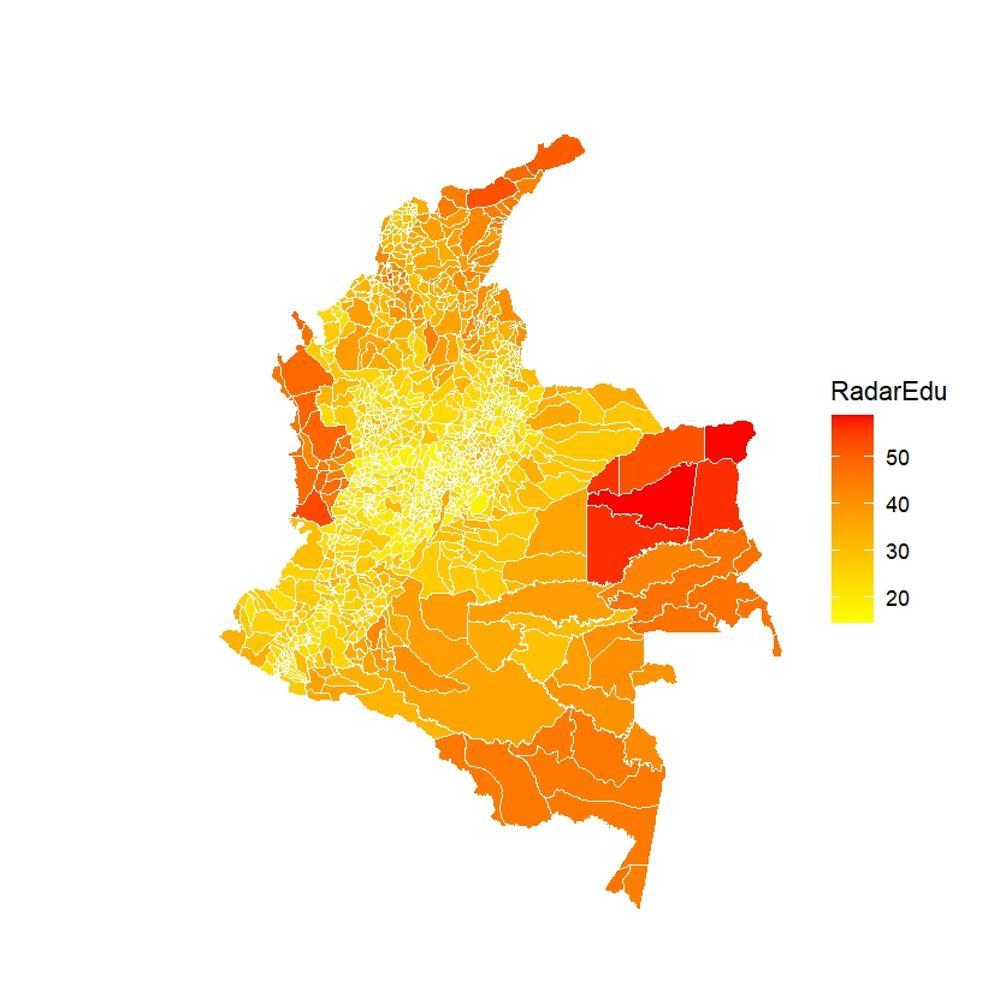
Higher scores reflect stronger negative associations between corruption and the right to education. Colombia’s outer regions, where most marginalised communities reside, scored the highest RADAR values.
Credit: Source: Secretaría de Transparencia. n.d.
Two windows of opportunity enabled RADAR’s emergence. First, the 2021 national protests – also known as the estallido social (social explosion) – and the associated human rights violations led to the election of the first left-wing national government in 2022, which prioritised human rights.36227d8b953c Second, the Secretariat was led by former Human Rights Director of Bogotá’s mayors’ office, Andrés Idárraga Franco, who spearheaded the development of RADAR.
RADAR has enabled the Transparency Secretariat to identify priority territories through a heatmap. It has also helped them advance the National Anti-Corruption Strategy (NACS) and provide useful information for how ministries should implement NACS commitments.a54c693e73d7
The secretariat recognises that RADAR’s impact largely depends on the extent to which other actors also engage with its findings. However, its largely in-house development and limited consultation may hinder future buy-in from national and local stakeholders.5be8ccc2d73e
RADAR's existence is nonetheless a testament to the power of political will in aligning anti-corruption efforts with human rights. The indicator represents a shift in how the Colombian government understands corruption, abandoning the “victimless crime” idea and acknowledging that such serious violations demand accountability.
Forging victim status in Honduras: The case of the Lenca Peoples
In 2021, the Constitutional Chamber of the Supreme Court of Justice of Honduras granted a constitutional review in favour of the Civic Council of Popular and Indigenous Organisations (COPINH), recognising their victim status in a corruption case about fraud on the Gualcarque river.7a07c92ed2cb COPINH represented the interests of the Lenca Peoples, who were directly affected. This was the first time that victims could actively participate in a corruption case in Honduras.1bcae66d46ef
The case involvedcollusion between public officials and an illegally established company, DESA, to advance a hydroelectric dam project called Agua Zarca (PHAZ) without proper consultation with the Lenca Peoples.The National Energy Enterprise (ENEE), the now-defunct Secretariat of Natural Resources and Environment, and DESA – illicitly established by ENEE’s management coordinator using two front men – colluded to carry out the PHAZ project on the River Gualcarque.258ead4b4a7f A central factor enabling DESA’s contract was falsified documents claiming prior consultation with the Lenca community of Rio Blanco, where the River Gualcarque flows and the dam was planned to be built.3aa5797d0270
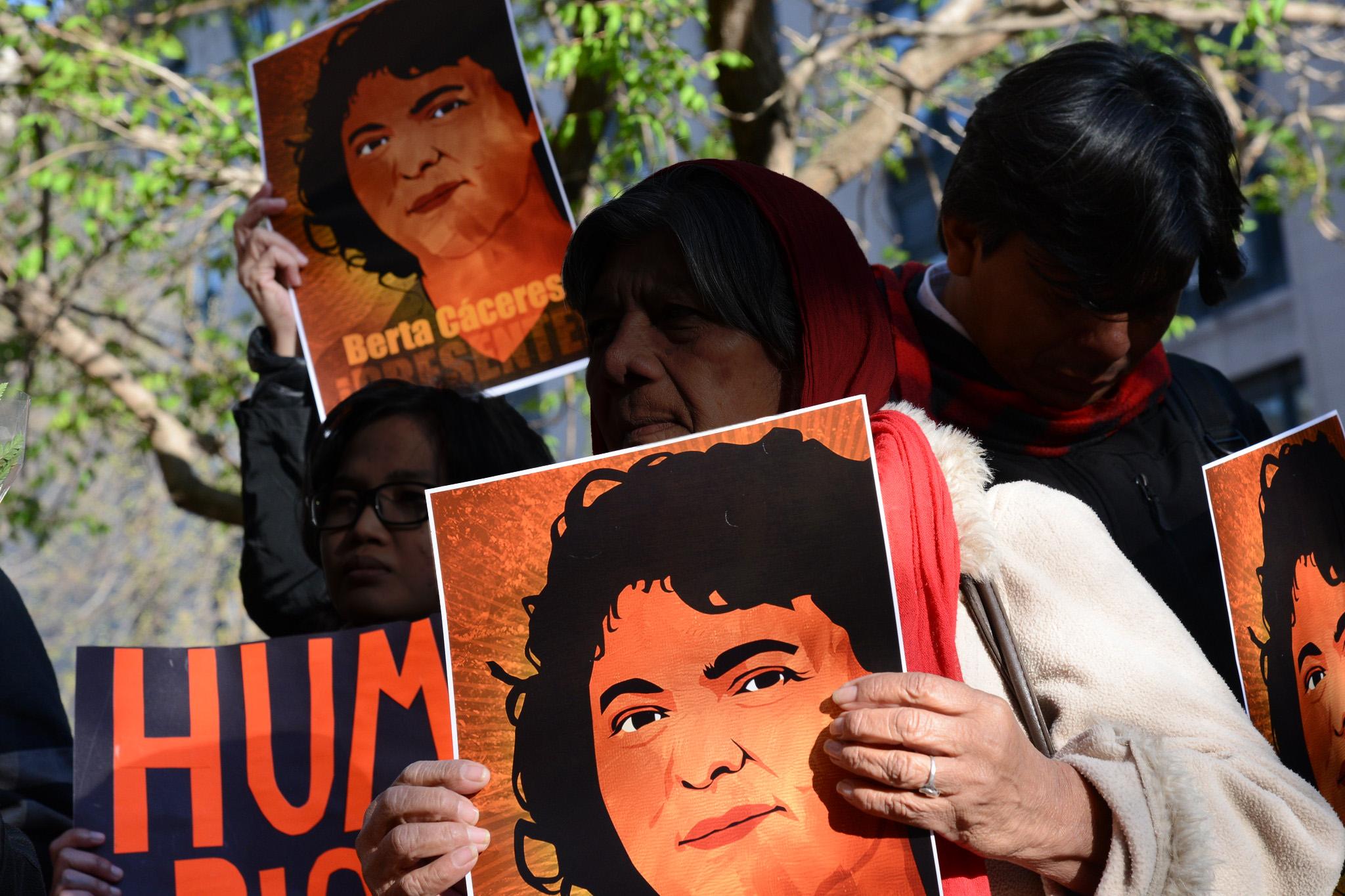
Protests were met with violent repression, culminating in the 2016 assassination of Berta Cáceres in 2016, who spearheaded COPINH’s opposition to this project.4ed567be05f7 Since then, COPINH has aimed to dismantle the corruption networks that enabled PHAZ and led to Cáceres’ assassination.a2bc24611c05
COPINH successfully combined advocacy with a legal strategy establishing a direct causal link between corruption and violations of collective property, territorial control, and self-determination rights.3651be783776
‘COPINH proved that the dam would not have happened without undue influence. They could trace changes in the quality of water and the number of species of flora and fauna to the construction of the dam.’32617f22881b
Lawyers cited the Honduras Criminal Procedure Code’s Articles 16 and 17,a9ccd7eb264e which enable victims to participate as private prosecutors; the UN’s Declaration of Basic Principles of Justice for Victims of Crime and Abuse of Power;5aff19756985 and Convention 169 of the International Labour Organisation (ILO), which stipulates the right of Indigenous Communities to exercise control over decisions affecting their interests.6bb0eed52376
Other contextual factors enabled COPINH’s success in their strategic litigation: First, Cáceres’ assassination elevated the profile of this case. COPINH connected it to the murder to expose the structural discrimination faced by the Lenca Peoples.c7824ae2ec0f
First, COPINH’s experience in conducting human rights advocacy and establishing important alliances also helped advance their cause. The council joined other civil society organisations (CSOs) in peaceful protests and disseminated information about the case through national and international media. They partnered with law firms to develop the legal argument; received guidance from human rights clinics; and gathered support from international organisations, which submitted amicus curiae202d1b3b062b briefs to the constitutional court.bf37c7b4e02e
Second, COPINH could build upon the corruption-related evidence presented by the Anti-Corruption Mission in Honduras (MACCIH). Although MACCIH did not establish the link to human rights violations, their work thoroughly documented the corrupt networks that facilitated the development of the dam project.94fb84a14be6
Third, their positionality as Indigenous Peoples persuaded the Constitutional Chamber to reverse the legal process so they could participate in all criminal proceedings as victims. This ruling is unprecedented, as the Honduran government had not considered the right to be consulted in previous interpretations of the ILO Convention.00aa10eb9410
In 2024, the National Court of Sentencing with Jurisdiction over Organised Crime and Corruption found three defendants guilty of fraud and document falsification.89239f9b55db The next step is to secure reparations for victims,012f1e38d18d and COPINH has already laid the groundwork. Through strategic litigation and advocacy, victims were recognised and the dam project was halted.e06e792d5772
The pursuit of freedom from corruption as a human right in Mexico
What can be done when a grand corruption case has wider implications for society as a whole? A Mexican civil society organisation working on criminal justice, TOJIL, confronted this question after the ex-governor of the state of Veracruz, Javier Duarte – who embezzled millions of funds – colluded with the Attorney General Office (AGO) to get a lower sentence.05f9a061c85c
In 2018, TOJIL filed a complaint for bribery crimes before the specialised unit tasked with investigating AGO public servants.34c6e2d37274 Since then, the CSO has sought victim status in domestic courts and regional arenas, arguing that this bribery case affected their collective interest in good public administration and their right to live free of corruption.30049a418193
As governor, Duarte embezzled more than 30 million USD allocated to education and health programmes.fc77e93c94cf In 2018, he was arrested in Guatemala and extradited to Mexico to answer for alleged abuse of power. He negotiated a plea bargain with the AGO to avoid trial and be prosecuted for criminal association instead of organised crime, which reduced his sentence from 55 to nine years and imposed a minimal fine of less than 3000 USD.4570532452eb
Knowing there were no legally recognised victims who could challenge this plea bargain, TOJIL filed a criminal complaint against the federal prosecutors who negotiated it in 2018, and sought recognition as victims.2c1b773df91e They argued that collusion between Duarte and the attorney general violated the collective right to an environment free from corruption, invoking domestic precedent in a previous case, UNCAC Article 13 – which identifies civil society as a key actor in the fight against corruption – and Mexico’s General Law on Victims, which acknowledges that civil society can be victims in cases of collective damages.27069d97ceee
Additionally, Mexico’s legal framework recognises two types of victims: the victim, who is directly affected, and the offended party, who is indirectly affected but has the same prosecutorial rights as victims.a03f82956847 Nonetheless, prosecutors had not been actively including victims or offended parties in corruption cases, therefore TOJIL took on the Duarte case to rectify these institutional patterns.
The attourney general’s office initially denied TOJIL’s claim, arguing that Duarte’s collusion had not directly affected TOJIL.81b3cbf83bd7 Although an amparo judge4d6748372815 in 2019 initially recognised TOJIL’s victim status55876b7d0533 – the first such ruling for a CSO – it was later overturned by a Collegiate Court, where only one judge considered that TOJIL’s collective rights had been violated.cf98151d6392
Together with the Due Process of Law Foundation (DPLF), TOJIL directors submitted a petition to the IACHR on this case in 2020. They argued that the Mexican authorities’ refusal to recognise TOJIL’s victim status violated their right to defend human rights.
Two additional factors have shaped TOJIL’s strategic litigation: their support networks and their inside knowledge of the AGO. TOJIL has closely collaborated with other national and international experts, including two legal clinics that submitted amicus curiae to the Collegiate Court, and DPLF, which has served as their communication link with IACHR in Washington.63ee164fa9d6 TOJIL also comprises criminal lawyers who previously worked at the AGO. TOJIL therefore ‘knows how the AGO works, what the areas of opportunities, as well as the Achilles heels, are’.7963ed5f1718
In October 2023, the IACHR admitted this case for revision.ff08a2afc1cc This is exceptional, as ‘it’s the first case where a state is being sued for institutional corruption’.9db36401bb9b A favourable ruling could establish a regional precedent for civil society participation in corruption cases.b4bf0ba673ae
Corruption and cancer: The quest for justice beyond Venezuela’s borders
If establishing a link between institutional corruption and human rights violations in democracies is challenging, doing so in repressive states may seem impossible. Civil society in Venezuela has taken up this challenge, using regional mechanisms to advocate for people’s rights violated by corruption.
In 2019, health and human rights CSOs filed a petition to the IACHR on behalf of 12 breast cancer patients in Venezuela. In 2020, the IACHR granted precautionary measures and requested the Venezuelan state to protect these women’s lives, but the state failed to comply.a9840d907b4b Three years later, these organisations, together with anti-corruption CSOs, petitioned IACHR to submit this case to the Inter-American Court so it could order provisional measures – arguing that grand corruption had weakened the health system’s capacity to fulfil these patients’ right to health.317a8b299148 Despite Venezuela’s contested exit from the OAS and the heightened levels of repression, the CSOs have managed to keep this case alive. Their strategic litigation – which has mainly focused on regional advocacy – is sustained through strong alliances with international legal experts and CSOs.
While their first petition did not consider corruption a key driver, the Covid-19 outbreak changed this. In 2020, 15 CSOs working in the areas of health, human rights, and anti-corruption submitted a report to IACHR on corruption in Venezuela’s health sector. They argued that the military and high-ranking officials in the ministry of health had captured the health system, disrupting the functioning of medical facilities. By March 2020, 35.2% of intensive care units were not operational, and some states reported medical shortages of up to 80%.6647b757477a Collaborating on the report marked the start of a joint strategy to link the 12 women’s case to corruption:
‘From that point on, we began to develop a closer relationship. In 2021, we started discussing whether another action could be taken because the government did not respond to the precautionary measures, and by that time, two of the 12 patients had already passed away.’17d3ecab8ec0
Keeping momentum for this case was challenging. The government denounced the Inter-American Convention on Human Rights in 2013, limiting the court’s jurisdiction to cases submitted before that date.6482006c8503 In 2017, Venezuela also formally requested to leave the OAS. This was scheduled for execution two years later, but in 2019, OAS member states recognised Juan Guaidó’s envoydf83d10fde25 as the representative of Venezuela.0d5e569ac392 This institutional limbo put into question the applicability of IACHR’s measures in Venezuela. Yet those cases submitted to the IACHR up to 2019 remain valid, including the case of the 12 women.
The coalition of national CSOs, together with DPLF, decided on the safest bet. Instead of submitting a new case to the Court, which could raise questions of admissibility, they opted to continue the case already opened with IACHR. Requesting the Commission to refer the case motu proprio20738161a988 to the court was unusual but strategically calculated to avoid admissibility challenges.91f7f1fe084c
The petitioners’ complaint focused on establishing a link between grand corruption and the violation of these women’s human rights. They pointed out that the OAS had recognised corruption’s impact on ECOSOC rights in the 2019 IACHR’s report. They argued that corruption had negatively impacted cancer research and the availability of medicines and equipment, contributing to a high mortality rate. They concluded that the state’s failure to comply with the precautionary measures had worsened the situation for the ten patients who were still alive and three more who joined this case.068d7d2e9783
CSOs have also carefully considered how to mitigate the risk of state reprisals against their organisations and victims. National CSOs document violations discreetly while international partners lead public advocacy. Meanwhile, the victims’ international lawyer is the one who publicly takes the case forward.7a67d0b22101
Despite – or perhaps as a result of – these challenges, something notable has emerged: meaningful collaborations now exist between CSOs working to improve human rights, health, and anti-corruption. These proactive engagements have enabled health CSOs to recognise the impact of corruption on this sector.d33e8e94c6fb Moreover, although the commission’s 2023 decision remains pending,302b3f3de013 Venezuelan CSOs have demonstrated innovative use of regional mechanisms to confront corruption’s human rights impact.
Recommendations – rights recognition, development partner support, litigation by civil society, allies, and prepared advocacy
These four cases represent innovative approaches that are locally grounded, context-driven, and responsive to windows of opportunity. The robustness of the inter-American human rights system, the existence of strong civil society groups linked to regional and global networks, the legal frameworks in place, and, in some cases, changes in government have fed into pioneering strategies to converge anti-corruption and human rights efforts.
Nonetheless, apart from the contextual factors that enabled their impact, there are several policy recommendations we can derive from these cases:
States should recognise freedom from corruption as a human right, enabling identification and participation of victims with both direct and diffuse interests. Given their experiences and interest in these cases, victims may be able to provide more evidence to the prosecution, contributing to more effective resolutions in corruption cases. Where legal frameworks exist but are underused, capacity-building and enforcement are essential. Appointing institutional champions, such as Colombia’s Transparency Secretariat leadership, can also help catalyse reform. Even where composite indicators like RADAR are infeasible, governments should disaggregate existing corruption data to identify affected populations and prioritise responses.
Development partners also have a vital role to play in fostering the convergence of anti-corruption and human rights efforts in their operating countries. They can contribute through various means:
- Direct development assistance funding
- Support legal reform initiatives that ensure victims, whether individuals or groups, are represented in corruption cases.
- Funding for legal research focused on identifying and redressing corruption victims.
- Invest in capacity-building programmes that enhance civil society organisations’ ability to engage in strategic litigation focused on victims’ needs, and to effectively navigate domestic and regional anti-corruption and human rights frameworks to hold states accountable.
- Create forums for sharing knowledge on advancing both the human rights and anti-corruption agendas, together.
- Embed a human rights perspective within their anti-corruption projects vis-à-vis partner countries, especially those related to asset recovery.
Civil society can learn from these cases about different ways to enhance its strategic litigation efforts. First, it is crucial to determine early on whether establishing the sine qua non-condition in the corruption case is possible. Sometimes, emphasising how corruption affects a specific group – such as the Lenca Peoples in Honduras – can help connect the corrupt act to the harm caused.
Partnerships are also vital. Collaborating with national and international allies, including legal clinics, universities, civil society groups, and international organisations, can strengthen legal arguments, attract support through funding, or gather amicus curiae submissions to advance cases. Extending alliances to actors in other sectors, as shown in the Venezuelan example, can bring in valuable expertise.
Civil society should also leverage well-established advocacy practices from human rights activism, such as peaceful protests and media campaigns. These efforts can increase the visibility of cases and, consequently, support strategic litigation efforts for victims.
Organisations engaged in strategic litigation will achieve better results if they understand their judicial system well. Hiring staff with relevant experience can be highly beneficial for navigating legal challenges at the national level. Moreover, engaging with regional and international human rights frameworks is essential, especially when domestic judicial systems are inadequately equipped or unwilling to support victims of corruption. This entails preparation and a clear grasp of how these systems operate.
Finally, since this work can be risky in many contexts, it is essential to develop strategies to protect the organisations and the victims involved. This might include partnering with international organisations to advance the cause, while national organisations support the process with careful investigations.
- Nash and Fuchs. 2019.
- CIDH. n.d.
- Prasad and Eeckelo. 2019.
- IACHR. 2019.
- Articles 10 and 13 of UNCAC. 2004.
- Articles 7 and 13 of UNCAC. 2004.
- Articles 11, 30, 32, and 37 of UNCAC. 2004.
- Articles 33 and 8(4) of UNCAC. 2004.
- Chapters IV and V of UNCAC. 2004.
- Human Rights Council. 2020.
- OHCHR, n.d.; Mbonu. 2004; 2009.
- Mutzenberg. 2018.
- Nash-Rojas, Bascuñan and Meza-Lopehandía. 2014.
- IACHR. 2019.
- Nash. 2024.
- Peters. 2018. p. 1268.
- Peters. 2018.
- Ibid.; Interview with attorney and professor of law. 2024.
- Falconi et al. 2024; Wickberg. 2013.
- Falconi et al. 2024; Wickberg. 2013.
- Wickberg. 2013. p.2.
- Ibid.
- Hawley. 2016.
- Interview with attorney and professor of law. 2024.
- Interview with the director of a CSO, México. 2024.
- Interview with attorney and professor of law. 2024.
- Secretaría de Transparencia. 2023.
- Secretaría de Transparencia. n.d.
- Ibid.
- Colombia Informa. 2023.
- Alianza Gobierno Abierto Colombia. 2023.
- Interview with the Secretariat. 2024.
- COPINH. 2021.
- The Robert & Ethel Kennedy Human Rights Center. 2022.
- Ministerio Público. 2024a; Perdomo. 2023.
- Irías. 2024.
- ASF. 2021.
- Interview with a representative of COPINH. 2024.
- Interviews with COPINH, an attorney and professor of law, and an international CSO operating in Honduras. 2024.
- Interview with attorney and professor of law. 2024.
- Congreso Nacional. 1999.
- United Nations. 1985.
- ILO. 1989; Indacochea. 2020.
- Interviews with COPIHN and an international CSO operating in Honduras. 2024.
- Amicus Curiae refers to individuals or groups who submit briefs to the court to influence the court’s decision.
- Interviews with COPIHN and an international CSO operating in Honduras. 2024.
- Interviews with COPINH and an attorney and professor of law. 2024.
- Interview with a representative of COPINH. 2024.
- Ministerio Público. 2024b.
- Interview with a representative of COPINH. 2024.
- Interviews with COPINH and an attorney and professor of law. 2024.
- Indacochea. 2020; TOJIL. n.d.
- Indacochea. 2020.
- TOJIL. n.d.
- Medina and Greaves. 2021.
- Ibid.; Indacochea. 2020.
- Ibid.
- Ibid.; Medina and Greaves. 2020; Cámara de Diputados. 2013.
- TOJIL (quejosa). Amicus curiae en el expediente 159/2019. 2024; Interview with a representative of TOJIL. 2024.
- Procuraduría General de la República. 2018.
- A judicial authority, typically a federal judge, tasked with hearing juicio de amparo cases – a legal remedy protecting individuals against constitutional rights violations caused by state actions, omissions, or laws.
- Juzgado de Distrito de Amparo en Materia Penal en la Ciudad de México, Amparo indirecto 22/2019, Quejosa: AGM & EMR, Sociedad Civil, sentencia de 31 de mayo de 2019.
- Medina and Greaves. 2021; Lopez Benitez. 2019; TOJIL. 2023a.
- TOJIL (quejosa). Amicus curiae en el expediente 159/2019, 2024; Interview with a representative of TOJIL. 2024.
- Interview with a representative of TOJIL. 2024.
- TOJIL. 2023a; 2023b.
- Interview with a representative of TOJIL. 2024.
- TOJIL. 2023a.
- IACHR. 2020; CEPAZ. 2023.
- CEPAZ. 2023.
- DPLF et al. 2020.
- Interview with national CSO. 2024.
- OAS. 2013.
- Following the 2019 presidential crisis in Venezuela, 54 countries, including many OAS Member States, recognised Juan Guaidó as the legitimate interim president. Recognising Guaidó’s envoy in the OAS solidified Maduro’s exit from the regional body, further isolating Venezuela. See Miliard. 2021; Cyrus R. Vance Center for International Justice. Amicus curiae in the case of Chirinos Salamanca et al. v. Bolivarian Republic of Venezuela, Case No. 14.143. Inter-American Court of Human Rights. 2024.
- Melimopoulos. 2019.
- What motu proprio means is that the Commission sent the case to the court on their own account and not on behalf of the CSOs.
- Interview with a representative of DPLF. 2024.
- Interviews with DPLF and national CSO. 2024.
- Ibid.
- Interview with a representative DPLF, 2024.
- The research stage for this piece was concluded in September 2024.