Seeking accountability for past corruption
Since the end of the Second World War, 15 countries have implemented transitional justice mechanisms to try to hold accountable elites who used corruption to maintain their non-democratic hold on power and/or to fight civil wars.7494505a721a Both international and domestic authorities have been involved in these efforts to ‘come to terms with a legacy of large-scale abuses, in order to ensure accountability, serve justice and achieve reconciliation’.93f814575758
Which countries have chosen transitional justice mechanisms to address past corruption, and with what effects? While corruption is defined differently across national contexts, in this brief, corruption is conceptually defined as the abuse of entrusted power for private gain that harms the public interest.ef6835975f72 Traditionally, transitional justice has focused mostly on accountability for physical violations of human rights, such as murder and torture, and only rarely on violations of social and economic rights. However, as part of a ‘fourth generation’ of transitional justice,69ad2c467a46 some post-authoritarian and post-conflict countries have expanded the scope of transitional justice, seeking justice for corruption at the level of individual offenders or at systemic levels through truth commissions and criminal trials.74d9ea423bdf
In theory, transitional justice mechanisms represent a window of opportunity to seek accountability for a broader range of rights violations, such as of economic and social rights. These include rights to education and health, as well as rights to a good standard of living, social security, and the ability to participate in cultural life.cd498f9f75ff7192ae73bed4 For example, violations like sexual violence are not the only way in which women suffer during conflict and authoritarian rule. Rather, the diversion of funds for public services like education and health to private pockets harms vulnerable segments of society the most, such as women and the poor.9f4caf905812 Corruption also raises the cost of living, increases poverty and economic inequality, and can make it difficult for people to access labor opportunities on an equal basis and to be treated fairly in the workplace.818b5748c4f9
While there have been some punitive measures taken against corrupt dictators in particular, the actual effects of addressing corruption through transitional justice mechanisms are mostly symbolic, normative, and informational. There is a lack of evidence that they reduce corruption or deliver economic justice to victims.
Countries using transitional justice to address corruption
Transitional justice mechanisms can be retributive in nature, wherein wrong-doers are held responsible for their actions through war crimes tribunals, trials, purges, or exiles. There are also restorative mechanisms for truth telling and remediation, such as truth commissions, reparations, and amnesties.539a0788213d Dozens of these mechanisms have been implemented in multiple countries around the world since the concept of transitional justice kicked off with the Nuremberg Trials at the end of the Second World War.
Table 1 shows the 15 countries that have used trials (retributive justice) and/or truth commissions (restorative justice) to address corruption, with start dates for each noted in parentheses. Some of these transitional justice mechanisms have been partially funded by international partners, including U4 partners.eb135847d454 Four countries – Tunisia, South Korea, Haiti, and Liberia – used both types of mechanisms at different points in time to investigate and punish acts of corruption committed under previous regimes.75780d002755
Table 1. Countries that have addressed corruption through transitional justice
|
Retributive (trials) |
Restorative (truth commissions) |
|
Haiti (1986): Trials to investigate and prosecute corruption committed under the deposed Duvalier government |
Philippines (1986): Presidential Committee on Human Rights |
|
South Korea (1988): National Assembly special committees set up to investigate corruption under 5th Republic |
Chad (1990): Commission of Inquiry into the Crimes and Misappropriations Committed by Ex-President Habré, His Accomplices and/or Accessories |
|
South Korea (1995): Trials of former presidents for corruption |
Haiti (1995): National Commission on Truth and Justice |
|
Chile (2005): Indictment and arrest of Augusto Pinochet (died before trial’s conclusion) |
Sierra Leone (2002): Truth and Reconciliation Commission |
|
Peru (2008): Trial of Alberto Fujimori for corruption |
Liberia (2006): Truth and Reconciliation Commission |
|
Tunisia (2011): Trials of President Ben Ali and associates for corruption |
Kenya (2009): Truth, Justice and Reconciliation Commission |
|
Egypt (2012): Trials of President Mubarak and associates for corruption |
Solomon Islands (2009): Truth and Reconciliation Commission |
|
Armenia (2018): Trials of President Serzh Sargsyan and associates for corruption |
Philippines (2011): Truth Commission |
|
Liberia (2024): War and Economic Crimes Court (not yet implemented) |
Tunisia (2013): Truth and Dignity Commission |
|
|
Colombia (2017): Commission for Clarification of the Truth, Coexistence and Non-Repetition |
|
|
Gambia (2017): Janneh Commission |
Explaining the choice of transitional justice mechanism
The choice about which transitional justice mechanism (restorative, retributive, or both) to use in addressing corruption is shaped by three factors: the nature of the political conditions out of which a country is transitioning (armed conflict vs. dictatorship), the role of political elites in the post-transition period, and the country’s existing institutions for addressing corruption.
Three types of countries are likely to use restorative transitional justice mechanisms to address corruption:
- Post-conflict countries.
- Countries with political elites from the former regime that continue to hold political power.
- Countries with weak anti-corruption institutions.
In contrast, post-dictatorships are likely to use retributive transitional justice to address corruption for political ends: consolidating power by delegitimising the previous regime and removing old elites.
A conflict–transitional justice connection?
Post-conflict countries have almost exclusively addressed corruption through truth commissions. Why is this the case? One explanation could lie in the way a conflict is ended. Conflicts ended through a negotiated peace agreement could create an opportunity to address corruption in the post-conflict era. However, though just over one-third (36%) of peace agreements mention anti-corruption,5b7ce9335da2 very few post-conflict countries (just 4) have chosen to address corruption through transitional justice after the signing of an agreement.d7be150f7310 And even in cases where corruption is mentioned in a peace agreement, an explicit connection is not always made to addressing it via transitional justice. For instance, the 1999 Lomé Peace Agreement for Sierra Leone briefly mentions corruption as a cause of the war, and further calls for the establishment of a Truth and Reconciliation Commission, but does not explicitly connect the two.
Truth commissions to address corruption in post-conflict Sierra Leone and Liberia
Despite the lack of a connection between addressing corruption in peace agreements and transitional justice mechanisms, conflict-affected countries may still see a need to address the connection as a way to forge a path to peace. This is because corruption has often fuelled government opposition and political upheaval that resulted in conflict to begin with. For example, in Sierra Leone and Liberia, endemic government corruption was a strong motivator for young people to join the armed rebellions against the governments of these states.bb7d40621d66 Corruption also fuels war economies and finances violence by providing the means for leaders of armed groups to acquire weapons. This was the case for the multiple armed groups that were active in Liberia’s civil war.487114b67045
However, post-conflict countries face dilemmas in seeking accountability for the corruption-conflict connection. First, institutions are weakened by the conflict, and second, people fear that if old regime and wartime political elites who remain in power are put on trial for rights violations, this could re-ignite conflict. Sierra Leone and Liberia illustrate these dilemmas well. The final report of Sierra Leone’s Truth and Reconciliation Commission stated that a ‘central cause of the war was endemic greed, corruption and nepotism that deprived the nation of its dignity and reduced most people to a state of poverty’.af2ad974e3a5 Yet, at the time of the report’s publication in 2005, existing anti-corruption institutions were too weak to effectively address corruption. In 2007, the UN Peacebuilding Commission recommended strengthening the Anti-Corruption Commission, the Anti-Corruption Law, and other anti-corruption institutions.19e7a9f20e3f Meanwhile, retributive transitional justice (in the form of the Special Court for Sierra Leone) focused exclusively on prosecuting the top leaders of the various armed factions for violations of physical integrity rights and for the economic crime of pillage. Corruption was not included in the charges because government officials prioritised a more immediate and narrow focus on prosecuting the leaders of the fighting factions for war crimes in order to militarily weaken the main rebel group, the Revolutionary United Front.1cbebe2d6c8a
One of the main recommendations of Liberia’s Truth and Reconciliation Commission final report in 2010 was the establishment of an Extraordinary Criminal Tribunal for Liberia. This was to be a criminal court that would try all persons identified in the report for human rights violations and economic crimes. But this recommendation was ignored by successive post-war governments due to the complicity of serving government officials in corrupt acts they had committed during the country’s civil war.f9f8ef1cee14 There was also a strong fear that warlords-turned-politicians would spoil the peace should they be prosecuted for war and economic crimes. Furthermore, national anti-corruption institutions, such as the Liberian Anti-Corruption Commission, were in their infancy in 2010. However, in 2024, newly elected President Boakai finally established the War and Economic Crimes Court. The waning political and military power of former warlords, as well as the rise to political power of a new generation of young politicians untainted by wartime atrocities, finally opened a window of opportunity for addressing the conflict–corruption connection.7e56e1b82bd1 Though the new tribunal has not yet been implemented due to a lack of funding, it will, among other things, establish an anti-corruption court under domestic law to address corruption committed before and during the conflict.062151f92036
Trials as the preferred transitional justice mechanism in former dictatorships
Six post-dictatorships in the dataset prosecuted former rulers and their associates for corruption through criminal trials (see Table 1). There are a few exceptions to this: Haiti and Tunisia used both truth commissions and trials to address corruption, while the Gambia, the Philippines, and Chad opted for truth commissions. Where dictatorships have been overthrown and a new regime has taken power, prosecuting corruption through trials can have several positive social effects. It creates a clean state by delegitimising the dictatorship and removing old regime elites. It also provides the semblance of addressing popular grievances about systemic corruption that ignited revolutionary change. And it bolsters the perception that the new regime respects the rule of law, and has moved away from engaging in strategic lawfare.b11eda074a75
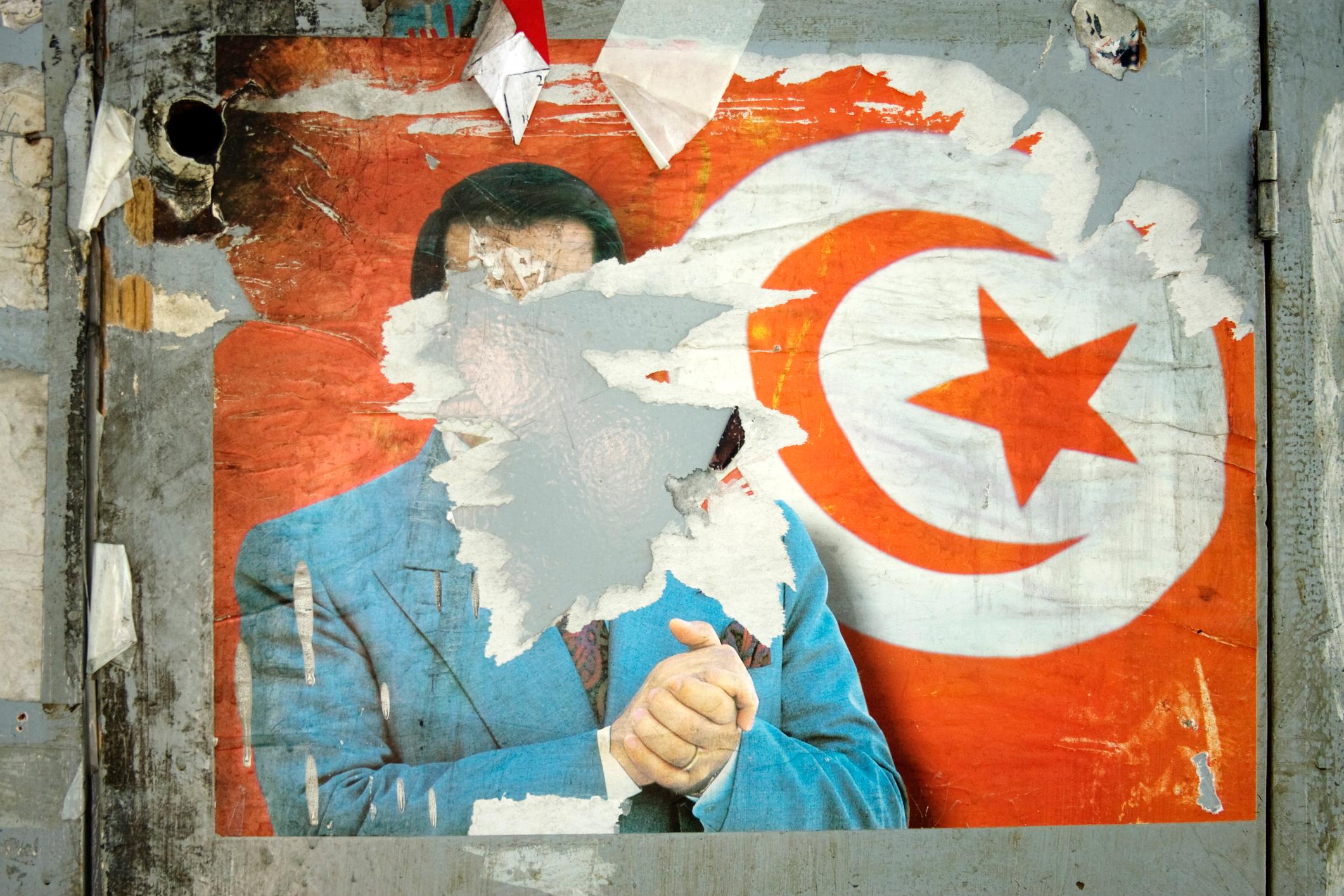
Tunisia and Egypt illustrate these dynamics well. Arab Spring protesters in Tunisia cited grievances about the rampant corruption of the dictatorial regime of President Zine Al-Abidine Ben Ali. The day after Ben Ali’s departure from power, the new provisional government established a commission to investigate crimes he had committed. International arrest warrants were issued for Ben Ali and his wife for corruption and fraud, and in July 2011, Ben Ali was convicted in absentia to 11 years in prison for these crimes. But because Ben Ali’s trial was widely viewed as a form of rushed ‘revolutionary justice’,c9fab8ccaa68 the post-revolution government supported the later establishment of a more comprehensive restorative transitional justice mechanism. In 2013, the Truth and Dignity Commission (TDC) was established in 2013 to investigate economic crimes and corruption; this body was enshrined in the country’s new constitution in 2014.4f489cd914b2 The TDC released a report in 2019 outlining how endemic corruption was institutionalised under the Ben Ali regime and it recommended actions for dismantling corrupt systems.535c45e9a06c
In Egypt, the anti-government protests that brought down dictator Hosni Mubarak’s government in early February 2011 also cited grievances about widespread government corruption.282bb292249a In August 2011, Mubarak, two of his sons, and several other former government officials were put on trial for corruption and the killing of protestors. In 2014 and 2015, Mubarak and his two sons were convicted of embezzlement and corruption, and they were sentenced to serve prison time and ordered to pay several million US$ in fines.f4b8ba22926e
The post-Mubarak military government and the provisional government in Tunisia both pursued retributive rather than restorative transitional justice due to domestic political pressures. In Egypt, revolutionary groups such as the Muslim Brotherhood had threatened to call for a second revolution in May 2011, posing a potential threat to the new government’s hold on power and to political stability.160e28675689 Egyptians voiced strong popular support for the trials of Mubarak and his associates, viewing retributive mechanisms as the preferred method of deterring future abuses and for achieving accountability for the large-scale economic crimes of the Mubarak regime.ba0afde1273f In Tunisia, mass protests continued after Ben Ali’s departure over the fact that members of the old regime were still in government. Transition officials viewed a quick move to investigate and prosecute the crimes of Ben Ali and other high-level government officials as a way to placate protestors. However, in 2017, the government granted an amnesty to business people and government officials from Ben Ali’s regime who had been put on trial for corruption.
Risks and challenges in addressing corruption through transitional justice
Tunisia and Egypt point to risks of using transitional justice to address corruption: the new regimes’ weaponisation and politicisation of retributive measures in particular. In the long-run, this can negatively shape citizen views of post-transitional governments and undermine trust in in the new regime. An additional challenge is that due to cost and capacity limitations, transitional justice processes can realistically focus only on high-level elites and large-scale corrupt acts.6a84bf5770da And because prosecuting corruption as a crime is a matter of national law, it is possible to go after only what is justiciable. These factors may impact the credibility of transitional justice for citizens.
The ability of transitional justice mechanisms to contribute to lasting political and social change faces additional constraints. By nature, transitional justice mechanisms are necessarily time-delimited and backwards-facing in nature, focusing on acts committed during a particular point in time.5ace02763611 As such, they may not sufficiently address ongoing, current patterns and systems of corruption, nor can they necessarily prevent or reduce corruption going forward.db4c412d08f8
Moreover, transitional justice mechanisms may not fulfill popular expectations about reducing corruption or providing restitution for past corruption. There is no evidence that transitional justice mechanisms have any impact on national measures of corruption, especially as transitional justice is likely only to address elite, grand-level corruption rather than the petty or systemic type.44c4ca929d06 As an example of this, in Tunisia, the majority of citizens surveyed by Afrobarometer in 2018 felt that corruption was continuing to increase despite the country’s post-revolution anti-corruption focus and reforms, and that the government was performing poorly on anti-corruption efforts.581cc1622ca3
There is furthermore no automatic link between transitional justice processes and economic justice, such as reparations or asset recovery.7dbeec12e606 These are separate initiatives that take place after, and separately from, the conclusion of transitional justice. And there is no guarantee that corruptly-acquired assets seized by post-transition regimes will, in fact, benefit citizens, as highlighted in the examples of the Gambia and Sierra Leone.96c98f4fcf4c
Finally, there is the risk that widening the scope of transitional justice can delay judicial processes and divert focus from the most serious rights violations that occurred during a period of dictatorship or armed conflict. For this reason, corruption has, in some cases, been identified during a transitional justice mechanism as the long-run cause for conflict or dictatorship, but it has not been explicitly addressed by the mechanism. This occurred in the case of South Africa’s Truth and Reconciliation Commission, which included information about corruption as background contextual knowledge for investigating gross human rights violations under apartheid but did not hold anyone accountable for corrupt acts.5ae0209d9e42
The potential and constraints of addressing corruption through transitional justice
Proponents of using transitional justice to seek accountability for corruption committed in the past argue that a broader conception of justice can more fully address how citizens’ economic and social rights are violated during earlier periods of armed conflict and/or authoritarian rule than can a focus on physical rights violations alone.e8899bb06d55 Corruption enables the violation of a range of rights, including physical integrity, economic, and social rights.cf385f735a02 Authoritarian rulers use bribery, kickbacks, embezzlement, patronage, and nepotism to buy the loyalty of elites and citizens, retain their hold on power, and avoid punishment for violating citizens’ physical integrity rights.
Addressing corruption in the aftermath of periods of authoritarian rule and armed conflict is an important piece of achieving accountability for past wrongs, as well as for building a new social consensus and norms. But using transitional justice mechanisms for this purpose is not sufficient for tackling corruption, nor has it delivered economic justice to victims through asset recovery or reparations. Instead, the effects are two-fold. First, there is the symbolic effect of acknowledging the corruption and broader rights violations committed under previous regimes. Second, there are informational effects as well as normative effects that occur by revealing the full extent of corruption in previous regimes, effectively ‘naming and shaming’ the perpetrators and establishing new norms of acceptable social behaviour.
While the emerging idea of a ‘right to be free of corruption’bb36dca698d2 could potentially influence more countries to address corruption through transitional justice, the risks and challenges of doing so, and the limited impacts on corruption, suggest caution in this approach. Other legal approaches to addressing past corruption may be worth considering, such as prosecuting former political officials for corruption in domestic courts but not as part of transitional justice.28f27a0f9f54 South Africa’s prosecution of former President Jacob Zuma for corruption is one example of this approach. Ultimately, though, countries choosing to implement transitional justice mechanisms, and the funders and stakeholders supporting these mechanisms, must carefully weigh the trade-offs and costs of addressing corruption in this way, including increased financial costs of a broadened scope of justice, as well as threats to post-conflict stability where corrupt spoilers can re-arm.
- The fifteen countries are a subset of the dozens of countries that have implemented transitional justice mechanisms. For an overview of all the countries that have implemented transitional justice, please see Stan and Nedelsky (2023).
- UN 2004.
- Kubbe et al 2024.
- Sharp 2013.
- Carranza 2008; Segovia 2023.
- A number of transitional justice mechanisms have addressed violations of economic, social, and cultural rights, including the truth commissions in Timor Leste, Sierra Leone, Guatemala, and Liberia (UN 2014).
- United Nations 2014; see also U4 2025.
- Cahill-Ripley 2014.
- Gupta et al 2002.
- Binningsbø et al 2012; Loyle and Appel 2017.
- See Muck and Wiebelhaus-Brahm 2016 for a discussion of international funding for transitional justice.
- This data was sourced through a review of academic and policy literature on corruption in transitional justice, as well as a review of existing datasets on transitional justice. Academic search engines as well as Google Scholar were used to identify literature and data sources. Search terms used were: corruption, transitional justice, post-conflict justice, war crimes trial, tribunal, and truth commission. The literature and data searches were conducted in July and August 2025.
- Forster 2024.
- Sierra Leone, Liberia, Kenya, Colombia.
- Bøås 2001.
- Picard and Goodman 2025; Jackson 2010.
- Sierra Leone Truth and Reconciliation Commission 2005, p. 27.
- UN Peacebuilding Commission 2007.
- Bangura 2021.
- Saxegaard and Dupuy 2026.
- Saxegaard and Dupuy 2026.
- Annex 4 of Liberia’s 2010 Truth and Reconciliation defines economic crimes as ‘any activity by a public or private person of any nationality, or domestic or international corporate entity conducting or facilitating business in or related to Liberia, or on behalf of the Liberian government, a Liberian business, or Liberian resident or citizen, committed with the objective of generating illicit profit either individually or collectively or in any organized manner by engaging in, among others, the following activities: fraud, narcotic drug trafficking, money laundering, embezzlement, bribery, looting and any form of corrupt malpractices, illegal arms dealing, smuggling, sexual slavery, human trafficking and child labor, illegal mining, illegal natural resource extraction, tax evasion, foreign exchange malpractices including counterfeiting of currency, theft of intellectual property and piracy, open market abuse, dumping of toxic wastes and prohibited goods, and any other activity unlawful under domestic or international law’.
- Andrieu 2012.
- International Crisis Group 2016.
- Andrieu 2012.
- (Government of Tunisia 2019)
- Robinson 2015.
- Zakerian and Emadi 2018.
- Cook 2011.
- de Waal 2011.
- (Freedom House 2014.
- Nenningsland 2024.
- McAuliffe 2021; Ndonga and Carranza 2019.
- Nenningsland 2024; Waldorf 2012.
- Meddeb 2018.
- Carranza 2008.
- UNCAC Civil Society Coalition 2022.
- Cahill-Ripley 2014.
- (Michalakea 2022.
- Andrieu 2012; Carranza 2008.
- Roht-Arriaza 2025.
- Lutz and Reiger, 2009.